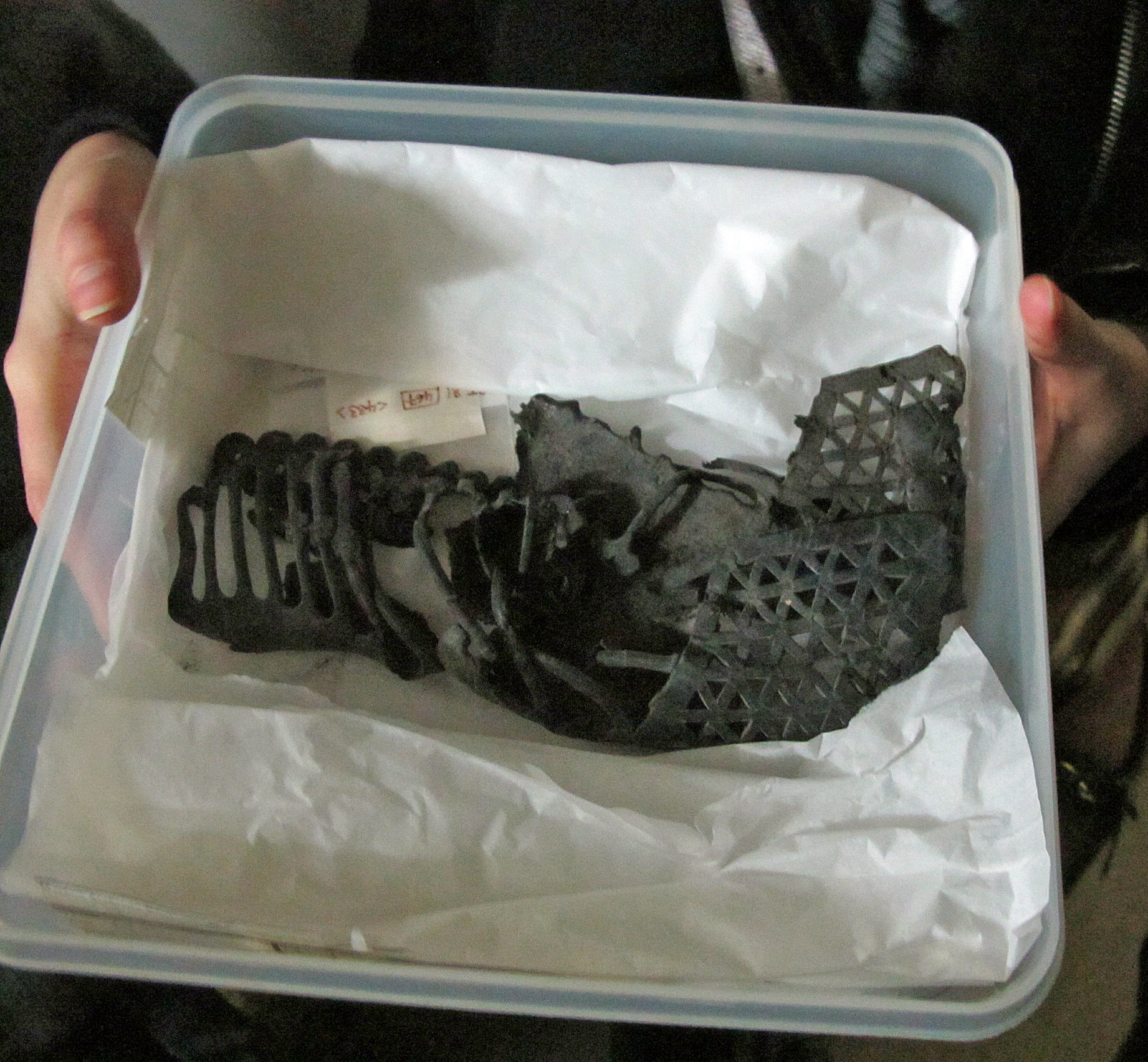
Lay a single piece of leather on a table and it is hard to see a shoe in it. Yet a Roman carbatina from Newstead, dated to AD 80–180, was cut from one piece. The trick lies in deciding which parts will sit beneath the foot and which will rise around it.
Preparing the hide and finding the pattern
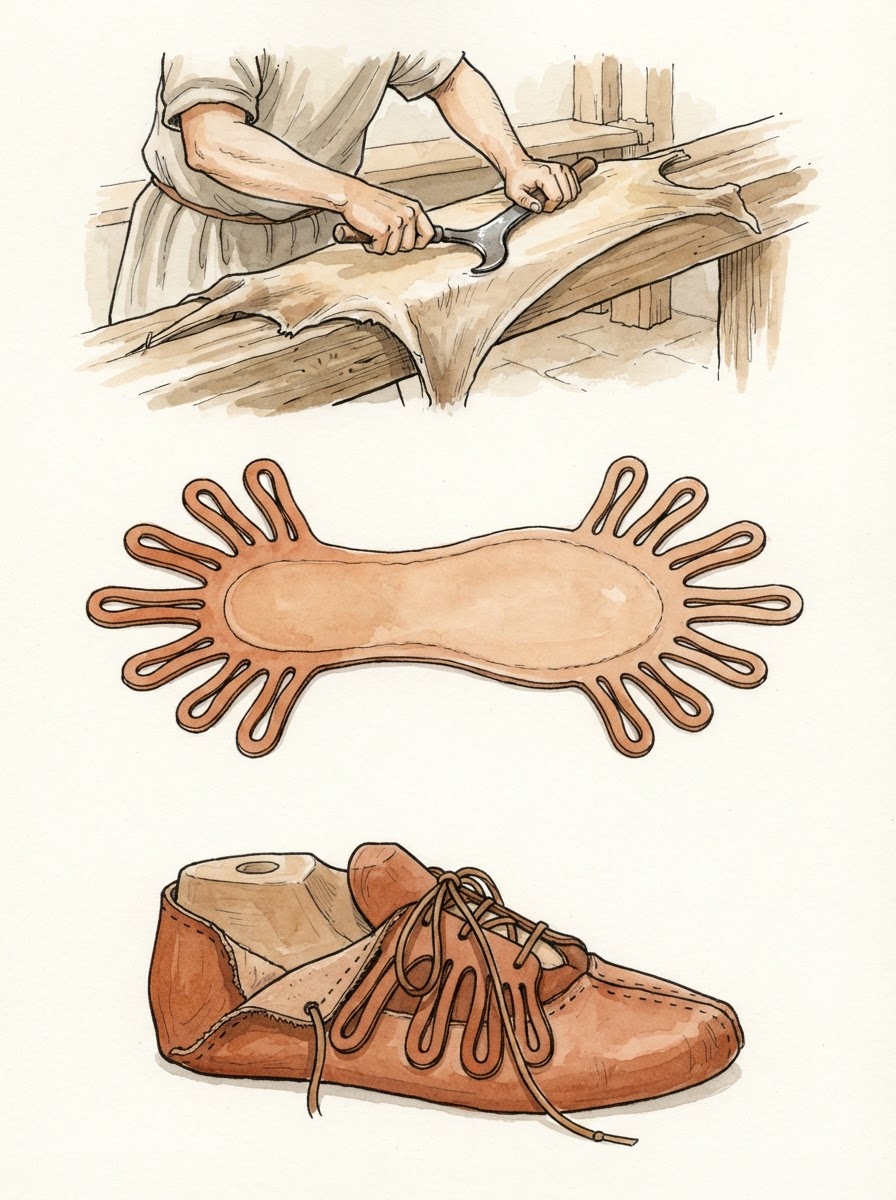
Before a hide can become shoe leather, the maker cleans the skin and scrapes away flesh. For smooth leather the hair is removed too. Vegetable tanning is one possible route. Tannins from plant material penetrate and stabilise the skin, which is then worked to give it the flexibility the job requires. Different treatments produce very different materials. An excavated shoe does not always preserve enough evidence to identify the tanning recipe.
With a one-piece shoe the sole and upper begin together. The maker cuts an outline broad enough to wrap around the foot, brings its edges up and secures them. A seam in the wrong place takes the wearer’s weight or rubs with every step. A modern replica lets a leatherworker try that arrangement on a moving foot.
A Pictish shoe that Lamley could examine
Hamish Lamley of Pictavia Leather demonstrates prehistoric leatherwork and made a shoe for the Roman Scotland exhibition. He also documented a separate, later reconstruction from Dundurn hillfort near St Fillans. At the Hunterian he examined the original and traced how its front seam rose clear of the ground. The species of animal that supplied the hide remains uncertain. His photographs show the original under examination and his first completed pair. Ryan Bain filmed the reconstruction.
Meet Hamish Lamley · See the Dundurn shoe photographs and film · Compare the Roman one-piece shoe from Newstead
Part of the Romans in Scotland series inspired by Meet the Makers at the National Museum of Scotland, 21–22 November 2026.


