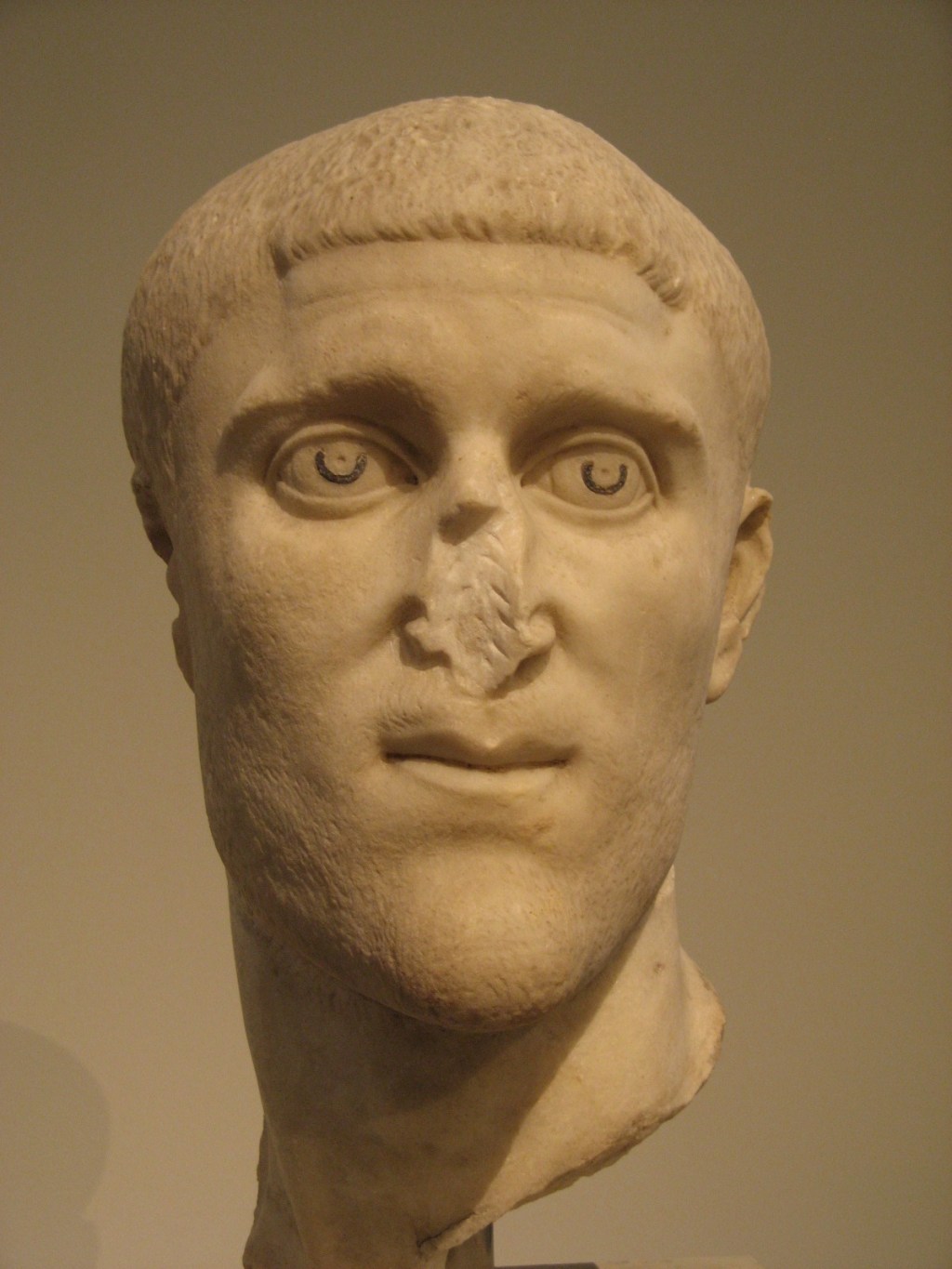
The Emperor Constantius I, born in what is now Serbia, was the second emperor to die in York (Eboracum) while fighting the tribes from Scotland. His complete history is on Wikipedia under the name Constantius Chlorus ( he only became Constantius I after the second was on the throne).
In AD 286/287, the Roman British Navy (Classis Britannica) commander Carausius usurped imperial power and established control over Britain and part of northern Gaul. Carausius was assassinated, and Allectus took control of Britain until 296, when Constantius’s armies invaded from Boulogne and defeated him. Constantius restored order and the forts.
The map above shows the extent of Roman coins in Scotland during this period. It can not be said that Romans lost these coins, as they might have been the result of trade or plundering. However, each coin has a map of distribution around England and Wales, and patterns can be seen – for example, some coins are found in ports around Britain, and some follow the routes of Roman roads into Scotland, with many found at York’s (Eboracum) legionary fort, which may indicate a marshalling of troops before an advance into Scotland.
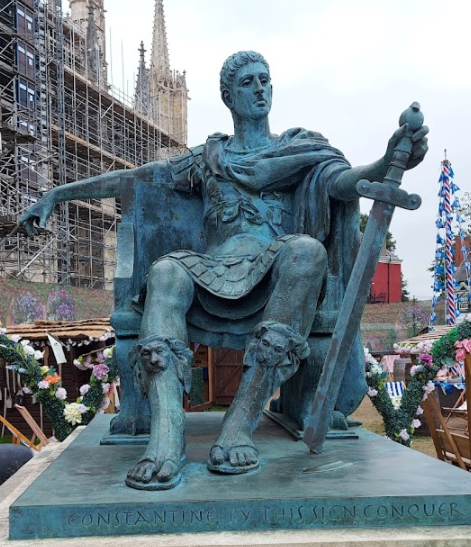
Summary of Constantius I’s Life
Constantius I, also known as Chlorus, was a Roman emperor and the father of Constantine I the Great.
- Birth and Early Career:
- Name: Flavius Valerius Constantius (also known as Flavius Julius Constantius)
- Birth: Around 250 CE in Dacia Ripensis (a modern-day region in the Balkans)
- Military Career: Constantius had a distinguished military career before entering politics. He served as the governor of Dalmatia (in present-day Croatia).
- Tetrarchy and Rise to Power:
- Constantius was one of the original members of the Tetrarchy, a four-man ruling body established by Emperor Diocletian.
- From 293 to 305, he held the title of Caesar, and from 305 to 306, he became Caesar Augustus.
- His marriage to Theodora, the stepdaughter of Emperor Maximian, resulted in three children: Dalmatius, Constantius, and Constantia.
- Military Campaigns and Triumphs:
- In 293, Constantius was adopted by Maximian and became his Caesar.
- He was assigned to rule Gaul and tasked with subduing the usurper Marcus Aurelius Carausius in Britain.
- Constantius captured Carausius’s mainland base, Gesoriacum (modern Boulogne, France), and later defeated Allectus, Carausius’s finance minister.
- In 296, he launched a successful two-pronged attack on Britain, securing victory over Allectus.
- Constantius also restored frontier defences and took measures against Frankish and Saxon piracy.
- His enforcement of Diocletian’s edicts against Christians was relatively lenient.
- Senior Emperor and Death:
- When Diocletian and Maximian abdicated in 305, Constantius became the senior emperor in the West.
- In 306, he died during a victorious campaign against the Picts in Eboracum (modern York, England).
- His troops proclaimed his son, Constantine, as the new emperor.
Constantius I’s legacy lies not only in his military achievements but also in being the father of the influential Emperor Constantine I.
References
A Roman Frontier in north-east Scotland? One man’s theory about Roman forts near Inverness.

