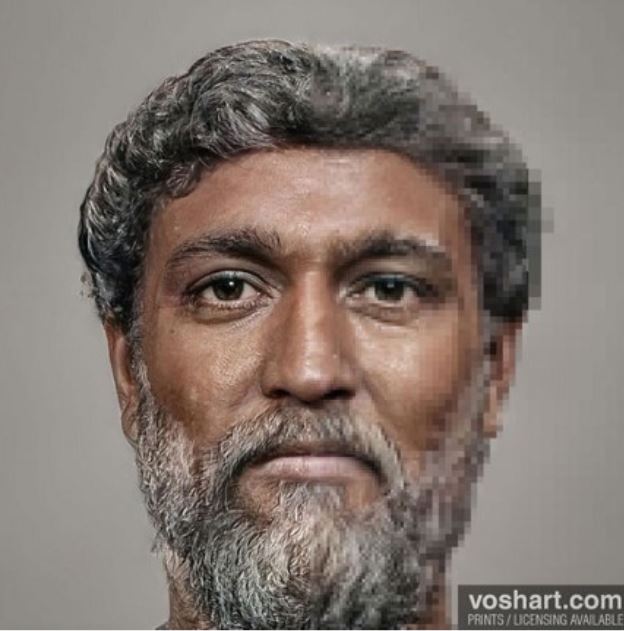
In AD 208, the emperor Septimius Severus arrived in Britain with his family and a major military force. The campaigns that followed took Roman armies deep into what is now Scotland, supported by coastal bases, supply depots and temporary camps. They also produced one of the most chilling passages in the written history of Roman Britain: an order, reported by Cassius Dio, to destroy the people resisting Rome.
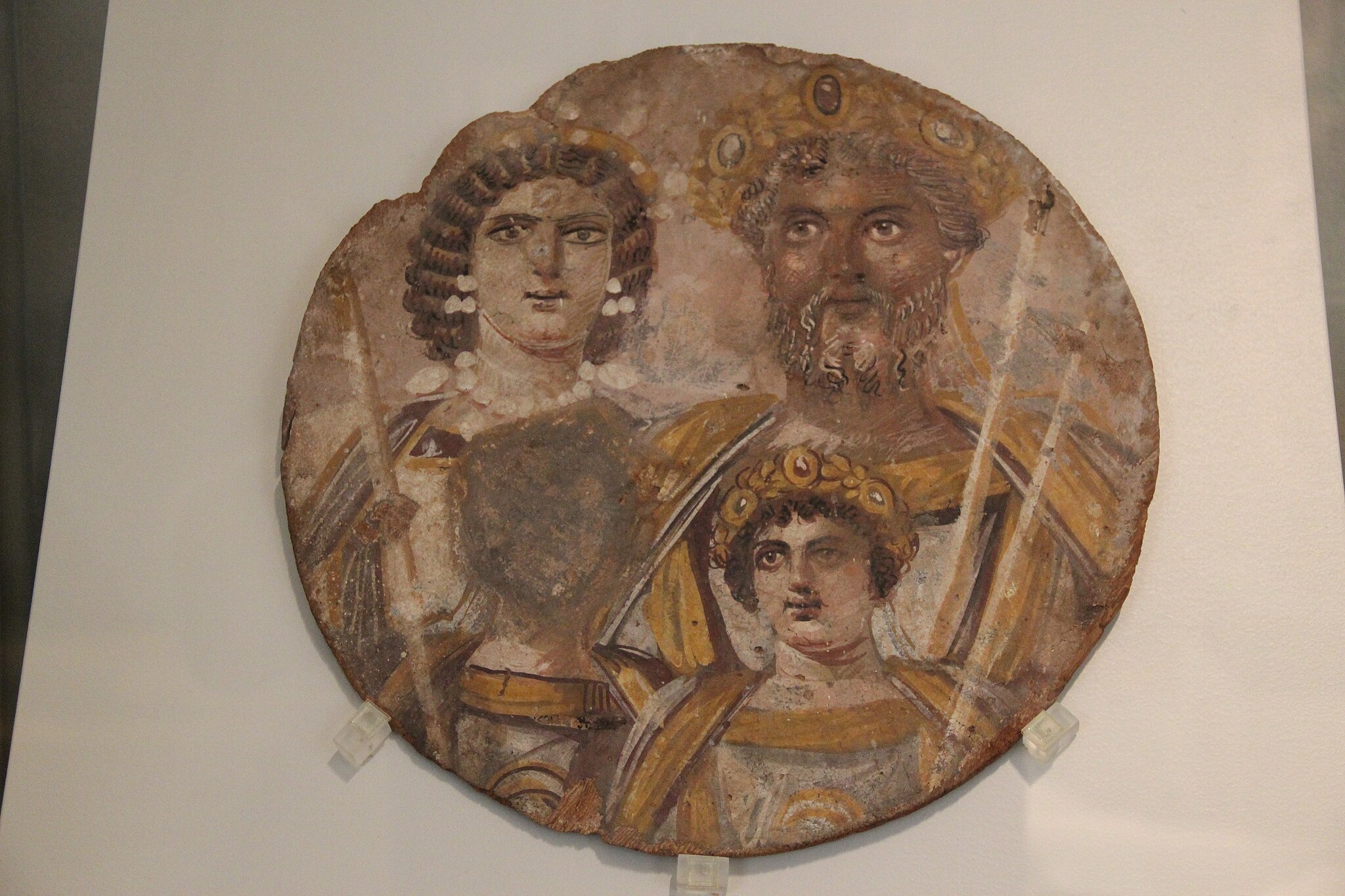
This was an extraordinary commitment by an ageing emperor. Yet it brought no lasting conquest of the north. To understand why, we need to look beyond the emperor himself to the communities he attacked, the practical demands of the invasion and the limits of our evidence.
Why did Severus come to Britain?
Born at Leptis Magna in present-day Libya, Severus became emperor in AD 193. His eventual victory over his rival Clodius Albinus at Lyon in AD 197 consolidated his power. Albinus had drawn troops from Britain for the civil war, leaving the province’s northern security under strain.
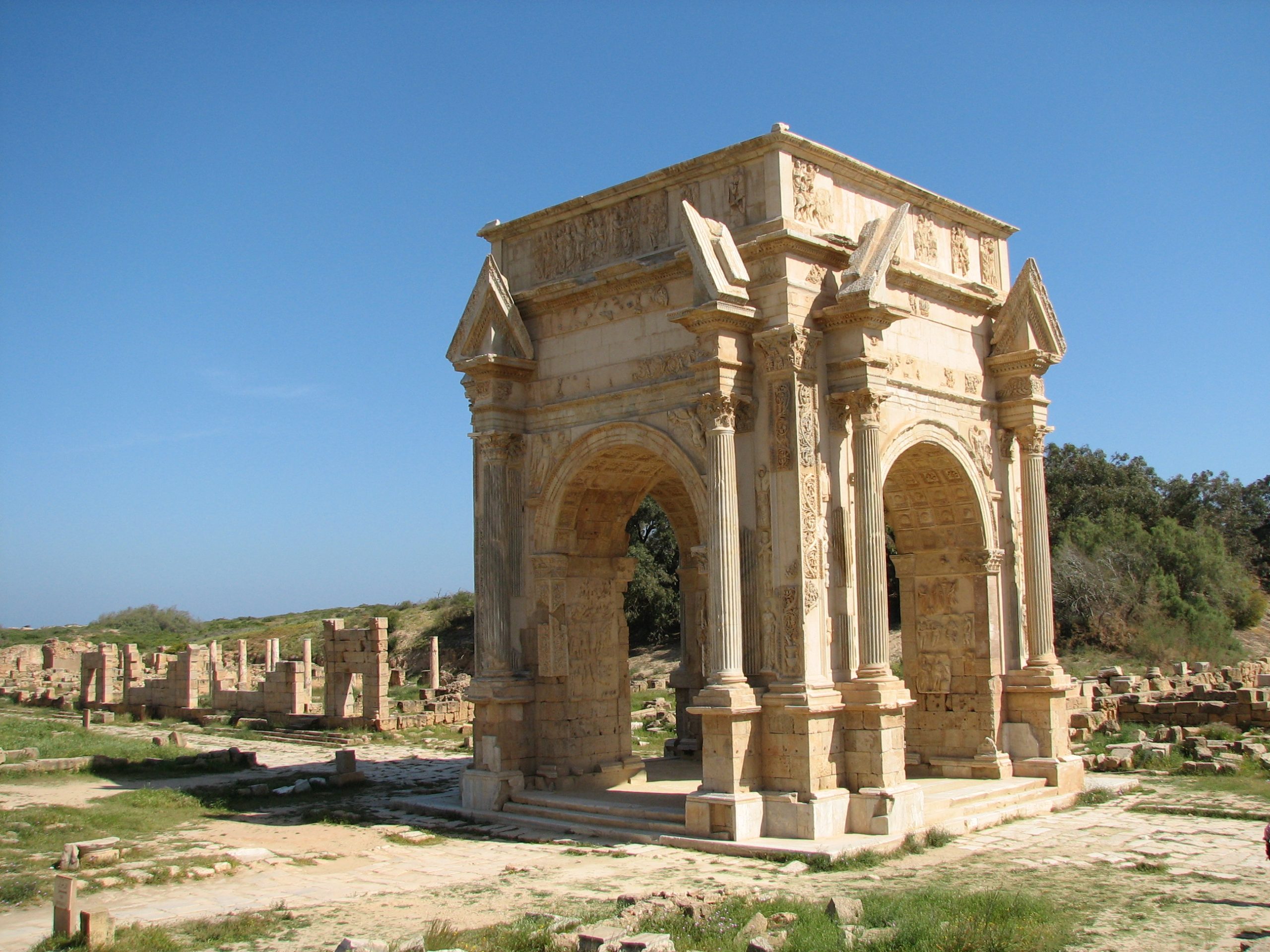
The invasion had both military and dynastic motives. Herodian says that Britain’s governor asked for reinforcements or the emperor’s presence in response to attacks. He also portrays Severus as eager for another military victory and anxious to remove his quarrelling sons, Caracalla and Geta, from the pleasures of Rome. A campaign offered the prospect of discipline, prestige and a shared imperial achievement.
Those accounts should not reduce a major war to a family dispute. As archaeologist Nick Hodgson stresses, the strategic situation deserves attention alongside the ancient writers’ stories about imperial personalities. Whether Severus intended permanent annexation of the whole island or a devastating campaign to impose favourable terms remains debated.
The northern peoples and the frontier
By this time the Antonine Wall had long ceased to function as Rome’s main frontier. Hadrian’s Wall again formed the principal defended line, with outposts beyond it. Earlier occupation of Scottish forts does not automatically establish that they were still garrisoned in AD 208.
Dio identifies two broad northern groupings: the Maeatae and the Caledonians. Their precise territories are uncertain; his description is not a reliable boundary map. Nor should his stereotyped portrayal of their way of life be read as a neutral account of northern society.
Forts such as Newstead and possibly Inveresk belong to a complicated sequence of occupation and withdrawal after the Antonine period. The Scottish Archaeological Research Framework places the abandonment of the most northerly outposts around AD 180, while recognising unresolved questions at individual sites. It would therefore be misleading simply to list them all as Severan garrisons.
Which forts and bases supported the invasion?
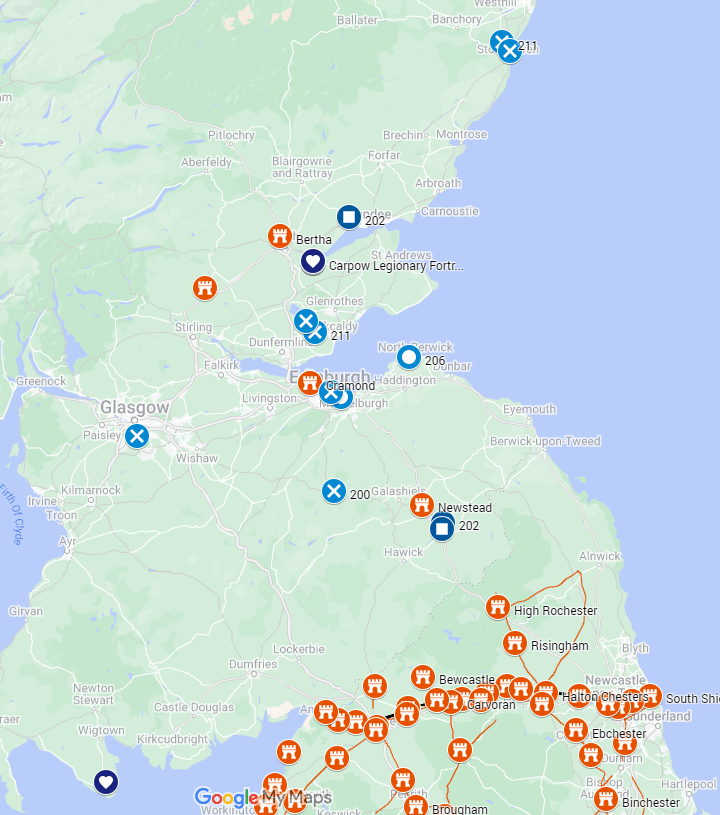
The clearest Scottish starting points are Cramond on the Forth and Carpow on the Tay. They belonged to a wider system linking the army’s movements by land with supplies arriving by sea.
- Cramond Roman Fort: this earlier fort was used again during the Severan campaigns. Its position at the mouth of the River Almond, beside the Forth, made it well placed to support the advancing army. The precise break between its earlier and later occupation remains debated.
- Carpow Roman Fortress: near the meeting of the Tay and Earn, this substantial base is central to discussions of the expedition. Inscriptions and stamped tiles associate it with the Second and Sixth Legions. Its foundation date is disputed: a start under Commodus has been proposed, so “built by Severus in AD 208” is too definite.
- South Shields: south of the Scottish theatre, this coastal fort was developed into a major supply depot. Its granaries demonstrate the importance of provisioning an army operating far beyond the normal frontier.
- Corbridge and York: Corbridge provided another supply base, while York was the centre of the imperial court during the British expedition. The campaign depended on these connections behind the advancing troops.
These were different kinds of installations with different jobs. A fortress or supply depot should not be confused with a temporary marching camp, where troops protected themselves during a campaign.
The advance into Scotland
Severus arrived in AD 208; the main campaigning is generally placed in AD 209–210. Modern estimates put the expeditionary force in the tens of thousands, but no complete surviving strength return allows an exact total. Caracalla accompanied his father, while Geta was entrusted with administration in the Roman-controlled province.
The distribution of Roman camps in Scotland broadly suggests an advance along Dere Street towards the Forth and then into the north-east. However, assigning a camp to one particular emperor from its size or shape alone is hazardous. The northern limit and detailed itinerary remain uncertain.
Herodian describes Roman preparations for difficult ground, including causeways across wet areas. He presents a war of repeated encounters in which local fighters could escape through terrain they knew well. Roads, river crossings, food and shelter mattered as much as battlefield strength.
Dio claims that 50,000 Romans died during the expedition. This is an ancient claim, not an independently verified casualty count. His account emphasises exhaustion, ambush and the difficulty of advancing rather than a single decisive battle.
AD 210: the reported order of extermination
After a settlement broke down, resistance resumed. In Dio’s account, 77.15, Severus ordered his troops to enter the rebels’ country and kill everyone they encountered. Dio attributes to him a quotation from Homer beginning: “Let no one escape sheer destruction”. The remaining lines extend the threat even to unborn male children.
This is why the campaign is discussed in terms of genocidal intent. The reported command reaches beyond defeating armed opponents to destroying a population. The word “genocide” is modern; it describes the character of the intention attributed to Severus, rather than the wording of a surviving Roman proclamation.
A crucial distinction remains between an order reported by an ancient historian and proof of its execution on a particular scale. We have no surviving official text of the command, no reliable total for civilian deaths and no archaeological demonstration that an entire people was exterminated. Dio’s narrative survives here through later abridgement, which adds another layer between the events and the text we read.
The Scottish Archaeological Research Framework notes that arguments for a demographic catastrophe amounting to genocide have been made, but considers the supporting evidence weak. Changes in settlement or vegetation cannot, by themselves, establish who died, when, or why. That uncertainty should be stated without softening the brutality of the reported intention.
Severus’s death and the end of the campaign
Severus died at York on 4 February AD 211. His declining health had already increased Caracalla’s role. Herodian describes the younger emperor concentrating on the succession and his rivalry with Geta; after his father’s death, Caracalla made peace with the northern peoples and prepared to leave Britain.
The imperial family returned to Rome with Severus’s remains. The attempt to impose Roman power deep in the north had not created a lasting province. Hadrian’s Wall remained the main frontier.
The archaeological ending is less tidy than a single date suggests. Hodgson’s study of the expedition challenges the assumption that Cramond, Carpow and every Roman activity north of the frontier ended immediately when Severus died. The end of the campaign and the abandonment of individual installations need to be considered separately.
Why these campaigns matter
The Severan expedition reveals both the reach and the limitations of Roman power. An emperor could move his court to Britain, assemble a large army and organise supplies over enormous distances. Holding territory and compelling communities to accept lasting Roman authority were different challenges.
It also asks us to consider whose experiences survive. The literary sources dwell on emperors, soldiers and imperial rivalries. The people whose homes and livelihoods lay in the army’s path rarely speak for themselves. Any account of the invasion needs room for that human cost, while remaining honest about what cannot now be measured.
Explore more on Romans in Scotland
- Cramond Roman Fort — the campaign base on the Forth.
- Carpow — the fortress on the Tay and its legionary evidence.
- The Maeatae — one of the northern groupings named by Dio.
- Inside a Roman marching camp — how an army sheltered on campaign.
- Ancient Writers on Roman Scotland — reading Dio and Herodian critically.
- Julia Domna — an emperor’s wife
Sources and further reading
- Cassius Dio, Roman History, Book 77, chapters 11–15 — the expedition, casualty claim and extermination order. Book numbering varies between editions.
- Herodian 3.14 and 3.15 — preparations, campaigning and the succession.
- ScARF: Severan activity, c. AD 208–211 — camps, supply and the limits of the evidence for population loss.
- ScARF: From the end of the Antonine Wall to the Severan invasions — the changing frontier and disputed fort chronologies.
- English Heritage: Septimius Severus — an accessible overview of the emperor and his British campaign.
- N. Hodgson, ‘The British Expedition of Septimius Severus’ — Britannia 45 (2014), 31–51. Abstract freely available; full text may require access.
- John Casey, ‘Who Built Carpow? A Review of Events in Britain in the Reigns of Commodus and Septimius Severus’ — Britannia 41 (2010), 225–235. Further reading on the dating debate; access may be required.

