Small posts with an important role
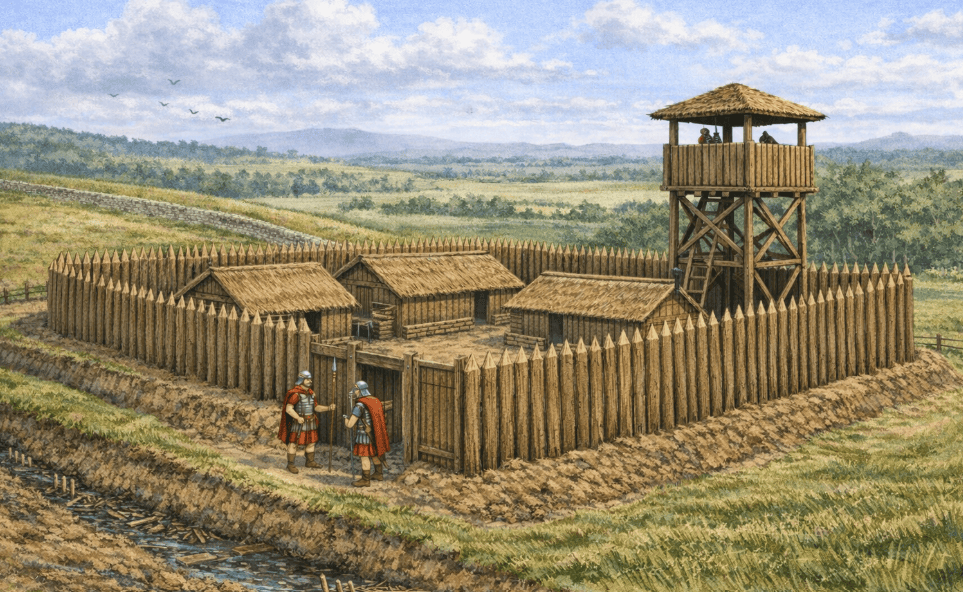
Between the large Roman forts were much smaller military installations known today as fortlets.
They were too small to accommodate an entire auxiliary regiment but were larger and more substantial than a simple watchtower. Fortlets could contain a small group of soldiers positioned to watch a road, guard a crossing, control movement through a frontier or maintain contact between larger forts. They occur in several parts of Roman Scotland.
But the most remarkable sequence is found along the Antonine Wall.
Fortlets on the Antonine Wall
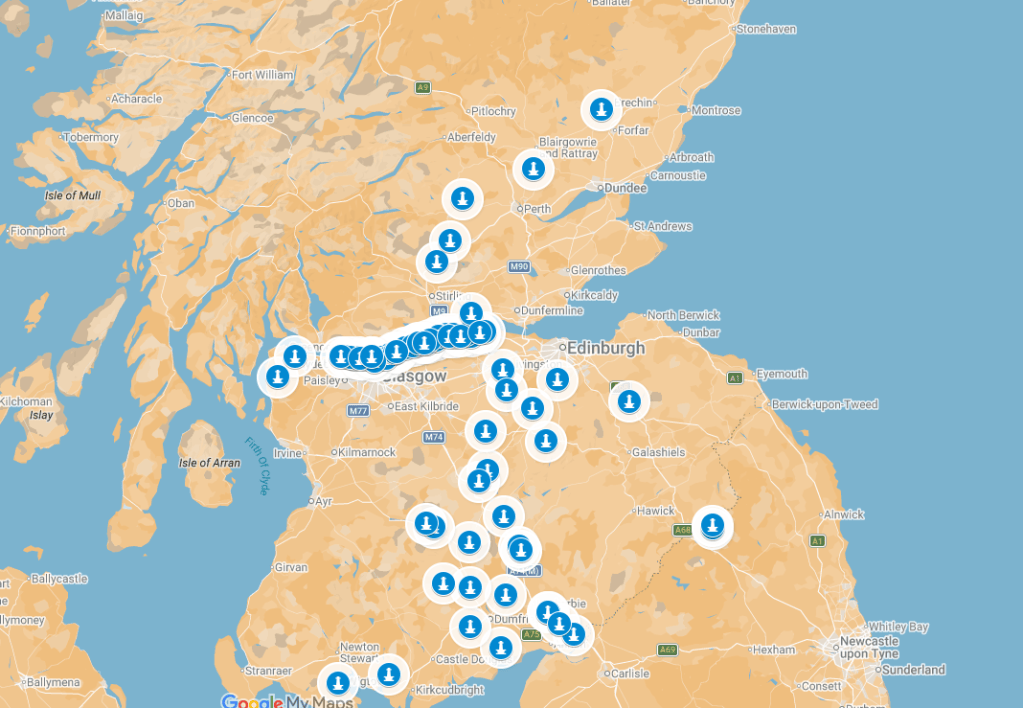
When archaeologists first studied the Wall, only a handful of fortlets were known.
By the late 1950s four had been identified:
Duntocher, Wilderness Plantation, Glasgow Bridge and Watling Lodge.
A deliberate search for more then found Cleddans, Summerston, Croy Hill, Seabegs Wood and Kinneil.Boclair was discovered much later during work beside a house.
Most recently, geophysical research identified three further examples at:
Carleith, Castlehill and Bonnyside.
The total currently identified therefore stands at 13 fortlets.
They are:
- Boclair
- Bonnyside
- Carleith
- Castlehill
- Cleddans
- Croy Hill
- Duntocher
- Glasgow Bridge
- Kinneil
- Seabegs Wood
- Summerston
- Watling Lodge
- Wilderness Plantation
Not all have been excavated to the same degree, and further examples may still remain undiscovered.
Were fortlets part of the original Antonine Wall plan?
This has become one of the most interesting questions about the frontier.
In 1975, archaeologist John Gillam proposed that the Antonine Wall had originally been designed with major forts spaced roughly eight Roman miles apart and fortlets at intervals of approximately one Roman mile.
During construction, he argued, the plan changed. More forts were added, sometimes replacing earlier fortlets. Subsequent discoveries provided considerable support for this idea. Recent geophysical work has strengthened it further.
At Castlehill, evidence suggests a fortlet was replaced by a small fort. The same sequence had already been identified at Duntocher. At Bonnyside, the newly identified fortlet lies only around 280 metres from Rough Castle fort — much too close for both to make obvious sense as elements of the same original deployment scheme.
Roman engineers appear to have been changing their plans while the frontier was being constructed.
About one Roman mile apart — but not exactly
The recent discoveries have also revealed something more subtle. Carleith, Duntocher and neighbouring fortlets create a sequence close to the expected one-Roman-mile spacing.
But the distances are not mechanically exact. The fortlets appear to have been moved slightly to make better use of the terrain and visibility.
This raises the fascinating possibility that the original system was designed so neighbouring posts could see one another. The Romans were therefore combining measurement with the realities of the Scottish landscape.
What was inside a fortlet?
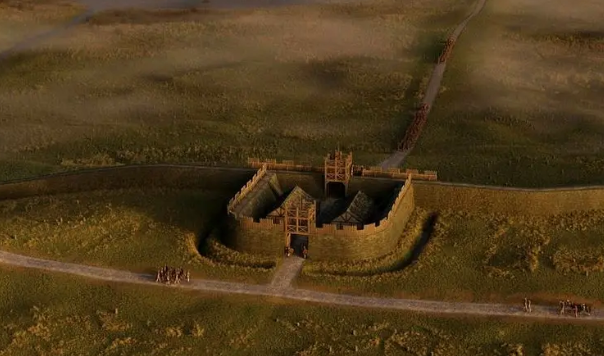
Antonine fortlets were small — generally only a few hundred square metres internally. But they were not simply empty enclosures.
Excavated examples show evidence for internal buildings, and recent research suggests that at least some were intended to accommodate proper small garrisons.
They normally had their own defences and were closely integrated with the Wall. Some provided gateways through the frontier.Their soldiers could therefore watch movement, control access and communicate with neighbouring posts and forts.
Exactly how many men occupied an individual fortlet remains uncertain.
Soldiers from nearby forts?
One possibility is that fortlet garrisons were supplied by nearby auxiliary units.
At Rough Castle the Sixth Cohort of Nervians was too large for the available accommodation. It has therefore been suggested that some of its soldiers may have been detached to nearby fortlets such as Watling Lodge and Seabegs.
Similar outposting occurred in south-west Scotland. A fortlet therefore did not necessarily have an independent military unit of its own.
It could form part of a much wider garrison network.
Fortlets to explore
Boclair
A remarkable modern discovery near Bearsden which added another installation to the Antonine Wall system.
Kinneil
One of the fortlets whose discovery helped support the theory of a regular sequence along the Wall.
Duntocher
Especially important because the archaeological sequence indicates that a fortlet existed before the later fort.
Fortlets beyond the Antonine Wall
Small military posts were not unique to the Wall.
Roman commanders used fortlets elsewhere to control roads and river valleys and to fill the spaces between larger bases.
Barburgh Mill Fortlet
A useful example from south-west Scotland.
Lyne
The military landscape around Lyne also included a small fortlet as part of a wider network of Roman installations.
Fortlet, fort or camp?
The distinction is useful.
A fort housed a substantial permanent or semi-permanent garrison.A fortlet housed a much smaller detachment and usually fulfilled a local control or observation role. A temporary camp accommodated troops moving through the landscape or undertaking a particular operation.
Together they show just how carefully the Roman army organised the territory it occupied. The great forts attract most of the attention.But between them, small fortlets helped make the whole military system work.

