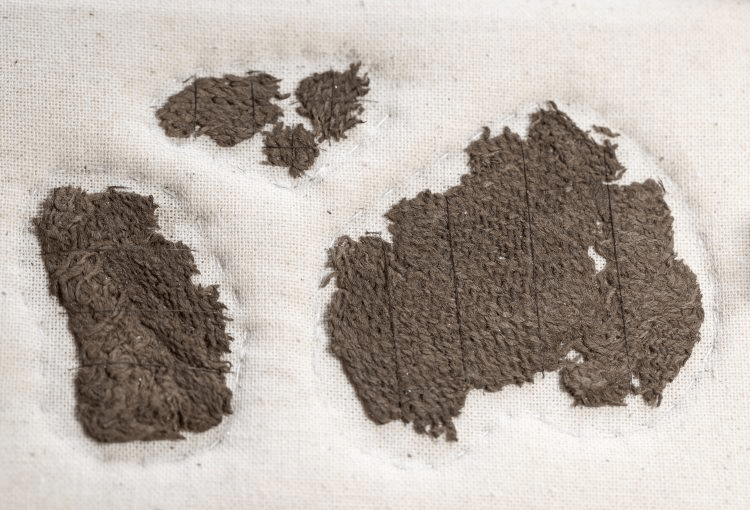
Around 400 BC, someone wove a piece of woollen cloth that survived in the waterlogged remains of Oakbank Crannog on Loch Tay. Its threads still cross in a pattern that a weaver can follow today. Textiles feature in the museum’s Meet the Makers introduction. This companion story comes from a separate experiment at the Scottish Crannog Centre.
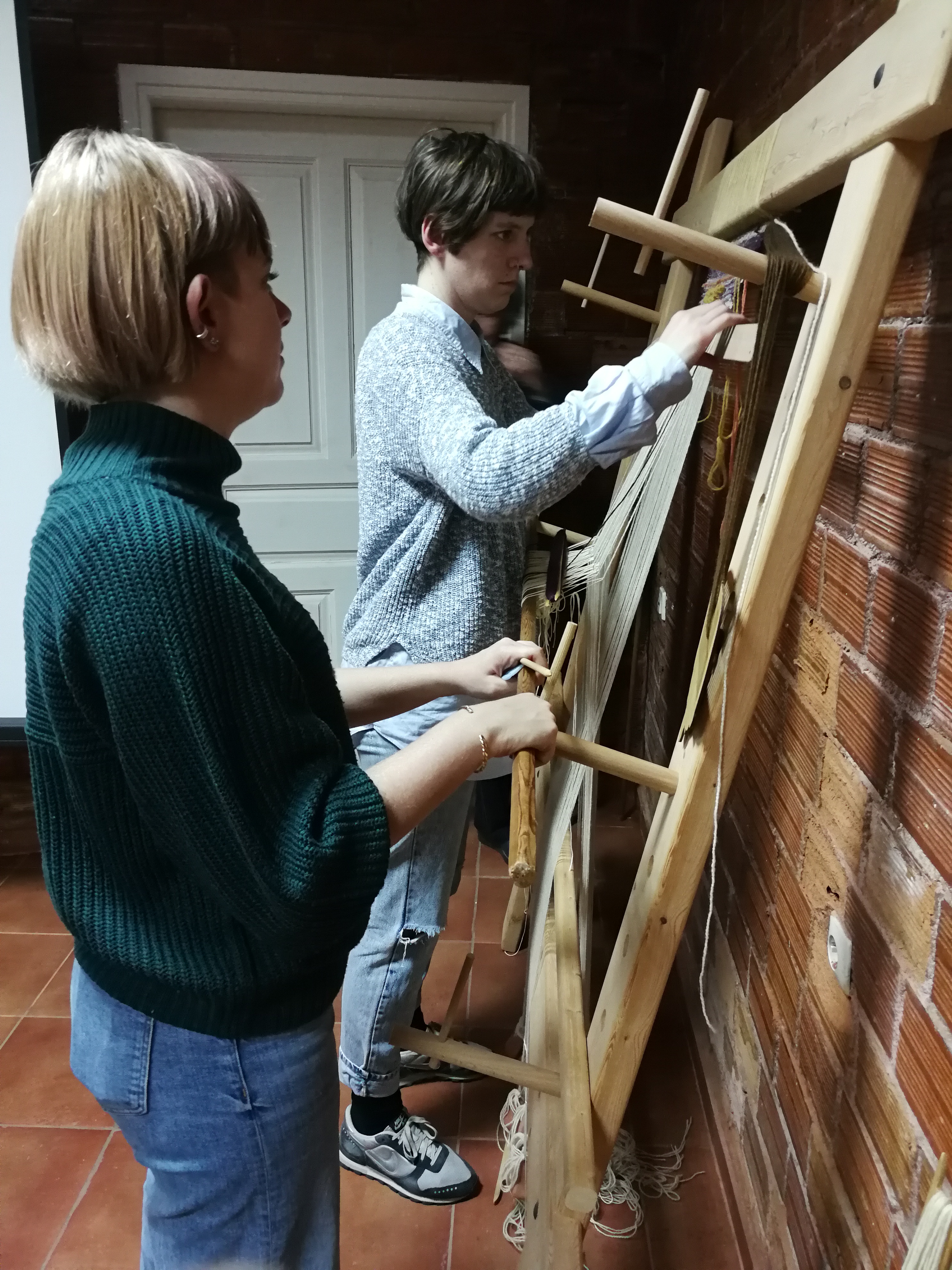
Reading the threads and setting up the loom
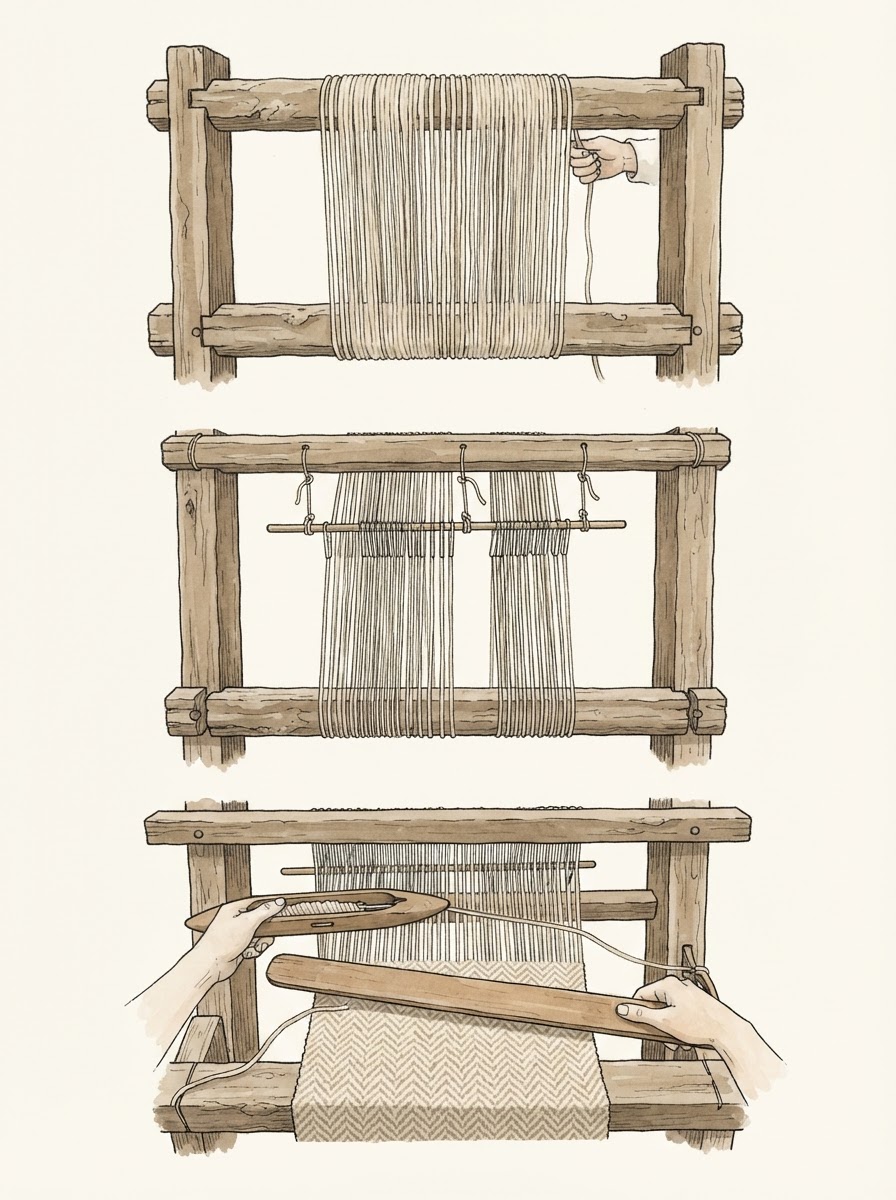
Making woollen cloth begins with drawing out fibres and twisting them into yarn. On a loom, the threads held under tension are the warp. The weaver carries a second thread, the weft, across them. In the Oakbank cloth, the weft passes over two warp threads and under one, with the crossing point shifting along on successive rows. The repeat creates the diagonal line of a twill.
To reconstruct it, the team tried two loom arrangements. On the two-beam upright loom, they wrapped yarn between horizontal beams and grouped the warp threads in threes. Loops called heddles allowed selected threads to be drawn apart. Passing the weft through the gap and beating it into place built the cloth one row at a time. Lifting a single group made the work easier and brought the twill out on the reverse face.
The people who put the loom to work
Master weaver Ashleigh Slater, craftsperson Lorraine Welsh and experimental archaeologist Jason Oliver were among the participants. Figures 7 and 8 of the free paper show Welsh tensioning the loom, John Strachan attaching heddles and Graham Liney beating in the weft. The team used modern yarn for this stage so they could concentrate on the loom. Their experience favoured the two-beam arrangement, while the original loom itself remains unknown.
Explore the Scottish Crannog Centre’s Oakbank collection · See the team’s loom and weaving photographs in figures 7 and 8 · Read the study by Susanna Harris, Frances Houston and Jason Oliver
Part of the Romans in Scotland series inspired by Meet the Makers at the National Museum of Scotland, 21–22 November 2026.


