Rub a little coloured earth across a dry surface and some of it will come away on your fingers. An Iron Age painter had two jobs. The first was to find and prepare the colour. The second was to make it stay where the brush put it.
Preparing the pigment and making the paint
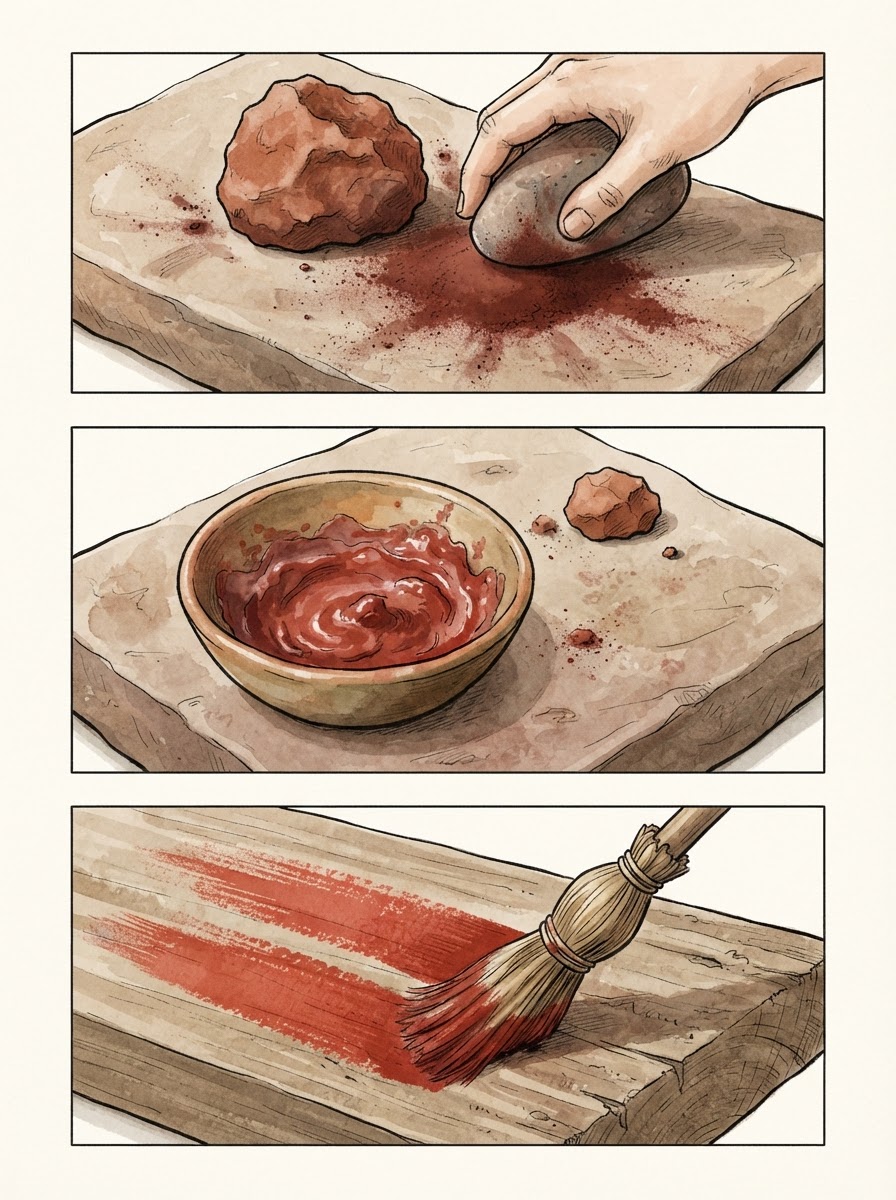
A pigment is the material that gives paint its colour. A maker can start with a coloured earth, sand or soft mineral, break it down, then grind and separate the fine particles from grit. Coarse grains drag under a brush. A fine powder is easier to spread into a continuous stroke.
The next decision is the binder, the ingredient that holds those particles together and attaches them to the surface. Make a small batch, paint a patch and let it dry. Does the colour cover the ground? Does it rub away? Try the same mix on timber and on a rough wall and the brush can leave quite different marks. A successful modern trial gives archaeologists a possible recipe. Identifying an ancient one requires evidence from the painted surface itself.
Caroline Nicolay’s reconstructed palette
Archaeologist and heritage interpreter Caroline Nicolay runs Pario Gallico. Her workshops begin with locally collected rocks, sands and earths and take participants through pigment preparation, making brushes and trying different binders. Her particular interest is colour on Iron Age walls and everyday objects. The brush deserves a look in its own right. Its width and the way its fibres hold paint help determine which lines a painter can draw.
Visit Pario Gallico · See Nicolay’s illustrated Ancient Paints and Pigments workshop · Explore her pigment and brush-making demonstrations
Part of the Romans in Scotland series inspired by Meet the Makers at the National Museum of Scotland, 21–22 November 2026.


