Few modern archaeologists have had as much influence on our understanding of Roman Scotland and the northern frontiers of the Roman Empire as Professor David J. Breeze. Over a career spanning more than half a century, Breeze has excavated Roman forts, studied the organisation of the Roman army, written some of the standard works on Hadrian’s Wall and the Antonine Wall, and played a central role in securing international recognition for Scotland’s Roman frontier.
His importance extends beyond academic archaeology. Breeze has also been closely involved in the conservation and presentation of ancient monuments, helping to turn the Roman frontiers from individual archaeological sites into parts of an internationally recognised shared heritage.
Early career and the Roman army
David John Breeze was born in 1944 and studied Modern History at Durham University. Durham was then an important centre for the study of the Roman army under the influential archaeologist Eric Birley. Breeze completed his PhD in 1970, researching soldiers below the rank of centurion in the Roman army. This early interest in how the army actually functioned — its officers, soldiers, organisation and deployment — remained central to much of his later work. (Wikipedia)
In 1969 he joined the Inspectorate of Ancient Monuments. He eventually became Chief Inspector of Ancient Monuments for Scotland, a post he held from 1989 until 2005. This placed him at the centre not only of archaeological research but also of the protection and management of Scotland’s historic sites. He was President of the Society of Antiquaries of Scotland from 1987 to 1990 and later chaired the International Congress of Roman Frontier Studies. (Society of Antiquaries of Scotland)
Excavating Roman Scotland
Professor Breeze’s work is particularly important for anyone studying the Roman occupation of Scotland because he combined large-scale interpretations of the Roman frontier with excavation of individual sites.
Perhaps the best example is Bearsden, one of the forts on the Antonine Wall west of Glasgow.
Excavations beginning in the 1970s revealed much of the fort together with its bath-house and latrine. The work became particularly famous because organic material survived in the latrine drains. Analysis provided unusually intimate evidence about the lives of the soldiers: their food, health, parasites and even aspects of Roman toilet hygiene. (Society of Antiquaries of Scotland)
The eventual excavation report, Bearsden: A Roman Fort on the Antonine Wall, appeared in 2016 and brought together contributions from more than thirty specialists. It examines everything from the fort’s defences and buildings to pottery, amphorae, coins, animal and plant remains, leather and environmental evidence.
This makes Professor Breeze’s work useful for understanding not simply where Roman soldiers were stationed, but what their everyday lives in Scotland may have been like.
Interpreting the Antonine Wall
The Antonine Wall has been another recurring theme throughout Breeze’s career.
Constructed from around AD 142 during the reign of Antoninus Pius, it represented the most northerly formal frontier of the Roman Empire. Professor Breeze has examined its forts, soldiers, construction and purpose and has repeatedly placed it within the wider military occupation of southern Scotland.
His work has also emphasised that the Antonine Wall cannot really be understood in isolation. The forts on the Wall were part of a much larger military system stretching south through Lowland Scotland towards Hadrian’s Wall and north towards the temporary camps, forts and roads created during earlier Roman campaigns.
In the major 2020 volume The Antonine Wall: Papers in Honour of Professor Lawrence Keppie, edited with William Hanson, Breeze contributed to the reassessment of the frontier and wrote a study entitled “The army of the Antonine Wall: its strength and implications.” The volume brings together modern research on the Wall’s construction, army, artefacts, inscriptions, women, civilians, supply system and landscape.
The Antonine Wall becomes a World Heritage Site
Professor Breeze’s influence on the Antonine Wall extends well beyond archaeological research.
After retiring as Chief Inspector of Ancient Monuments, he led the team responsible for the successful nomination of the Antonine Wall for inclusion in the Frontiers of the Roman Empire World Heritage Site. The Wall was inscribed by UNESCO in 2008. (main.archaeopress.com)
This forms part of a much more ambitious idea with which Breeze has been closely associated: treating the surviving frontiers of the Roman Empire as elements of one enormous archaeological monument extending across Europe, the Middle East and North Africa.
His own introduction to The Antonine Wall: A World Heritage Site reflects this approach, arguing that Roman frontiers should be understood together rather than merely as isolated national monuments.
Major publications
Professor Breeze has written and edited a very large number of books, excavation reports and academic articles. These are some of the most useful for anyone interested in Roman Britain and particularly Roman Scotland:
Hadrian’s Wall — with Brian Dobson (1976; later editions)
One of the classic modern studies of Hadrian’s Wall. Breeze and Dobson combined archaeological evidence with evidence for the Roman army and repeatedly revised the book as new discoveries changed interpretations. (CiNii)
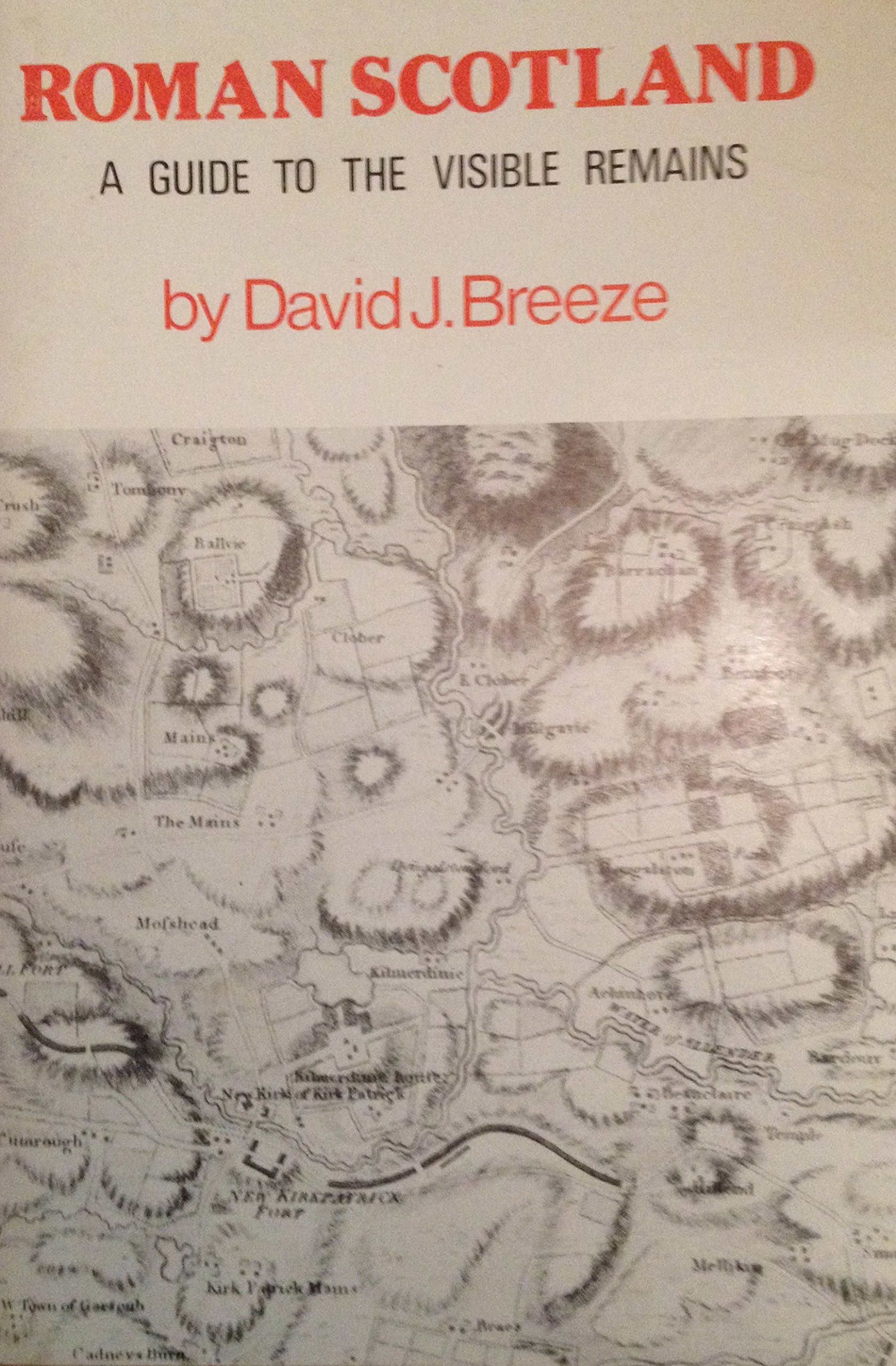
Roman Scotland: A Guide to the Visible Remains (1979)
An early guide to the physical evidence surviving across Scotland.
The Northern Frontiers of Roman Britain (1982)
An important attempt to understand northern Britain as a military frontier zone rather than studying Hadrian’s Wall or Scotland separately. It remains frequently cited in discussions of Roman military strategy in northern Britain. (scarf.scot)
Roman Forts in Britain (1983; revised edition 2002)
A concise introduction to Roman forts and the soldiers who occupied them.
Roman Scotland: Frontier Country (1996; revised 2006)
One of Professor Breeze’s most useful general introductions to the Roman presence in Scotland, examining conquest, military occupation and Rome’s changing northern frontier.
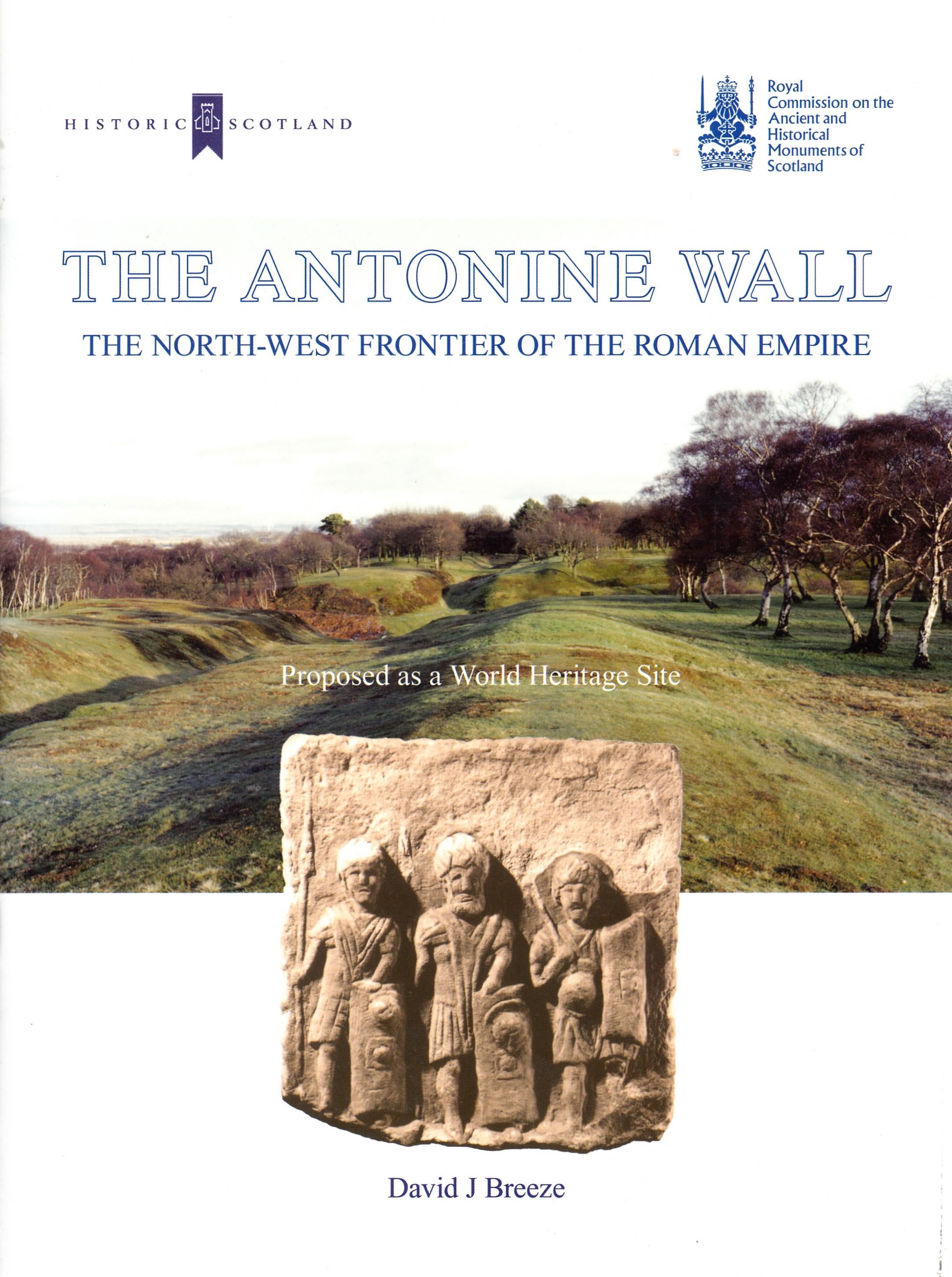
The Antonine Wall (2006)
A dedicated study of Rome’s second great linear frontier in Britain.
The Frontiers of Imperial Rome (2011)
Here Professor Breeze moves beyond Britain and examines the frontier systems surrounding the Roman Empire as a whole.
The Roman Army (2016)
A compact synthesis of the structure, development and role of Rome’s military forces, reflecting the subject with which Breeze began his academic career. (asehismi.es)
Bearsden: A Roman Fort on the Antonine Wall (2016)
The definitive archaeological report on the excavations at Bearsden. The text is now available as an open-access publication from the Society of Antiquaries of Scotland. (Society of Antiquaries of Scotland)
The Antonine Wall: Papers in Honour of Professor Lawrence Keppie (2020), edited with William S. Hanson
Thirty-two papers bringing together a major body of modern research on the Wall, including Breeze’s own reassessment of its military garrison.
Frontiers of the Roman Empire: The Antonine Wall – A World Heritage Site (revised 2022)
A highly illustrated and accessible introduction which places Scotland’s frontier within the much larger system of Roman imperial boundaries.
Frontiers of the Roman Empire: Hadrian’s Wall (revised 2023) and The Hinterland of Hadrian’s Wall (2023)
These form part of the international Frontiers of the Roman Empire series edited by Professor Breeze. The series now ranges far beyond Britain, covering Roman frontier systems from western Europe to the Danube, Africa and the eastern Empire. (archaeopress.com)
More than a historian of walls
One of Professor Breeze’s most important contributions has been to move the study of Roman frontiers away from thinking of them simply as walls designed to keep people out.
His work considers the soldiers stationed there, how units were organised and supplied, the civilian communities around forts, communications, movement across frontiers and the relationship between the Roman army and indigenous populations.
This makes his research particularly relevant in Scotland. The Roman presence here was never represented solely by the Antonine Wall. Scotland contains evidence for repeated campaigns, temporary camps, roads, watchtowers, forts and fortlets extending from the Borders well into northern Scotland.
Professor Breeze has therefore helped place the Antonine Wall within the much larger story of Rome’s repeated attempts to control — and understand — its northernmost territories.
Recognition
Professor Breeze’s contribution has been recognised both nationally and internationally. He holds numerous archaeological honours, was awarded an honorary Doctor of Letters by the University of Glasgow in 2008, and is an Honorary Fellow of the Society of Antiquaries of Scotland. (Society of Antiquaries of Scotland)
In 2021 the British Academy awarded him the Kenyon Medal, one of Britain’s major honours for classical studies and archaeology, specifically recognising his contribution to the archaeology of the Roman Empire and his role in achieving World Heritage status for the Antonine Wall. (The British Academy)
Professor David Breeze and Romans in Scotland
For anyone trying to understand the Roman occupation of Scotland, Breeze’s publications provide an unusually useful bridge between individual archaeological discoveries and the bigger picture.
His work ranges from the contents of a Roman latrine at Bearsden to the strength of the army occupying the Antonine Wall, and from the organisation of individual Roman soldiers to the enormous frontier system surrounding the whole Empire.
More than fifty years of research have therefore made David Breeze one of the key figures through whose work the modern story of Romans in Scotland has been reconstructed.
Further reading
A particularly good starting point is Roman Scotland: Frontier Country. For the Antonine Wall, his Antonine Wall – A World Heritage Site provides a readable overview, while Bearsden: A Roman Fort on the Antonine Wall and the 2020 Antonine Wall: Papers in Honour of Professor Lawrence Keppie provide much greater archaeological detail.
Many of Professor Breeze’s more recent Frontiers of the Roman Empire publications are also available free as open-access PDFs through Archaeopress, while the full Bearsden excavation report is available free through the Society of Antiquaries of Scotland. (archaeopress.com)