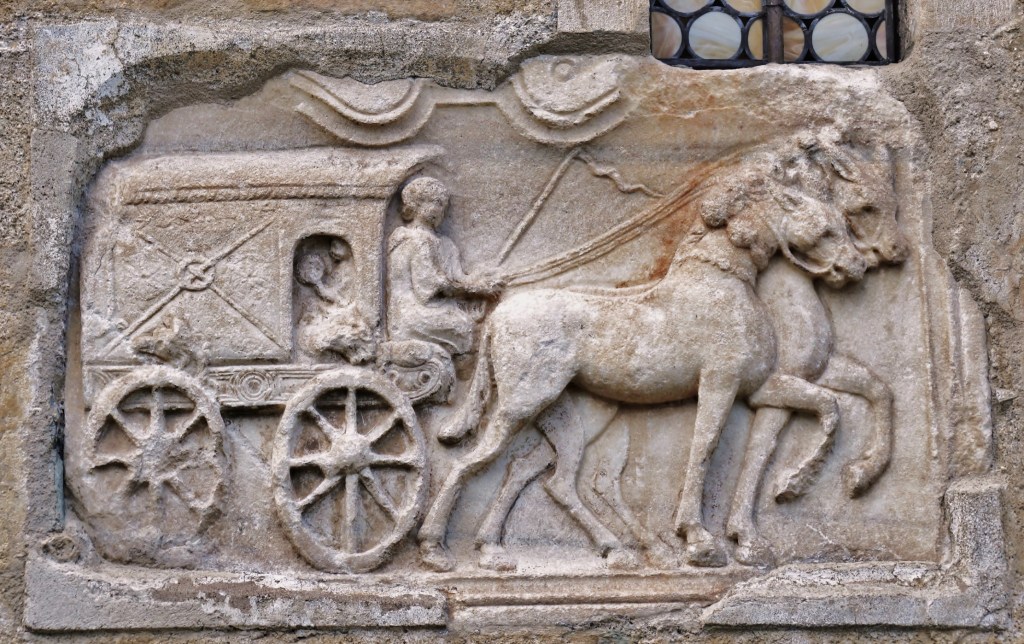
A trader named Octavius had hides to collect at Catterick. There was a wagon to collect too, but the roads were bad enough that he feared injuring his animals. His letter survived at Vindolanda. Across the Scottish border the evidence is of a different kind. At Newstead we can see how a wheelwright bent ash into a wheel rim. At Croy Hill we can measure the tracks a vehicle left on the road. Read Octavius’ letter.
How far apart were the wheels in Scotland?
Archaeologists measure from the centre of one wheel rut to the centre of the other. This distance is called the track or gauge. The clear gap between the inner edges of the wheels would be smaller. A rut can widen through wear, so subtracting its width would give a misleadingly precise answer.
| Site | Rut spacing | What was measured |
|---|---|---|
| Croy Hill, Antonine Wall | 1.10 m | Two parallel ruts on the bypass road. Each rut was about 10 cm wide. |
| Ardoch, Perthshire, trench 4 | 1.42 m | A pair near the middle of the gravel road. The ruts were 24–32 cm wide and about 6 cm deep. |
| Ardoch, trench 1 | 1.40 m and 1.53 m | Four visible ruts and a faint fifth. These figures depend on which ruts are paired. |
At Ardoch, the excavator considered the ruts probably Roman, although there was no direct dating evidence for the marks themselves. None of the tracks identifies its maker as a freight wagon, passenger carriage or chariot. Consequently, we cannot assign a Scottish width to each Latin vehicle name. See the Croy Hill report, section 4 and illustration 4.8, David Breeze’s Ardoch report, pp. 122–124, and our comparison of excavated road surfaces.
What survives of the vehicles themselves?
At Newstead, near Melrose, two wheels from one pit measured about 91 cm across. Each had eleven spokes, an elm hub, and a rim bent from a single length of ash. A third wheel, from another pit, was about 1.04 m across. It had twelve spokes and a rim made in six sections. These are wheel diameters, measured from top to bottom. Bar Hill on the Antonine Wall produced examples of both forms. James Curle’s excavation report and drawings and Trimontium’s photograph of the heavier wheel.
The smaller finds take the story beyond the forts. At Eckford in the Borders, a hoard included tyre fragments, a linchpin that kept a wheel on its axle, and what may be the iron tip of a two-horse vehicle’s pole. Related fittings came from Blackburn Mill and Carlingwark Loch. Iron cartwheel rims were buried with the nail hoard at Inchtuthil. A Scottish farmer and an army driver could use much the same equipment. Stuart Piggott’s catalogue of the three hoards and North Lanarkshire Museums on Inchtuthil.
Working carts and freight wagons
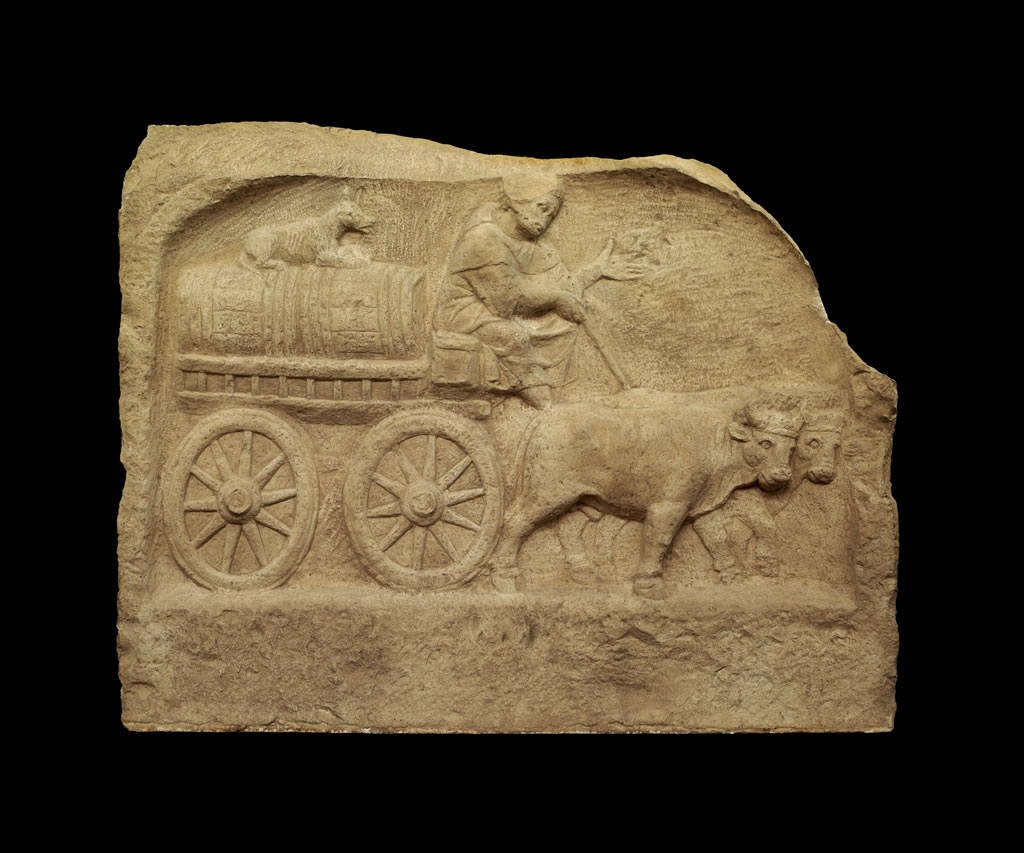
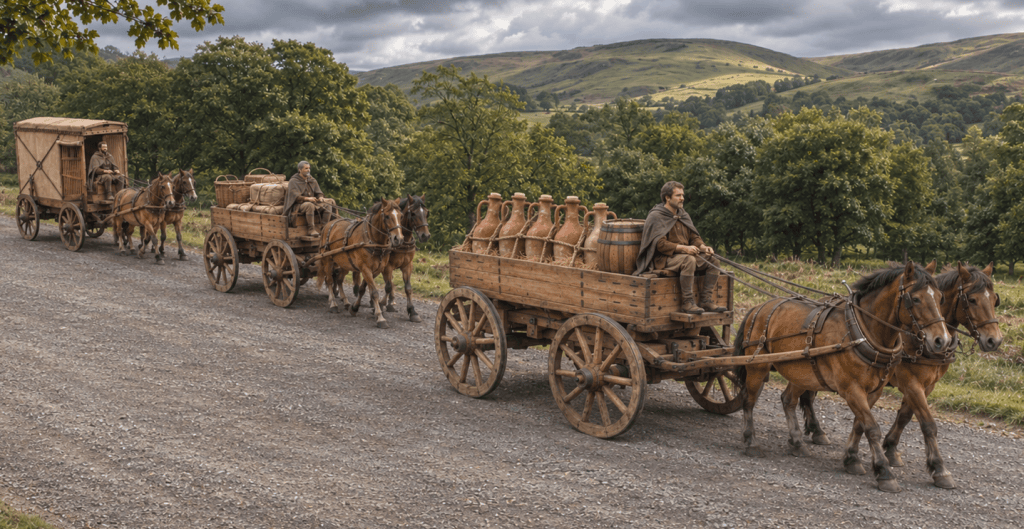
Plaustrum (also plostrum) was a broad term for a working cart or wagon. On a farm it might take produce to market. On a building job it could carry stone or timber. The ox-drawn barrel wagon pictured above shows how the load could be carried on a low platform ahead of the rear axle.
Sarracum was a heavy goods wagon or dray. Carrus (also carrum) was a freight or baggage wagon, familiar in accounts of armies on the move. A box body kept loose supplies together. The names overlap sufficiently that a side view of a wagon rarely decides which word its driver would have used.
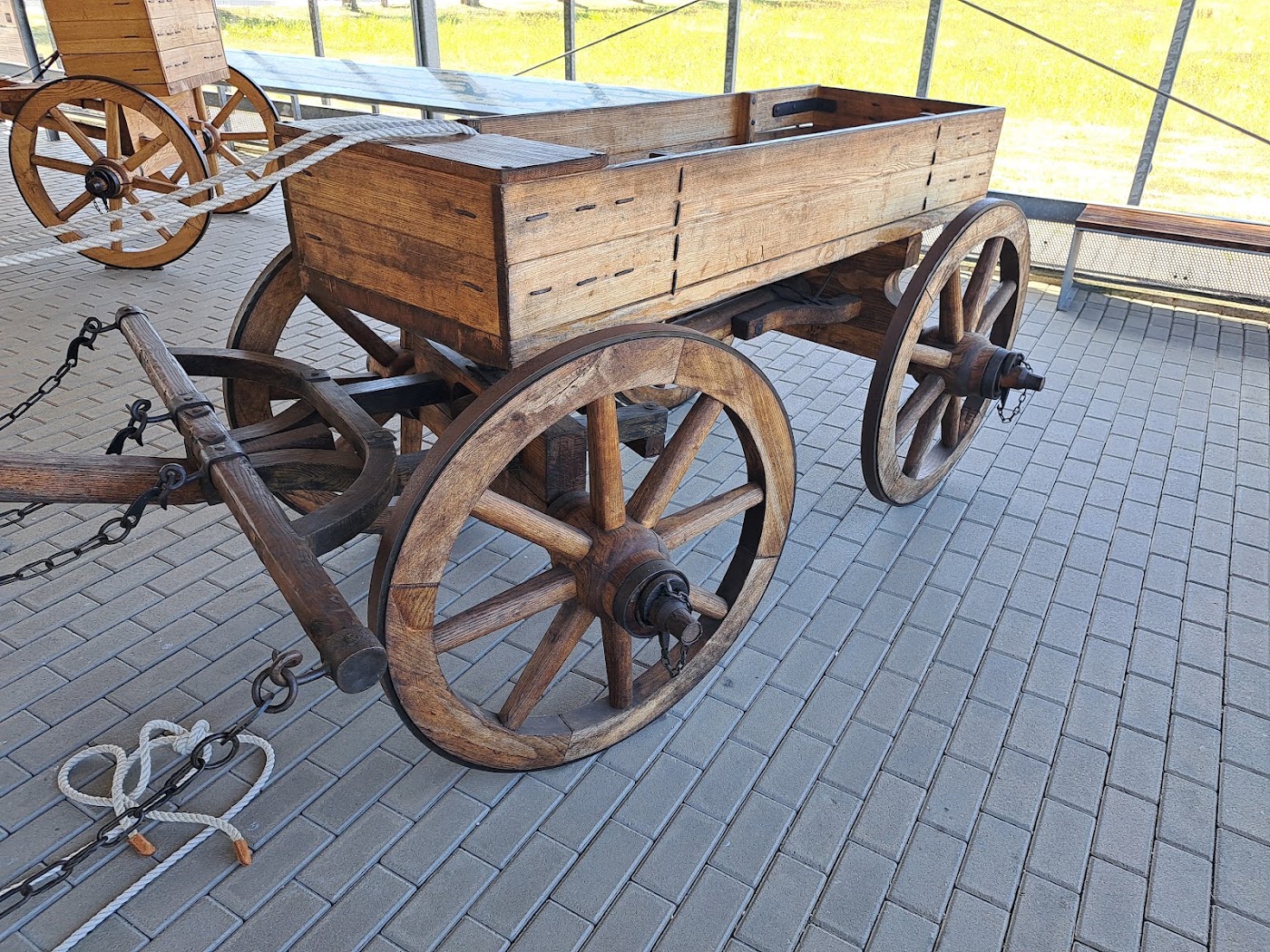
Wheels and axles could travel as cargo themselves. One correspondent at Vindolanda itemised 34 hubs, 38 cart axles and 300 spokes already dispatched. That one delivery gives a better sense of the demand on frontier wheelwrights than a single surviving cart could. Read the dispatch note.
Passenger carts and travelling carriages
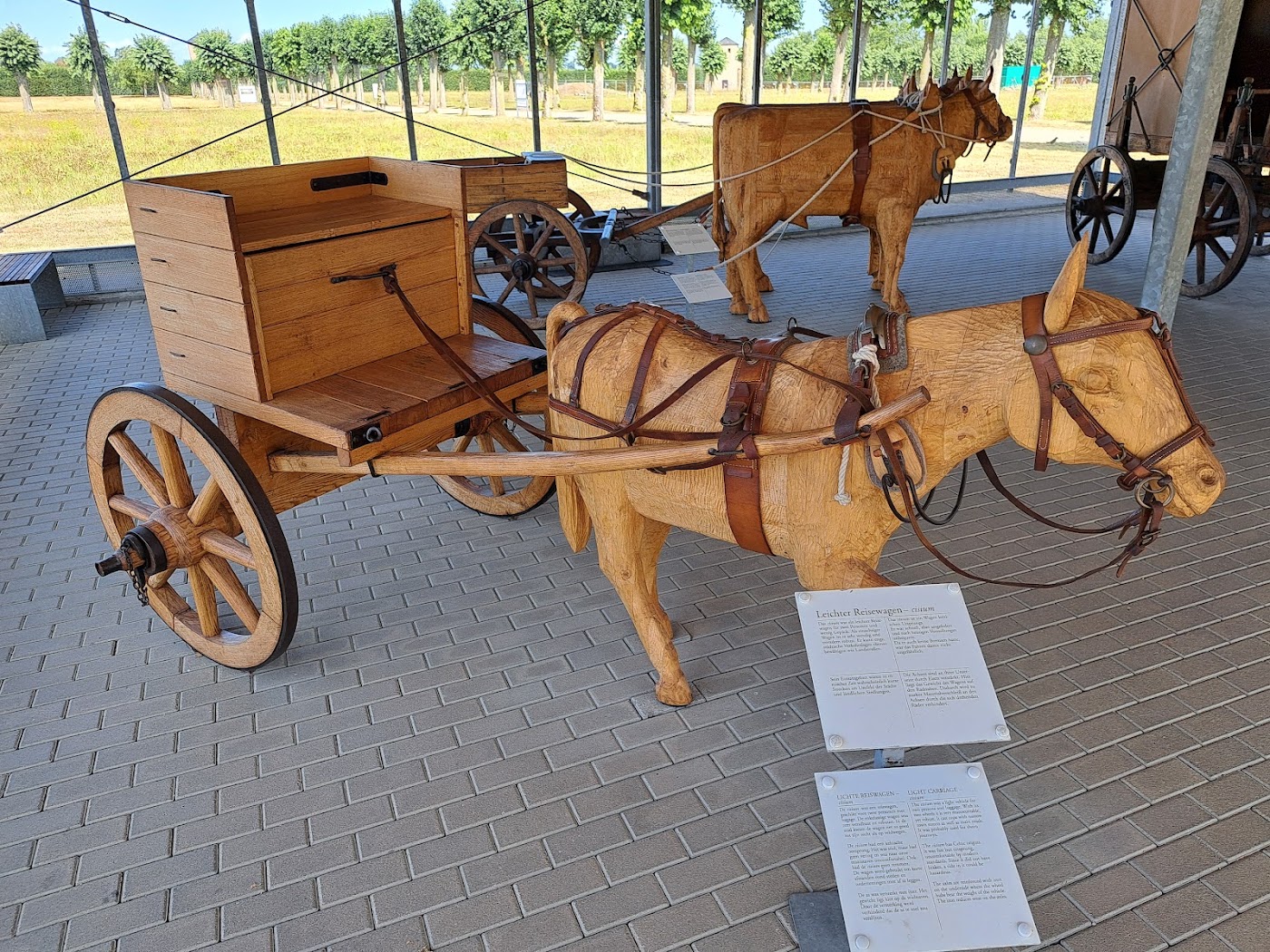
Cisium. A light two-wheeled cart suited a passenger who wanted to travel quickly with little baggage. The driver sat close to the animal, and a single axle carried the body. The professional drivers were known as cisiarii.
Raeda (or rheda). A four-wheeled travelling carriage had room for passengers and baggage. We know the name was used in northern Britain because a Vindolanda account records a payment of 3½ denarii for two wagon axles for a raeda. Read the expense account, lines 20–21.
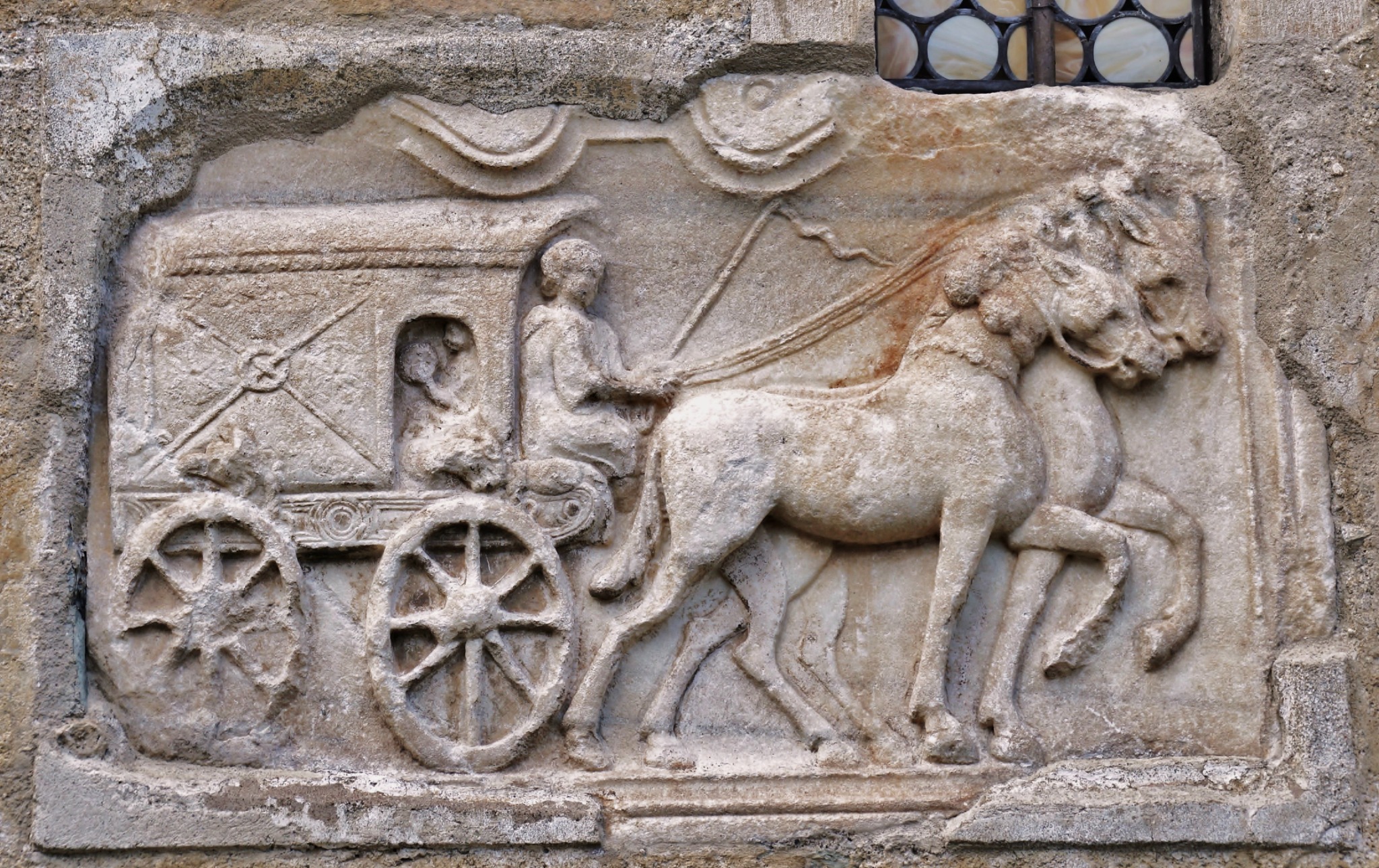
Petorritum (or petoritum). Another name for a four-wheeled carriage used for travel. The wheel count is more certain than the shape of the body. Carruca dormitoria. This was a sleeping carriage for longer journeys. A covered compartment offered privacy and shelter, although a roof on its own tells us nothing about the sleeping arrangements.
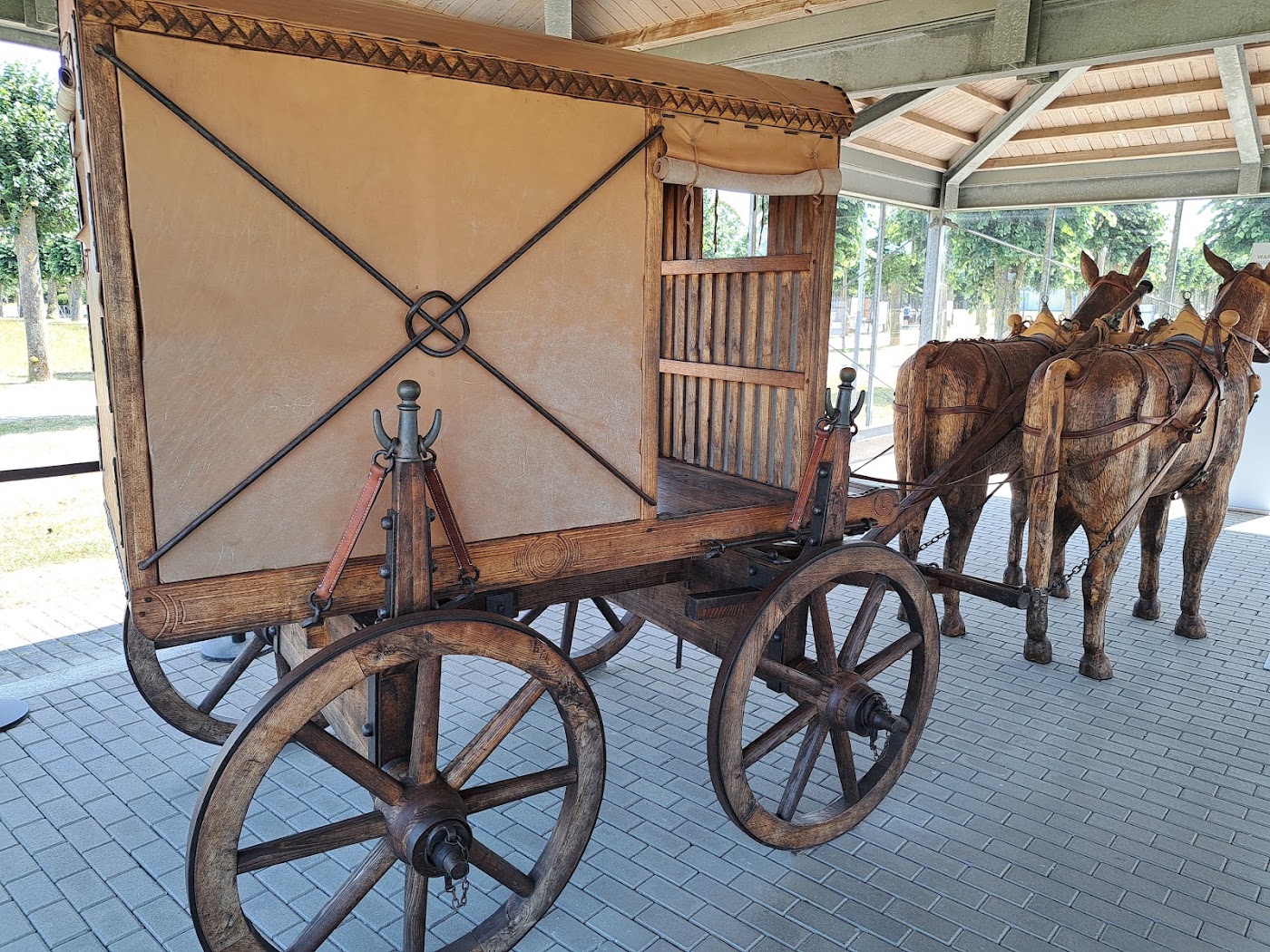
Carruca. A four-wheeled carriage for passengers, sometimes richly finished. Its use overlapped with the raeda. Visible fittings, cushions or carved decoration could mark the owner’s wealth, but no surviving Scottish carriage body preserves these details.
Carriages for ceremony
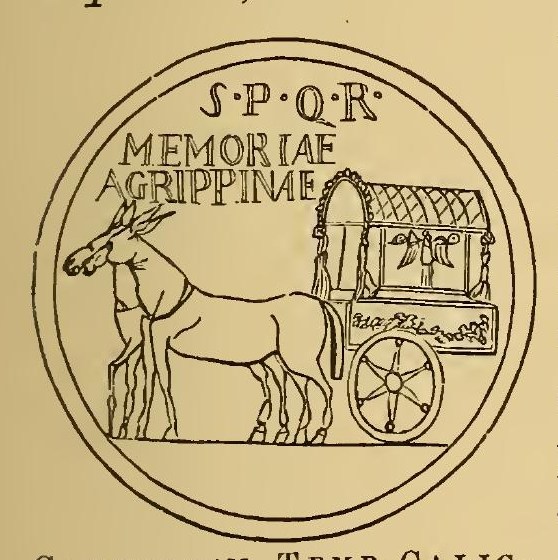
Carpentum. A covered carriage, commonly two-wheeled, could carry a passenger on a formal occasion. A Roman coin commemorating Agrippina the Elder shows an ornamented canopy and two mules in harness. See the original coin in the Ashmolean Museum.
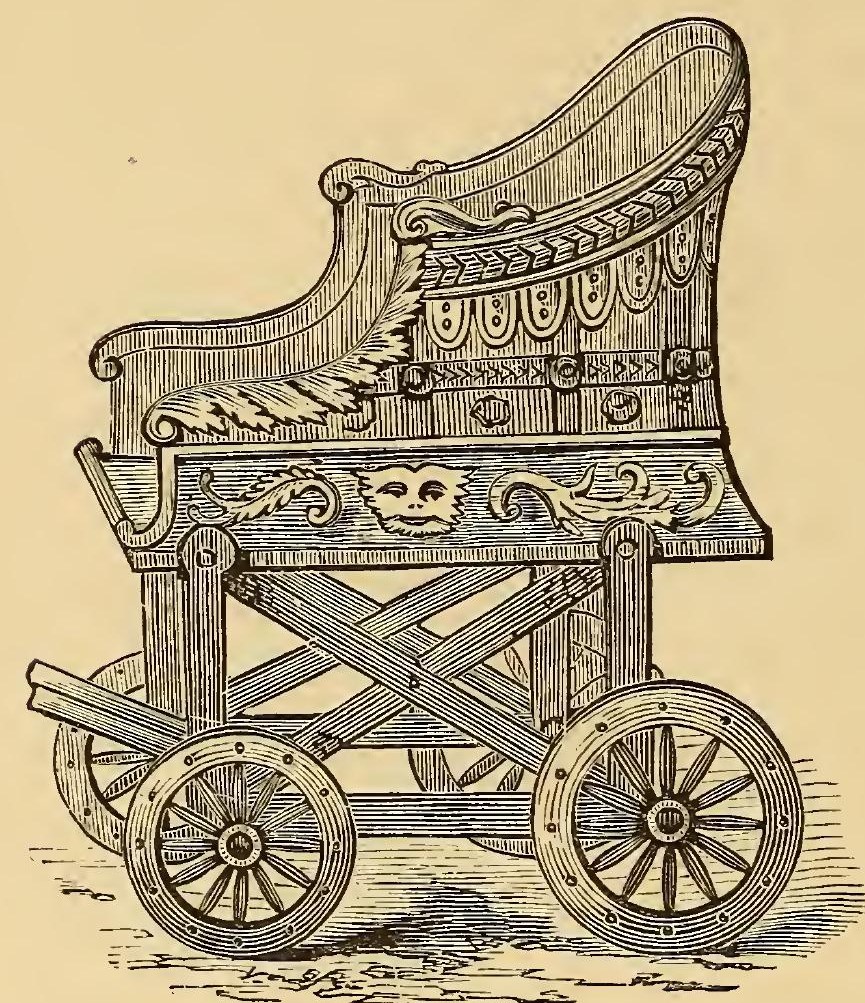
Pilentum. A four-wheeled ceremonial carriage used on processions. At Civita Giuliana, outside Pompeii, the eruption of AD 79 preserved parts of an exceptionally ornate carriage. Its excavators suggest that it was a pilentum. See the excavators’ photographs and account.
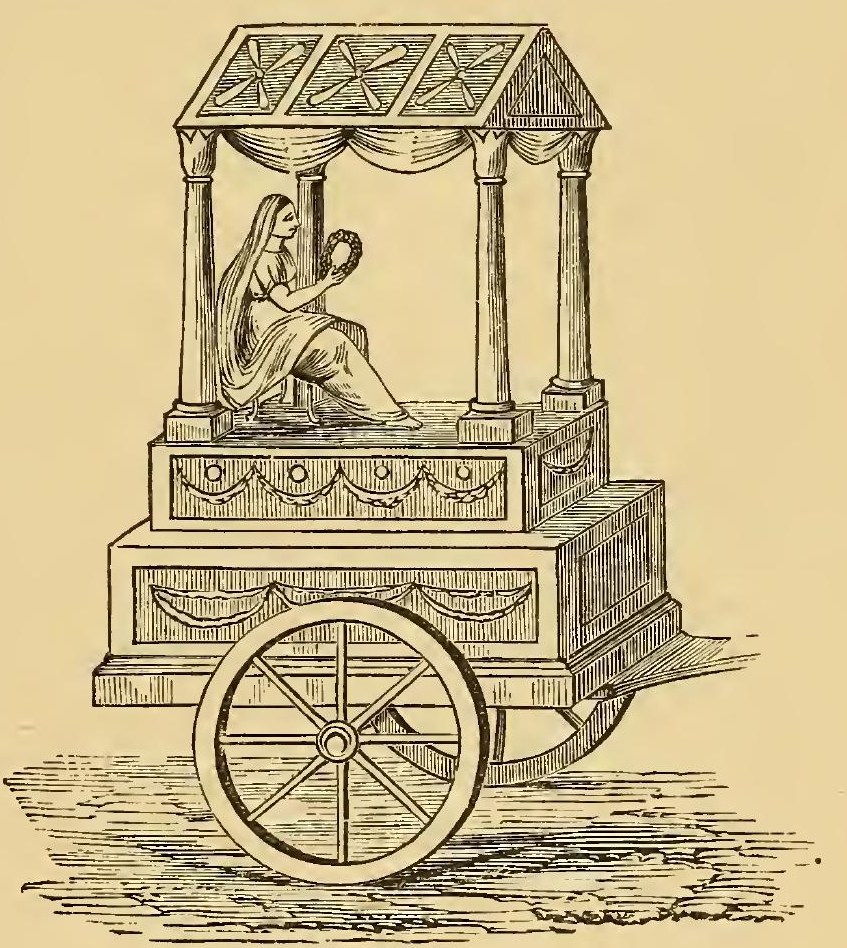
Vehicles of the imperial transport service
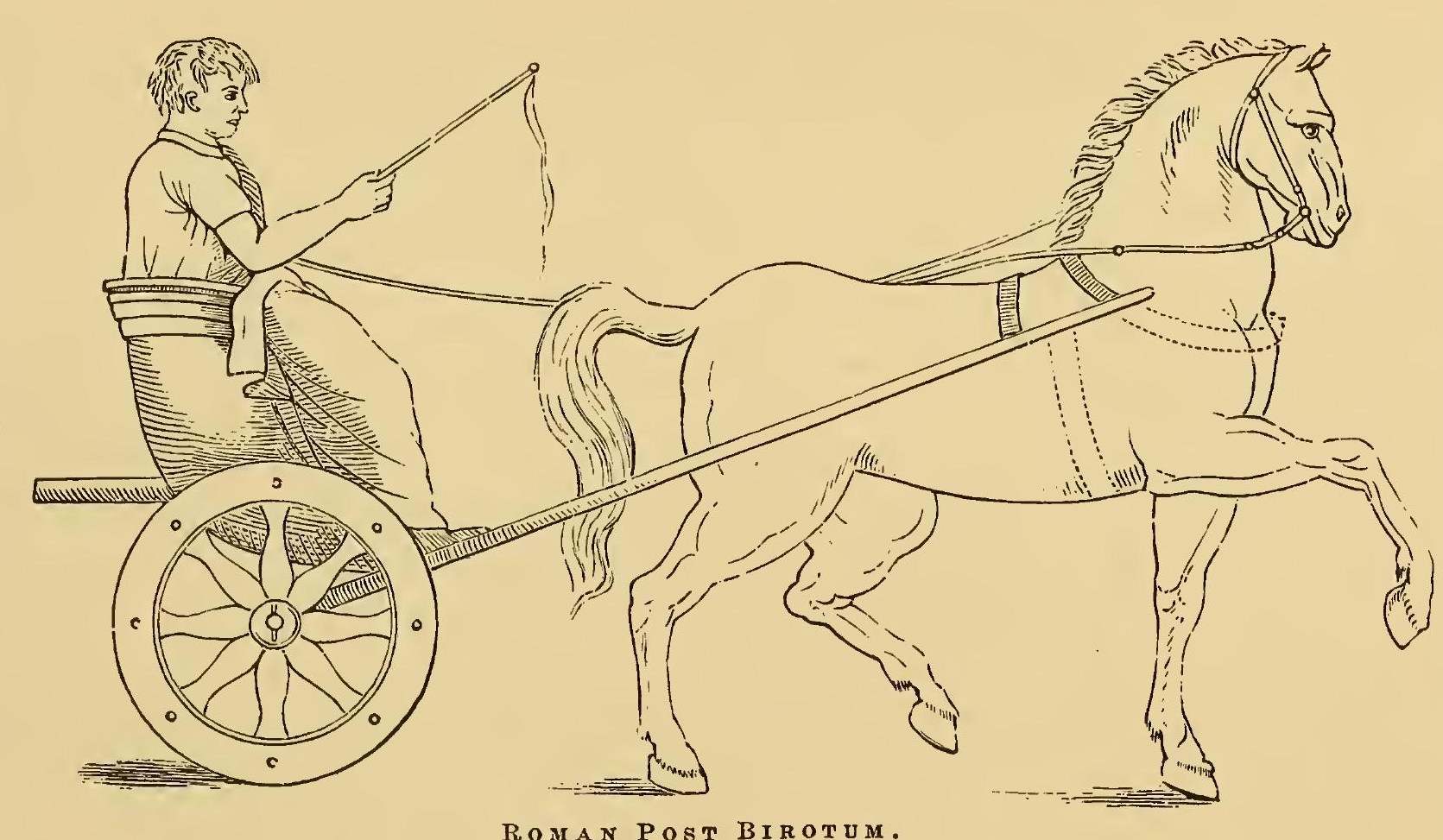
Birota. A light two-wheeled vehicle used on official journeys. The later imperial regulations distinguish this lighter traffic from the heavier haulage provided for the state.
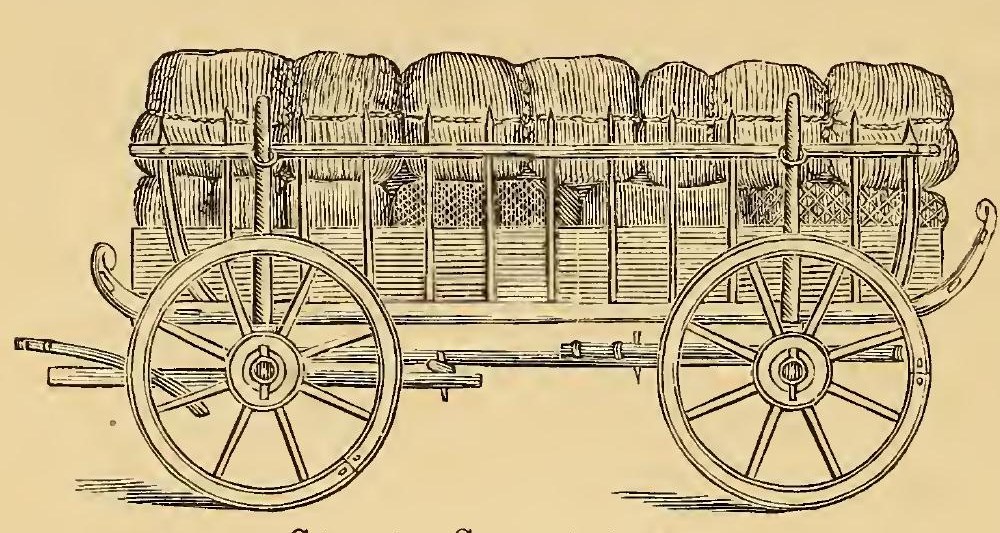
Angaria and clabula. Both terms occur in connection with heavy transport for the imperial service. Angaria could also describe the obligation to supply transport. The surviving rules are better evidence for the work demanded of these vehicles than for visual differences between them. They date from centuries after Agricola’s campaigns. Via Appia nomination dossier, discussion of vehicles and legal loads.
British chariots
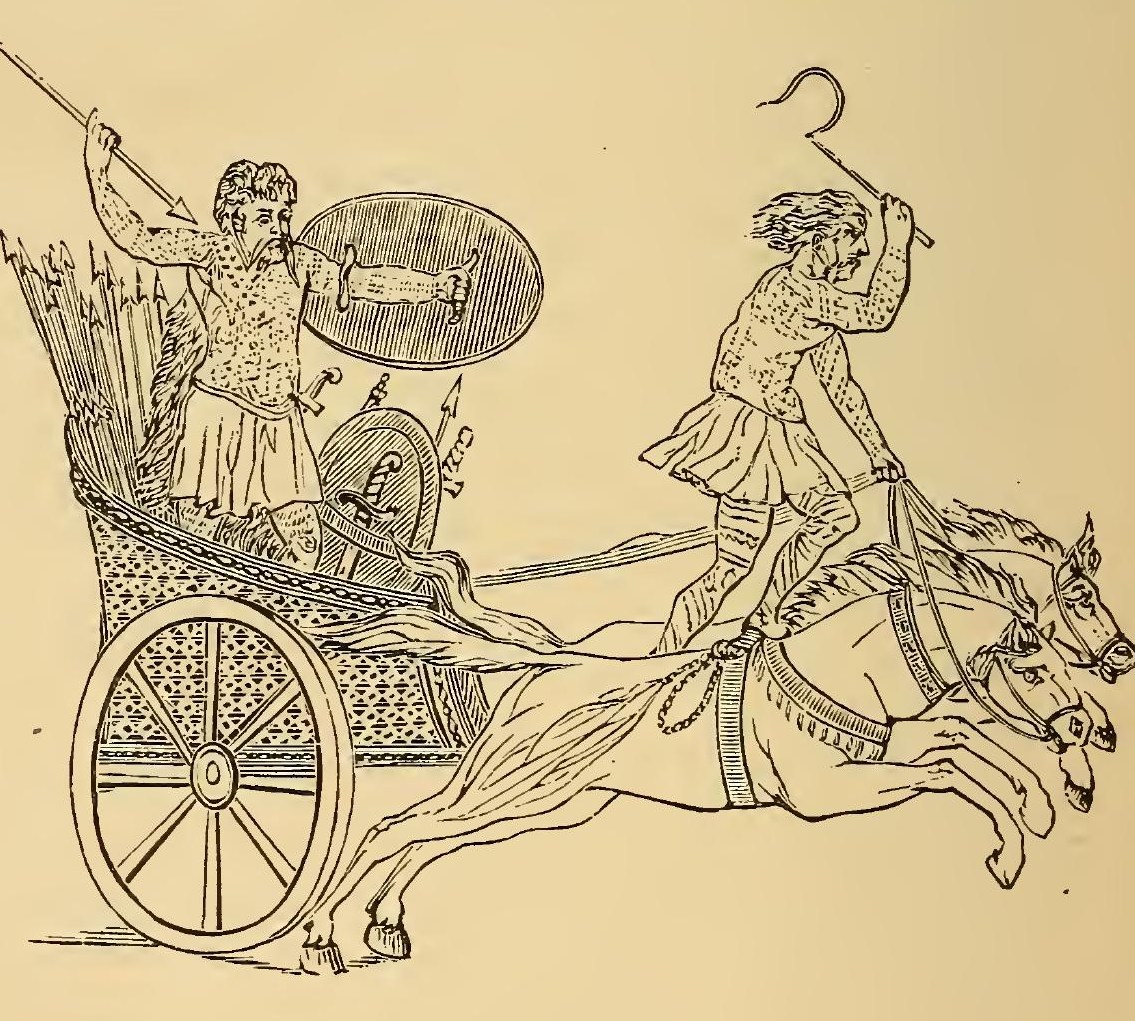
Essedum and covinnus. These names are associated with light two-wheeled vehicles in British and Gallic chariot traditions. Tacitus uses the related word covinnarius when he describes charioteers moving across the plain at Mons Graupius. His account supplies a setting and a use, but little detail about construction. Scotland’s excavated Newbridge chariot burial is several centuries earlier, around 520–370 BC. It shows how long people here had known the craft. See also the evidence for the Caledonians.
Sources and picture credits
For the Latin vehicle names, see Mezzi di trasporto e traffico and the University of Edinburgh study of Roman vehicles. The historical engravings are from Ezra M. Stratton, The World on Wheels (1878), in the public domain. The Roman Wagons photo album includes further views of the reconstructions, their harness and the carved reliefs.


