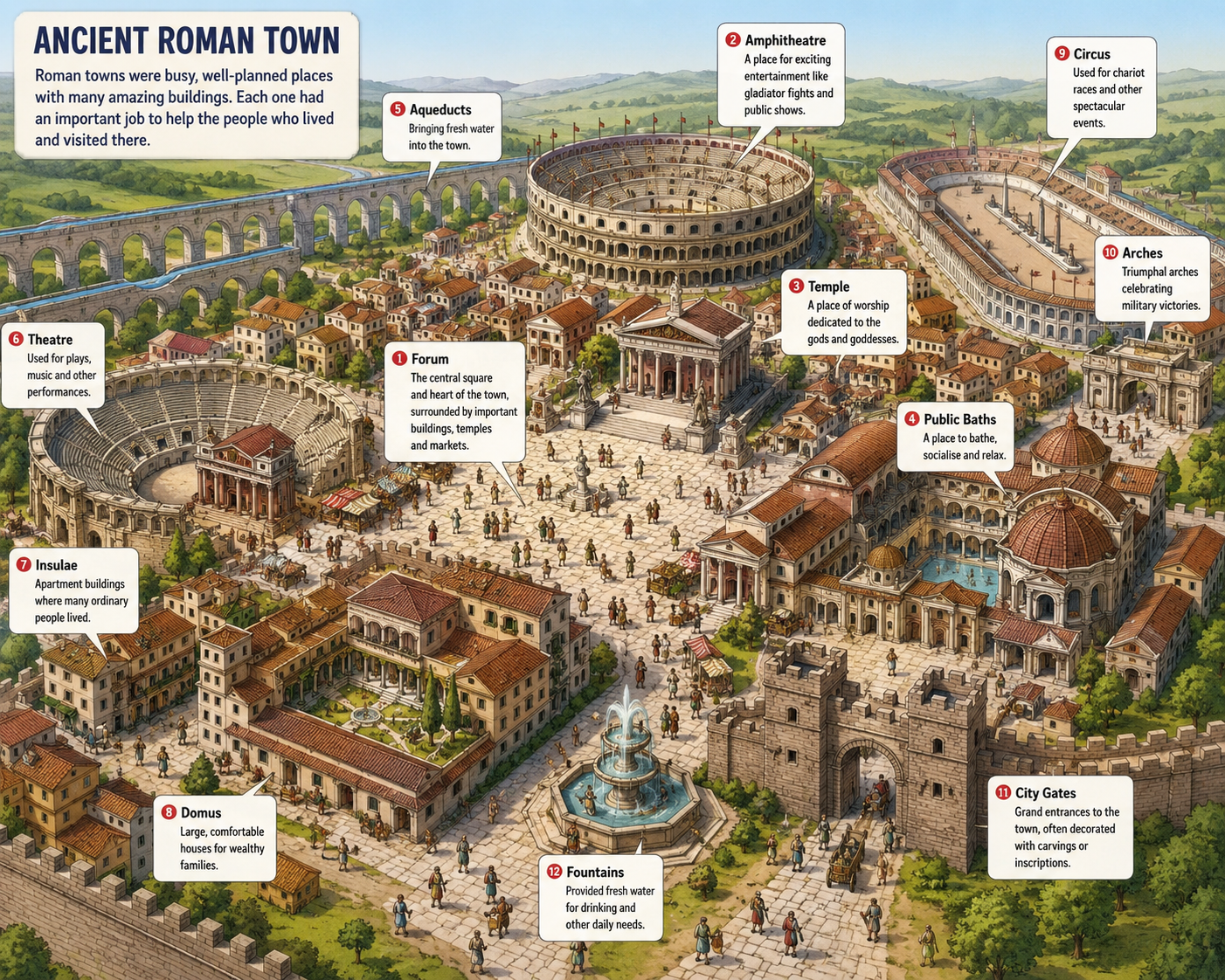
Ancient Roman towns were meticulously planned and featured a variety of key buildings that served different purposes. Here are some of the main ones:
- Forum: The central public square, often surrounded by important buildings like temples, basilicas, and markets
- Amphitheatre: A venue for entertainment, such as gladiatorial games and public spectacles.
- Temple: Dedicated to Roman gods and goddesses, these were places of worship.
- Public Baths: Complexes for bathing, socialising, and relaxation.
- Aqueducts: Structures that transported water into the town.
- Theatre: Used for dramatic performances and other cultural events.
- Insulae: Apartment buildings for the urban population.
- Domus: Private houses for wealthy families.
- Circus: A large venue for chariot races and other public events.
- Arches: Triumphal arches celebrating military victories.
- City Gates: Positioned at town entrances and elaborately decorated with carvings or inscriptions.
- Fountains: Fountains were not just decorative but also served practical purposes, providing fresh water to inhabitants.
These buildings reflect the Romans’ emphasis on civic life, entertainment, and infrastructure.

