Here’s the man, straight from the stone:
Who: Nectovelius, son of Vindex (Nectovelius f(ilius) Vindicis).
What: a funerary inscription (tombstone) recording that he died aged 29 after 9 years’ service (an(norum) IXXX; stip(endiorum) VIIII).
Origin: a Brigantian by tribe (nationis Brigans)—i.e., from the Brigantes of northern England.
Unit: Second Cohort of Thracians (militavit in coh. II Thr.), an auxiliary unit stationed in Britain.
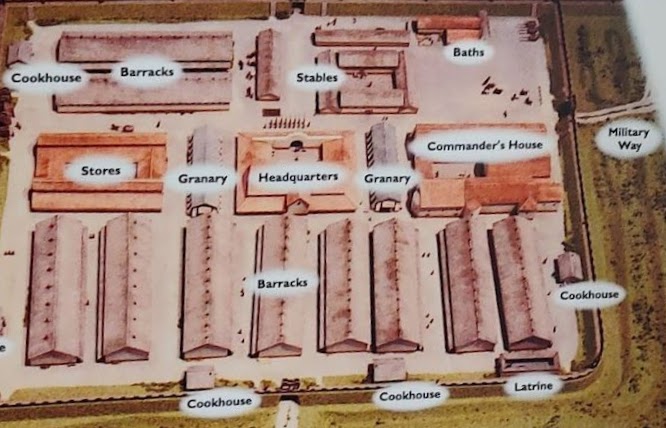
Where found: Mumrills fort on the Antonine Wall (near Falkirk). Discovered 1834; now in the National Museum of Scotland, Edinburgh.
When: usually dated by context to about AD 140–165 (Antonine period).
Latin text (RIB 2142)
> DIS M
NECTOVELIVS F
VINDICIS AN IXXX
STIP VIIII NAT
IONIS BRIGANS
MILITAVIT IN
COH II THR
Why he matters
He’s a crisp example of local recruitment: a Briton (Brigantian) serving in a unit originally raised in Thrace, showing how auxiliary cohorts became mixed over time.
The epitaph uses the formula DIS M(anibus) (“to the spirits of the departed”), typical of Roman tombstones, and preserves details that let us sketch a brief biography (age, service length, tribal origin, unit).
Nectovelius
Category

