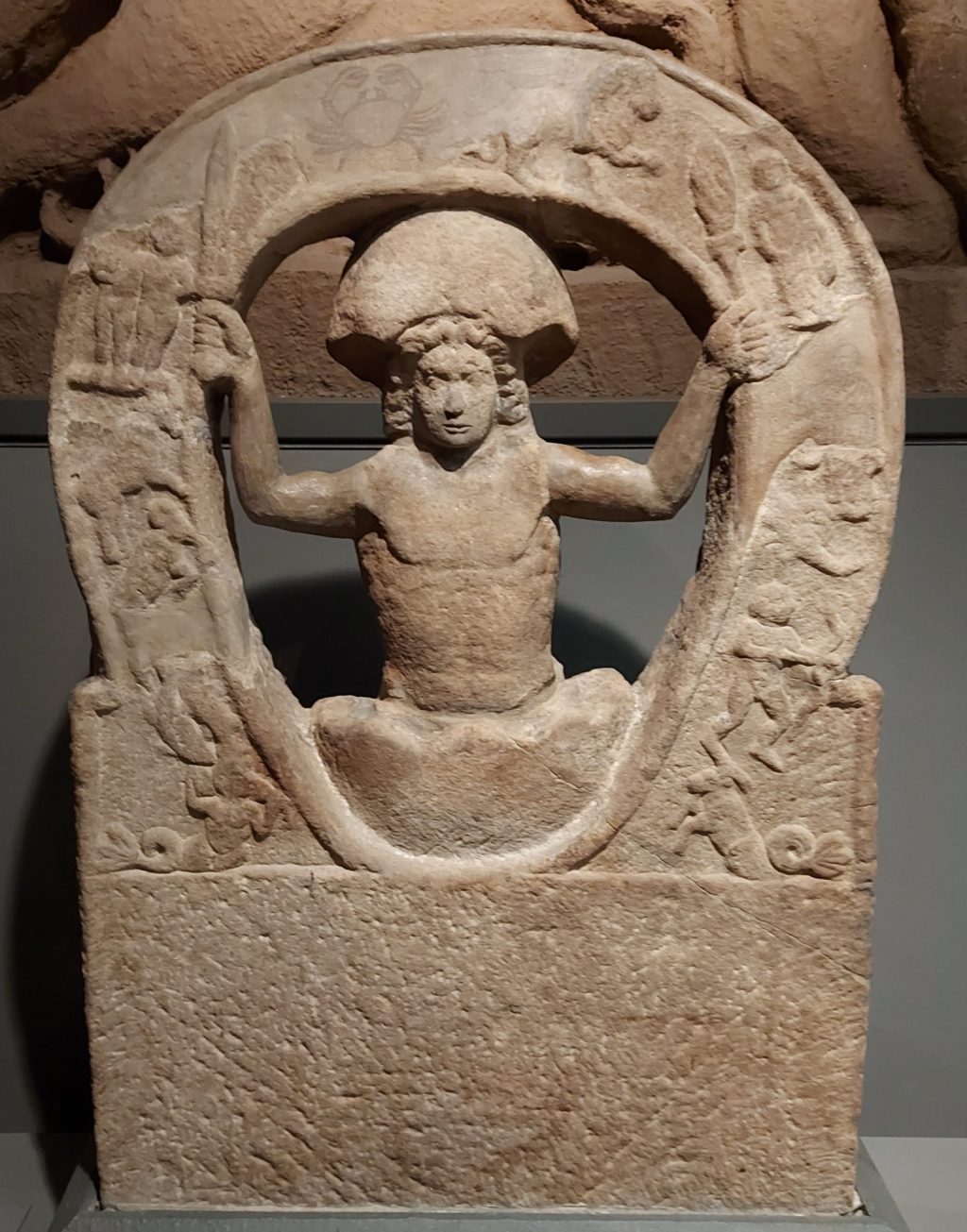
The academic investigation into the Roman cult of Mithras—alternatively termed the Mithraic Mysteries—represents one of the most dynamic and shifting landscapes in the study of ancient Mediterranean religions. For over a century, scholars have grappled with a central paradox: a deity bearing a distinctly Persian name (Mithra) whose most profound archaeological expressions are found exclusively within the borders of the Roman Empire, primarily from the late 1st century through the 4th century CE.1 The resulting historiographical discourse has transitioned from a nineteenth-century preoccupation with Iranian origins to a twenty-first-century focus on Roman social identity, cognitive science, and the “lived religion” of the individual initiate.3 This analysis synthesizes the prevailing academic literature, primary literary testimonia, and the most recent archaeological data to provide a comprehensive state-of-the-field report for professional scholars of classical antiquity and religious history.
The Evolutionary Paradigm: Franz Cumont and the Iranian Hypothesis
The formalization of Mithraic studies as a specialized academic discipline is inextricably linked to the work of the Belgian scholar Franz Cumont. In his seminal publication, Textes et monuments figurés relatifs aux mystères de Mithra (1896–1899), Cumont established the first rigorous corpus of Mithraic evidence.6 His methodology was rooted in the “History of Religions” school, which sought to trace the evolutionary path of religious ideas across cultural boundaries. Cumont utilized a striking geological metaphor to describe the genesis of Mithraism, positing that the religion possessed an Iranian “primordial layer” upon which Babylonian Semitic doctrines and Anatolian local beliefs were deposited as sediment.6
Under the Cumontian paradigm, the Roman mysteries were viewed as the “definitive form” of a long-standing Mazdean diaspora that flourished in Anatolia following the fall of the Achaemenid Empire.6 This view emphasized continuity; the Roman Mithras was essentially the Persian Mithra adapted for a Greco-Roman audience.7 Cumont argued that the “oriental” nature of the religion was the primary driver of its success, offering a mystery-based alternative to the traditional Olympic pantheon and acting as a significant rival to early Christianity.1 This perspective dominated the field for nearly seventy years, shaping the interpretation of the tauroctony (the bull-slaying relief) as a symbolic representation of Zoroastrian dualism—the struggle between light and darkness, or creation and destruction.3
The Manchester Revolution and the Rise of Revisionist Scholarship
The hegemony of Cumont’s Iranian hypothesis was challenged at the First International Congress of Mithraic Studies, held at Manchester University in 1971.10 This event catalyzed what is now recognized as a “paradigmatic shift” in the field.3 Scholars such as John Hinnells and Richard Gordon argued that the purported “continuities” between Persian Zoroastrianism and Roman Mithraism were largely speculative and lacked direct archaeological or textual support.3 Gordon, in particular, emphasized that the lack of the “bull-killing” motif in Iranian traditions suggested that this central iconographic element was a Roman “invention” rather than a Persian inheritance.14
This revisionist movement urged a redirection of focus toward the Roman context of the cult. Manfred Clauss, in his influential work The Roman Cult of Mithras: The God and his Mysteries, argued that the mysteries likely originated in Rome or the port city of Ostia, where the earliest dateable evidence is concentrated.2 Clauss’s positivist approach prioritized the “mute” evidence of archaeology and inscriptions over the “speculative theology” of previous generations.2 He maintained that the Persian elements—the Phrygian cap, the name of the god, and terms like nama—were intended as “exotic trappings” to lend the cult an aura of ancient, oriental authority within the Roman cultural marketplace.2
The Cognitive and Astrological Turn: Roger Beck and David Ulansey
Parallel to the rise of Roman-centric archaeology was the development of complex symbolic interpretations. Roger Beck, a leading figure in post-Manchester scholarship, introduced a “cognitive” approach to Mithraic ritual and iconography.4 In The Religion of the Mithras Cult in the Roman Empire: Mysteries of the Unconquered Sun, Beck argued that the mithraeum functioned as a sophisticated laboratory for “star-talk”—a system of astrological and astronomical referents that allowed initiates to navigate the celestial order.4
Beck’s theory suggests that the tauroctony was not a narrative of a historical or mythical event in the traditional sense, but a map of the heavens.5 In this model, the figures surrounding Mithras—the bull, the dog, the snake, the scorpion, and the raven—correspond directly to constellations (Taurus, Canis Minor, Hydra, Scorpio, and Corvus).5 Unlike David Ulansey, who famously posited that the tauroctony represented the discovery of the precession of the equinoxes, Beck focused on how the arrangement of these symbols in the ritual space of the mithraeum facilitated a “soul journey” for the initiate.2
| Interpretation | Proponent | Core Mechanism | Historiographical Significance |
| Iranian Continuity | Franz Cumont | Evolutionary transmission from Persia to Rome via Anatolia. | Established the discipline; now largely regarded as obsolete. 6 |
| Roman Invention | Manfred Clauss | Intentional creation of a new mystery religion in Rome/Ostia (c. 100 CE). | Shifted focus to archaeology, ritual, and social structure. 2 |
| Astrological Map | Roger Beck | Iconography as “star-talk” for a celestial soul journey. | Integrated cognitive science and astronomy into the study of ritual. 4 |
| Precession Theory | David Ulansey | Bull-killing represents the movement of the celestial pole (Precession). | Highly influential in popular media; met with academic skepticism. 2 |
Primary Literary Testimonia: Distinguishing Mitra from Mithras
A significant challenge in Mithraic studies is the scarcity of “insider” texts; as a mystery cult, its secrets were protected by oaths of silence.19 Consequently, researchers must rely on “outsider” accounts from Greco-Roman historians, philosophers, and Christian polemicists. Academic analysis distinguishes sharply between early references to the Persian Mitra and later accounts of the Roman Mithras.
Greco-Roman Accounts of Persian Mitra
Early literary evidence primarily reflects Persian religious practices as observed by Greek writers. Herodotus (5th century BCE) mentions that the Persians sacrificed to the sun, moon, and earth, and that they learned to sacrifice to “Urania,” whom they called Mitra.20 Xenophon, in the Cyropaedia, depicts Cyrus the Younger swearing “by Mithra,” indicating the god’s status as a guarantor of oaths and truth.20 Strabo notes that the satrap of Armenia would send twenty thousand colts annually for the “Mithraic festivals,” underscoring the deity’s association with horses and the sun.20 These accounts portray a public, ethnic religion centered on light and royalty, distinct from the secret, congregational mysteries of the Roman period.9
References to the Roman Mysteries
The transition to the Roman “mysteries” is first hinted at in the late 1st century CE. Statius, in his epic Thebaid (c. 80 CE), provides an enigmatic reference to Mithras “wrestling with the horns” in a “Persean cave,” which many scholars identify as the earliest literary allusion to the tauroctony.1 Plutarch (c. 46–120 CE) famously attributes the origins of the “secret mysteries of Mithras” to the pirates of Cilicia, who were active in the 1st century BCE.1 While this link remains archaeologically unverified, it has been utilized by scholars like Ulansey to suggest an Anatolian genesis for the cult.2
Porphyry’s De Antro Nympharum (3rd century CE) is arguably the most critical text for modern symbolic interpretations. Porphyry describes the mithraeum as an “image of the cosmos” and discusses the “seven planetary gates” through which the soul descends into generation and ascends toward divinity.7 Christian apologists like Justin Martyr and Tertullian provide valuable, albeit biased, details on Mithraic ritual.1 Justin Martyr charges the cult with a “diabolical imitation” of the Christian Eucharist, noting that the initiates used “bread and a cup of water” in their rites.1
Architectural Topography: The Mithraeum as Ritual Environment
The mithraeum is the defining physical manifestation of the cult. These sanctuaries were typically small, windowless, and either constructed underground or designed to resemble a cave (spelaeum).1 The standard architectural plan includes a central aisle (the nave) flanked by two raised stone or brick benches (podia) where the congregation of syndexioi (“those united by the handshake”) would recline for communal meals.1
The Case of San Clemente, Rome
The archaeological complex beneath the Basilica of San Clemente provides an exemplary study of the cult’s physical integration into the Roman urban fabric. The mithraeum was installed in the late 2nd century CE within a repurposed central room of a large, two-story domus.25 Its barrel-vaulted ceiling was decorated with stars to reinforce the celestial symbolism.25 The presence of an altar depicting the tauroctony flanked by Cautes and Cautopates, along with ritual artifacts like a rock-birth statue and sacrificial bones, allows for a detailed reconstruction of the space’s liturgical function.24
Atypical Plans and Late Antiquity at Ostia
The port city of Ostia Antica, which contains at least sixteen known mithraea, offers the highest density of evidence for the cult’s urban presence.28 While many Ostian sites like the Mithraeum of the Seven Spheres adhere to the standard plan, recent excavations have identified “atypical” structures that challenge the notion of absolute architectural uniformity.17 The “Mithraeum of the Colored Marbles,” dated to the late 4th century CE, features only a single bench and a floor constructed from expensive fragments of reused marble.22 David Walsh suggests that such deviations indicate a “vulgarization” or significant restructuring of the cult’s ritual practices in its final decades, as it opened to a broader, perhaps less rigorously initiated, membership.30
Social Stratification and the Initiatory Hierarchy
Mithraism was uniquely structured as an “elective” cult that reinforced Roman social hierarchies while providing a sense of fraternal belonging.3 The membership was almost exclusively male and drew heavily from the Roman military (legionaries and centurions), lower-level imperial administrators (apparitores), and the households of the elite (slaves and freedmen).1 Clauss characterizes these individuals as “modest social risers” who valued the cult’s emphasis on contract, loyalty, and submission to authority.2
The Seven Grades of Initiation
The cult’s internal hierarchy was organized into seven distinct grades, each associated with a planetary deity and a specific set of symbolic attributes.1
| Grade Number | Latin Title | Translation | Planetary Protector | Traditional Symbols |
| I | Corax | Raven | Mercury | Caduceus, beaker. 1 |
| II | Nymphus | Bridegroom | Venus | Lamp, veil, diadem. 1 |
| III | Miles | Soldier | Mars | Helmet, spear, pouch. 1 |
| IV | Leo | Lion | Jupiter | Fire-shovel, sistrum. 1 |
| V | Perses | Persian | Luna | Sickle, hooked dagger. 1 |
| VI | Heliodromus | Sun-Runner | Sol | Radiate crown, whip. 1 |
| VII | Pater | Father | Saturn | Patera, mitre, staff. 1 |
The scholarly debate regarding these grades centers on their accessibility. Clauss argues that the grades were not a standard path for all members but were specifically steps toward the priesthood, noting that only a small percentage of inscriptions mention these titles.2 Richard Gordon, conversely, suggests that while many may have passed through the initial grades, only the Pater (the Father) functioned as the true sacerdotal head of the community, often acting as the earthly representative of Mithras himself during ritual re-enactments.2
Ritual Praxis: The Liturgy of the Meal and Ordeals
The central ritual act of the Mithraic community was the communal meal, which served as a mimesis of the banquet shared by Mithras and the sun god Sol after the slaughter of the bull.7 This banquet was more than a social gathering; it was a “liturgie ordinaire” that celebrated the salutary effects of the bull’s blood, which was believed to have generated the life-sustaining elements of the world.14
Zooarchaeological and Material Evidence
Excavations at sites like Carrawburgh on Hadrian’s Wall and San Clemente have provided concrete evidence of these meals. Large quantities of bones from young pigs, lambs, and chickens indicate a preference for high-quality meat.24 At the Carrawburgh mithraeum, remains of Mediterranean pinecones were found, suggesting their use as ritual fuel to create a specific sensory environment—likely involving both scent and flickering light.33 Recent heritage science techniques, including pXRF and FTIR-ATR, applied to the Carrawburgh altars have revealed a vibrant polychromy of cinnabar, Egyptian blue, and orpiment, indicating that the ritual space was far more visually intense than its current stone state suggests.34
Ordeals and Cognitive Transformation
Mithraic initiation appears to have involved intense physical and psychological experiences designed to induce an altered state of consciousness.22 The “ordeal pit” discovered at Carrawburgh suggests that initiates may have been subjected to heat, cold, or physical confinement.33 Frescoes from Santa Maria Capua Vetere depict initiates who are blindfolded, stripped, and led by a “Father” or “Sun-Runner,” reinforcing the idea that the mysteries were a “rite of passage” into a higher cosmic understanding.22 Beck argues that these rituals were intended to “mobilize” the mithraeum as a celestial apparatus, where movement through the space corresponded to movement across the heavens.5
Regional Frontiers: Mithras on the Boundaries of Empire
The distribution of mithraea is notably uneven, with heavy concentrations along the Rhine and Danube frontiers and within the military zones of Roman Britain.1 This geography underscores the cult’s vital role in the social and spiritual life of the Roman army.
Dacia: A Bastion of Mithraic Activity
The province of Dacia (modern Romania) is one of the most prolific regions for Mithraic finds.3 Since the mid-20th century, the volume of material has grown substantially, leading to the creation of the Digital Atlas of Roman Sanctuaries in the Danubian Provinces (DAS).3 Recent research by Csaba Szabó and colleagues has shifted focus from the “obsession” with origins to the mechanisms of “intraconnectivity”—how Hellenistic entrepreneurs, soldiers, and merchants carried and adapted Mithraic ideas through the Danubian river networks.3
Hadrian’s Wall: The Carrawburgh Sequence
In northern Britain, the Carrawburgh Mithraeum (Brocolitia) provides a rare chronological sequence of the cult’s life.33 Discovered in 1950, the site revealed three distinct building phases starting around 200 CE.33 The temple was deliberately dismantled and rebuilt multiple times, reflecting both the prosperity of the garrison and periods of neglect.33 The sequence ends with evidence of “deliberate desecration” in the late 4th century, coinciding with the rise of Christian intolerance and the eventual collapse of the frontier administration.30
The End of Mithraism: Conflict, Coexistence, and Transformation
The decline of Mithraism is often portrayed as a violent struggle against a triumphant Christianity. However, archaeological evidence presents a more varied picture of abandonment, repurposing, and gradual decay.1
The Archaeological Record of Conflict
The destruction of Mithraic icons is well-documented. At Carrawburgh and elsewhere, the central tauroctony reliefs were frequently smashed or removed, and the “torchbearer” statues decapitated.33 In Rome, the building of churches directly atop mithraea—as seen at San Clemente and Santa Prisca—was a powerful symbolic act of “burial” and replacement.22 Christian polemicists like Firmicus Maternus explicitly called for the “error of profane religions” to be eliminated, viewing the Mithraic “bloody sacrifices” as a threat to the soul.39
Transformation and “Vulgarization”
Conversely, David Walsh’s research suggests that in some regions, Mithraism transformed into a “watered-down” or “diversified” version before its final disappearance.30 The presence of low-denomination coinage in late-antique mithraea may reflect a shift toward a more “casual” form of worship, less dependent on the rigorous initiation system of the 2nd and 3rd centuries.30 By the early 5th century, the specialized knowledge required to “read” the mithraeum as a celestial map appears to have eroded, leading to the cult’s ultimate demise even in areas where paganism persisted in other forms.30
Methodological Innovations and the Future of the Field
Contemporary Mithraic studies are increasingly reliant on interdisciplinary approaches that blend classical archaeology with digital humanities, material science, and social theory.
- The New Mithraeum (TNMdB): This central database aims to consolidate the thousands of monuments, inscriptions, and places of worship discovered since Vermaseren’s 1960 corpus, providing researchers with a real-time map of the cult’s distribution.40
- Astro-Archaeology: New studies on the orientation of mithraea relative to solstices and specific stars (such as Aldebaran or Sirius) continue to test and refine the theories of Stark and Beck.28
- Sensory Archaeology: The application of pigment analysis and lighting simulations is reconstructing the “dynamic atmosphere” of the darkened sanctuary, moving beyond the “mute” grey stone to a polychrome, multi-sensory ritual experience.34
The “Renaissance” of Mithraic studies in the 21st century has successfully moved the field beyond the “Iranian mirage” of Cumont.12 By viewing Mithraism as a uniquely Roman phenomenon—one that utilized oriental motifs to explore universal cosmic truths—scholars are now able to better understand how this “religion of the handshake” captured the imagination of the Roman world for nearly three hundred years.1 The cult remains a vital subject of inquiry precisely because it sits at the intersection of Roman military identity, celestial science, and the profound religious transformations that paved the way for the late antique world.
Summary of Major Bibliographic Clusters in Mithraic Research
| Research Focus | Key Authors & Publications | Primary Contribution |
| Comprehensive Corpora | M.J. Vermaseren (CIMRM); Franz Cumont (TMMM). | Cataloged the material evidence (statues, inscriptions, reliefs). 7 |
| Roman Context & Ritual | Manfred Clauss (2000); Richard Gordon (JMS). | Emphasis on archaeology, the military, and the social function of ritual. 2 |
| Astrology & Symbolism | Roger Beck (2006); David Ulansey (1989). | Interpreted the tauroctony and mithraeum as a map of the heavens. 2 |
| Late Antiquity & Decline | David Walsh (2018); Robert Turcan (2000). | Analysis of the transition from paganism to Christianity in the 4th/5th centuries. 7 |
| Regional provincial Studies | Csaba Szabó (Dacia); Richmond & Gillam (Carrawburgh). | Documented the spread of the cult on the imperial frontiers. 3 |
Works cited
- Mithraism – Wikipedia, accessed on May 13, 2026, https://en.wikipedia.org/wiki/Mithraism
- The Roman Cult of Mithras: The God and his Mysteries. Translated …, accessed on May 13, 2026, https://bmcr.brynmawr.edu/2001/2001.09.25/
- The Material Evidence of the Roman Cult of Mithras in Dacia: CIMRM Supplement of the Province – SciSpace, accessed on May 13, 2026, https://scispace.com/pdf/the-material-evidence-of-the-roman-cult-of-mithras-in-dacia-38qy0ef6j5.pdf
- The Religion of the Mithras Cult in the Roman Empire – Paperback – Oxford University Press, accessed on May 13, 2026, https://global.oup.com/academic/product/the-religion-of-the-mithras-cult-in-the-roman-empire-9780199216130
- The Archaeology of Mithraism: New Finds and Approaches to Mithras-worship 9789042943520, 9042943521 – DOKUMEN.PUB, accessed on May 13, 2026, https://dokumen.pub/the-archaeology-of-mithraism-new-finds-and-approaches-to-mithras-worship-9789042943520-9042943521.html
- The Mysteries of Mithras: A New Account of their Genesis* | The Journal of Roman Studies, accessed on May 13, 2026, https://www.cambridge.org/core/journals/journal-of-roman-studies/article/mysteries-of-mithras-a-new-account-of-their-genesis/AC321C5C8E0CCA42AF8918B5D13428E7
- The Roman cult of Mithras, accessed on May 13, 2026, https://mithras.tertullian.org/
- “A Study of Mithraism” | The Martin Luther King, Jr. Research and Education Institute, accessed on May 13, 2026, https://kinginstitute.stanford.edu/king-papers/documents/study-mithraism
- View of Roman Mithras, Mithra of Commagene, and Miiro in the Kushan Empire – A Study in Comparative Iconography – OJS, accessed on May 13, 2026, https://ojs.utlib.ee/index.php/UA/article/view/23669/18020
- Proceedings of the First International Congress of Mithraic Studies, Volume 1 – Google Books, accessed on May 13, 2026, https://books.google.com/books/about/Mithraic_Studies.html?id=eBy8AAAAIAAJ
- History and Development of the mysteries of Mithras, and the scholarship about it, accessed on May 13, 2026, https://mithras.tertullian.org/display.php?page=History
- THE CULT OF MITHRAS – (L.) Bricault, (P.) Roy Les cultes de Mithra dans l’Empire romain. 550 documents présentés, traduits et commentés. (Amphi 7.) Pp. 636, b/w & colour ills, b/w & colour maps. Toulouse: Presses Universitaires du Midi, 2021. Paper, €30. ISBN: 978-2-8107-0750-8. | The Classical Review – Cambridge University Press & Assessment, accessed on May 13, 2026, https://www.cambridge.org/core/journals/classical-review/article/cult-of-mithras-l-bricault-p-roy-les-cultes-de-mithra-dans-lempire-romain-550-documents-presentes-traduits-et-commentes-amphi-7-pp-636-bw-colour-ills-bw-colour-maps-toulouse-presses-universitaires-du-midi-2021-paper-30-isbn-9782810707508/CEBD7E90BA474D73421392BA3D5215D6
- Roger Beck: The Religion of the Mithras Cult in the Roman Empire. Mysteries of the Unconquered Sun. Oxford, accessed on May 13, 2026, http://www.plekos.uni-muenchen.de/2010/r-beck.pdf
- Ritual, Myth, Doctrine, and Initiation in the Mysteries of Mithras: New …, accessed on May 13, 2026, https://www.cambridge.org/core/journals/journal-of-roman-studies/article/ritual-myth-doctrine-and-initiation-in-the-mysteries-of-mithras-new-evidence-from-a-cult-vessel/5EFA66008C0F019870563329ACB6E933
- What are some good books on Mithraism? : r/AskHistorians – Reddit, accessed on May 13, 2026, https://www.reddit.com/r/AskHistorians/comments/91492x/what_are_some_good_books_on_mithraism/
- Chalupa, Aleš The origins of the Roman cult of Mithras in the light of …, accessed on May 13, 2026, https://digilib.phil.muni.cz/_flysystem/fedora/pdf/135694.pdf
- Regio II – Insula VIII – Mitreo delle Sette Sfere (II,VIII,6) (Mithraeum of the Seven Spheres), accessed on May 13, 2026, https://www.ostia-antica.org/regio2/8/8-6.htm
- Reading List for Mystery Schools | Magicka School, accessed on May 13, 2026, https://www.magicka-school.com/reading-list-for-mystery-schools/
- Mithraeums and the Cult of Mithras – Academus | Education, accessed on May 13, 2026, https://www.academuseducation.co.uk/post/mithraeums-and-the-cult-of-mithras
- Mithras: all the passages in Graeco-Roman literature, accessed on May 13, 2026, https://mithras.tertullian.org/literary_sources.htm
- The Origins and Identity of Roman Mithraism – DigitalCommons@UNL, accessed on May 13, 2026, https://digitalcommons.unl.edu/context/artstudents/article/1120/viewcontent/HILL_THESIS_FINAL_April_19__2017.pdf
- The transformation of Mithraea in the Late Roman period | Journal of Roman Archaeology | Cambridge Core, accessed on May 13, 2026, https://www.cambridge.org/core/journals/journal-of-roman-archaeology/article/transformation-of-mithraea-in-the-late-roman-period/528062DF8B73F7CF769ACF2E1D7BD1F1
- The Roman Cult of Mithras: The God and His Mysteries 9781474465793 – DOKUMEN.PUB, accessed on May 13, 2026, https://dokumen.pub/the-roman-cult-of-mithras-the-god-and-his-mysteries-9781474465793.html
- CIMRM 338 – Mithraeum at San Clemente, Rome, accessed on May 13, 2026, https://mithras.tertullian.org/display.php?page=cimrm338
- Mithraeum of Saint Clemente – Turismo Roma, accessed on May 13, 2026, https://www.turismoroma.it/en/node/43919
- The date of the Mithraeum of San Clemente in Rome – Roger Pearse, accessed on May 13, 2026, https://www.roger-pearse.com/weblog/2011/11/09/the-date-of-the-mithraeum-of-san-clemente-in-rome/
- Mitreo di San Clemente – The New Mithraeum, accessed on May 13, 2026, https://www.mithraeum.eu/monument/13
- (PDF) The orientation of the Mithraea in Ostia Antica – ResearchGate, accessed on May 13, 2026, https://www.researchgate.net/publication/312229332_The_orientation_of_the_Mithraea_in_Ostia_Antica
- The transformation of Mithraea in the Late Roman period – Cambridge University Press & Assessment, accessed on May 13, 2026, https://www.cambridge.org/core/services/aop-cambridge-core/content/view/528062DF8B73F7CF769ACF2E1D7BD1F1/S1047759423000430a.pdf/transformation_of_mithraea_in_the_late_roman_period.pdf
- The Cult of Mithras in Late Antiquity. Development, Decline and Demise ca. A.D. 270-430. Late Antique Archaeology (Supplementary Series), volume 2, accessed on May 13, 2026, https://bmcr.brynmawr.edu/2019/2019.08.23/
- Mithras – 1st Edition – Andrew Fear – Routledge Book, accessed on May 13, 2026, https://www.routledge.com/Mithras/Fear/p/book/9781032252032
- News – Mithraeum Excavated in Rome’s Port of Ostia – Archaeology Magazine, accessed on May 13, 2026, https://archaeology.org/news/2019/12/16/191218-italy-ostia-mithraeum/
- CIMRM 844 – The Carrawburgh Mithraeum, Britain., accessed on May 13, 2026, https://mithras.tertullian.org/display.php?page=cimrm844
- Multi-Technique Analysis and Digital Reconstruction of Polychromy on a Mithraic Altar from Carrawburgh Roman Fort near Hadrian’s Wall – MDPI, accessed on May 13, 2026, https://www.mdpi.com/2079-6447/5/1/6
- Books and articles on Mithras, its cult, and related subjects – The New Mithraeum, accessed on May 13, 2026, https://www.mithraeum.eu/libri
- Mithras in Dacia with Csaba Szabó – The New Mithraeum, accessed on May 13, 2026, https://www.mithraeum.eu/video/FH1FWT7_Qwo
- History of Carrawburgh Roman Fort – English Heritage, accessed on May 13, 2026, https://www.english-heritage.org.uk/visit/places/temple-of-mithras-carrawburgh-hadrians-wall/history/
- San Clemente al Laterano Excavations – Churches of Rome, accessed on May 13, 2026, http://www.churches-of-rome.info/CoR_Info/SC015/sub.pdf
- Roman Myth & Religion M.A. Reading List | Department of Classics, accessed on May 13, 2026, https://www.colorado.edu/classics/graduate/graduate-exams/ma-reading-lists/roman-myth-religion-ma-reading-list
- The New Mithraeum. Ad Augusta per Angusta, accessed on May 13, 2026, https://www.mithraeum.eu/
- (PDF) The archaeology of ancient cult: from foundation deposits to …, accessed on May 13, 2026, https://www.researchgate.net/publication/336454385_The_archaeology_of_ancient_cult_from_foundation_deposits_to_religion_in_Roman_Mithraism
- Bibliography | Roman religion – WordPress.com, accessed on May 13, 2026, https://religioacademici.wordpress.com/news/
- (PDF) Four Imperial Roman Mithraea: An Astro-Archaeological Analysis – Academia.edu, accessed on May 13, 2026, https://www.academia.edu/36230329/Four_Imperial_Roman_Mithraea_An_Astro_Archaeological_Analysis
- Roger Beck: Mithraism – Dr. Kaveh Farrokh, accessed on May 13, 2026, https://www.kavehfarrokh.com/zoroastrianism/professor-roger-beck-mithraism/
Archaeological Evidence of the Cult of Mithras in Ancient Italy – IRIS, accessed on May 13, 2026, https://iris.univr.it/bitstream/11562/1060675/1/Canciani%20-%20Mithras%2096%20dpi.pdf

