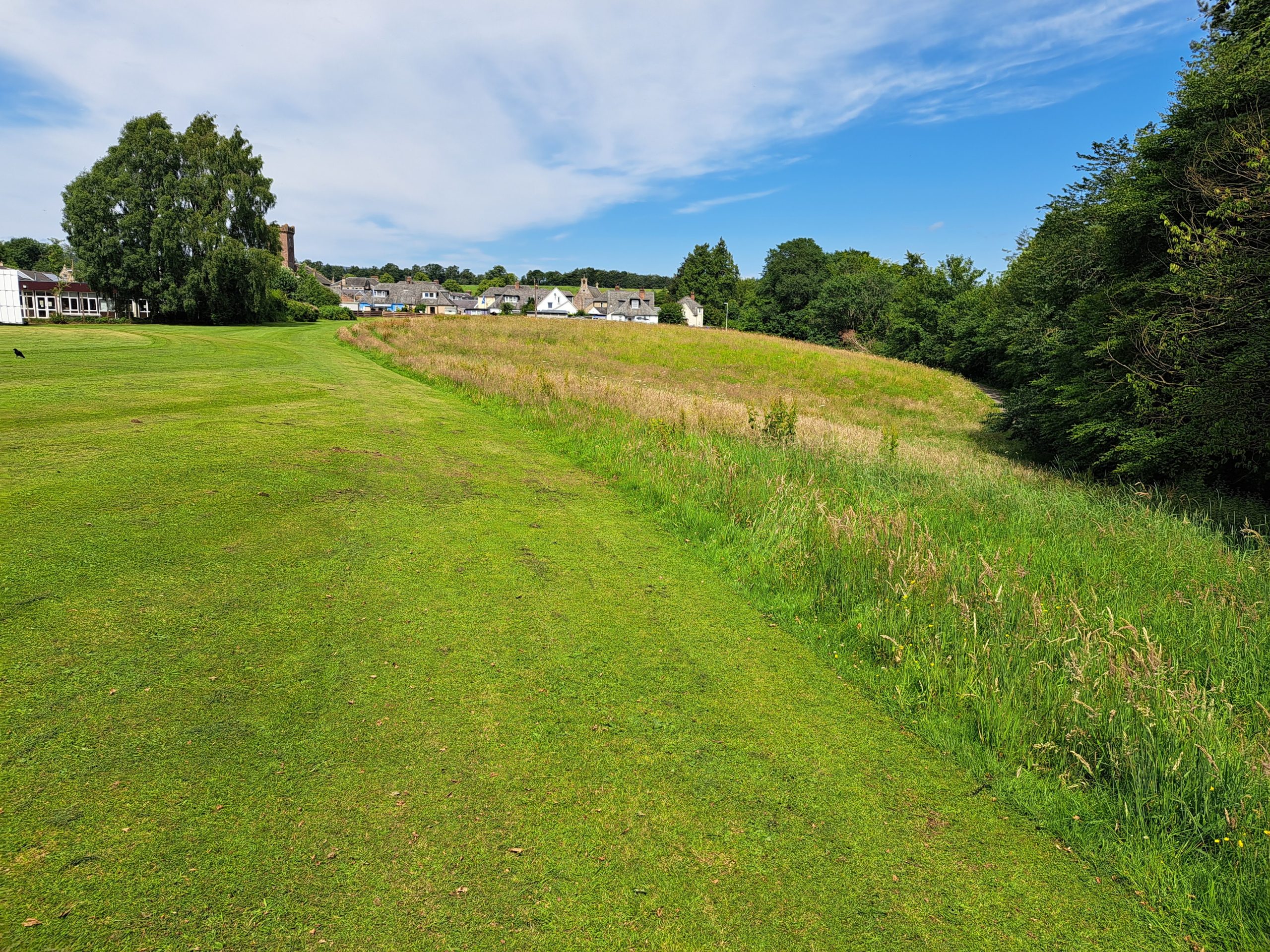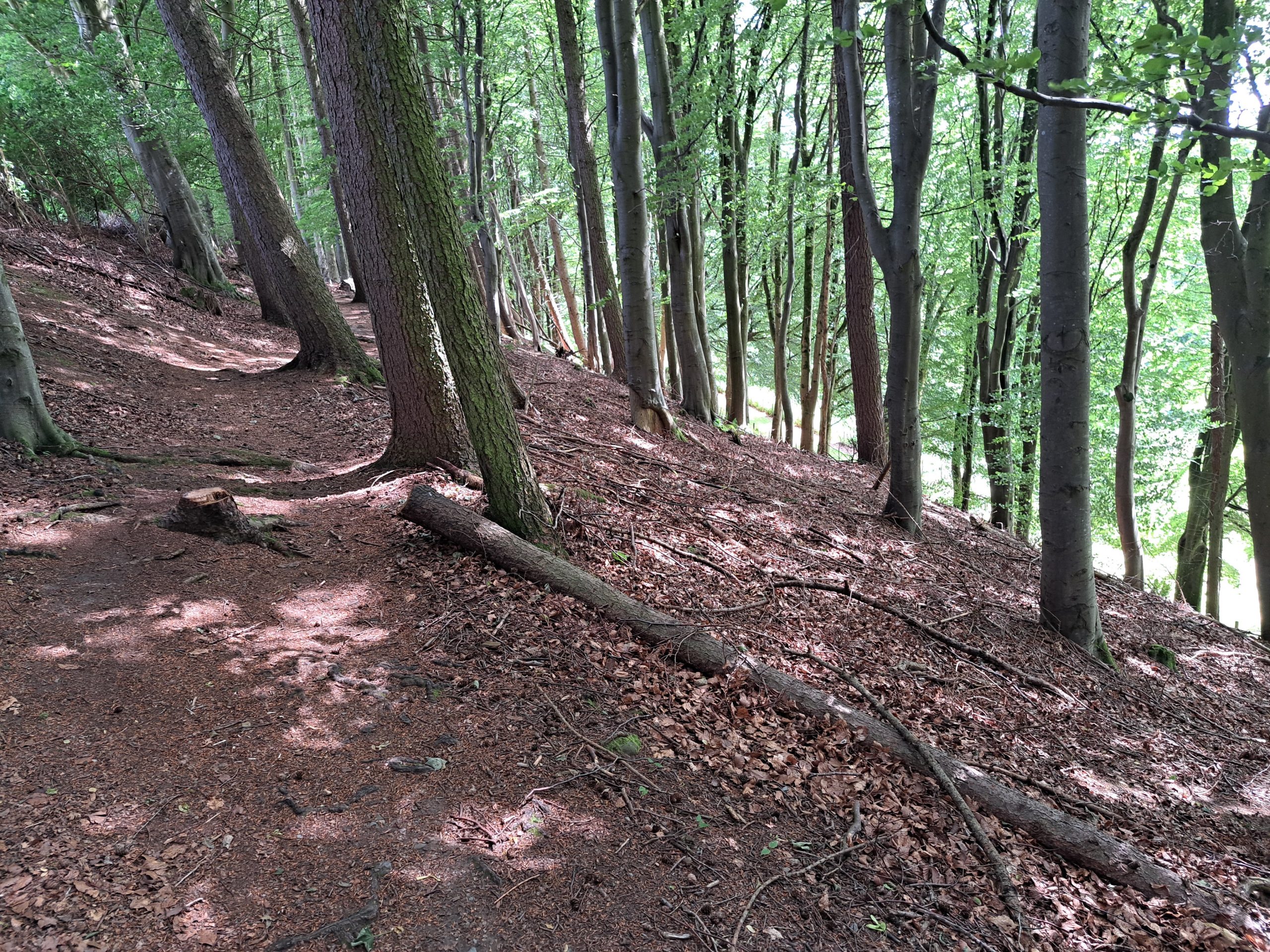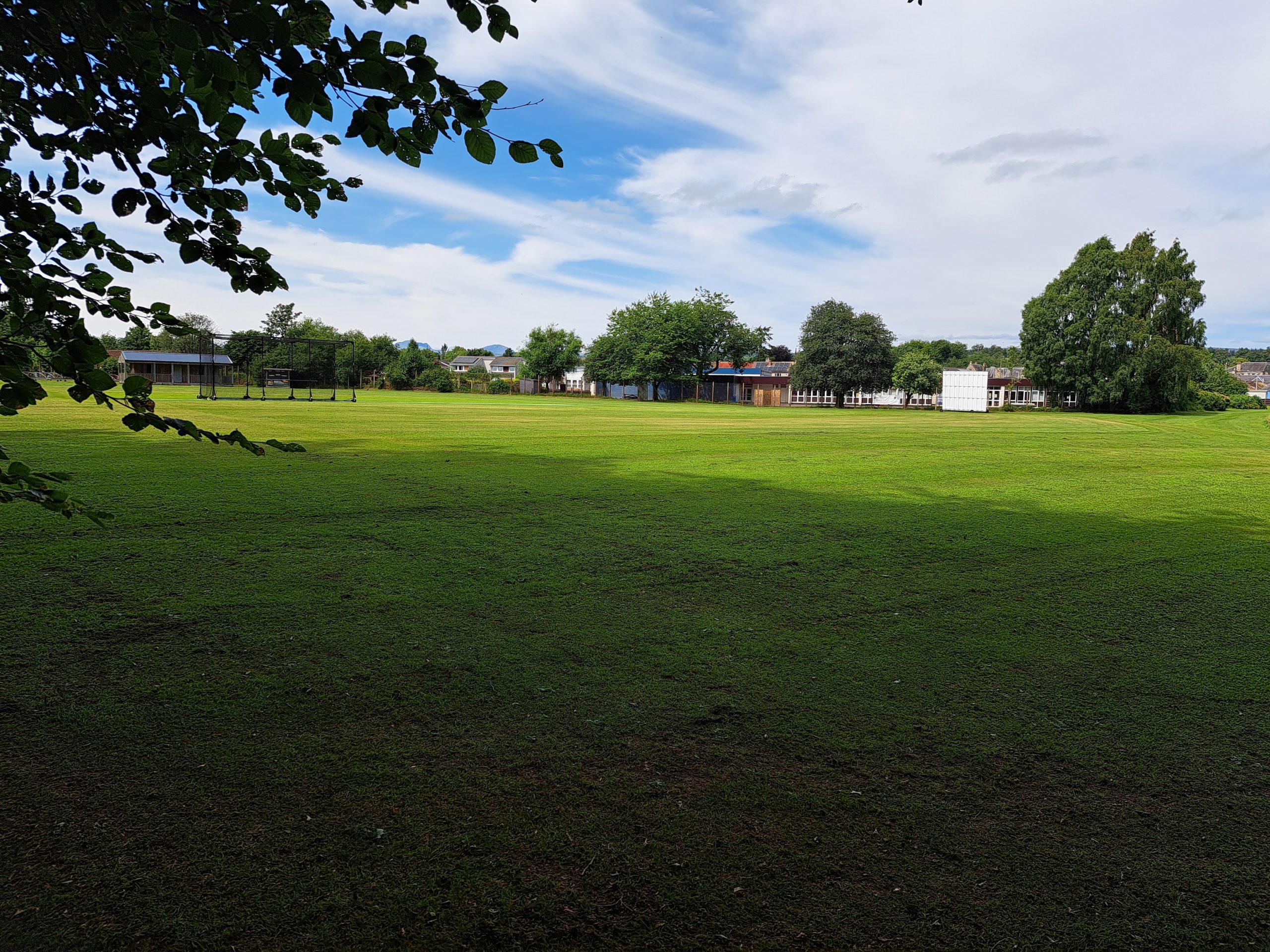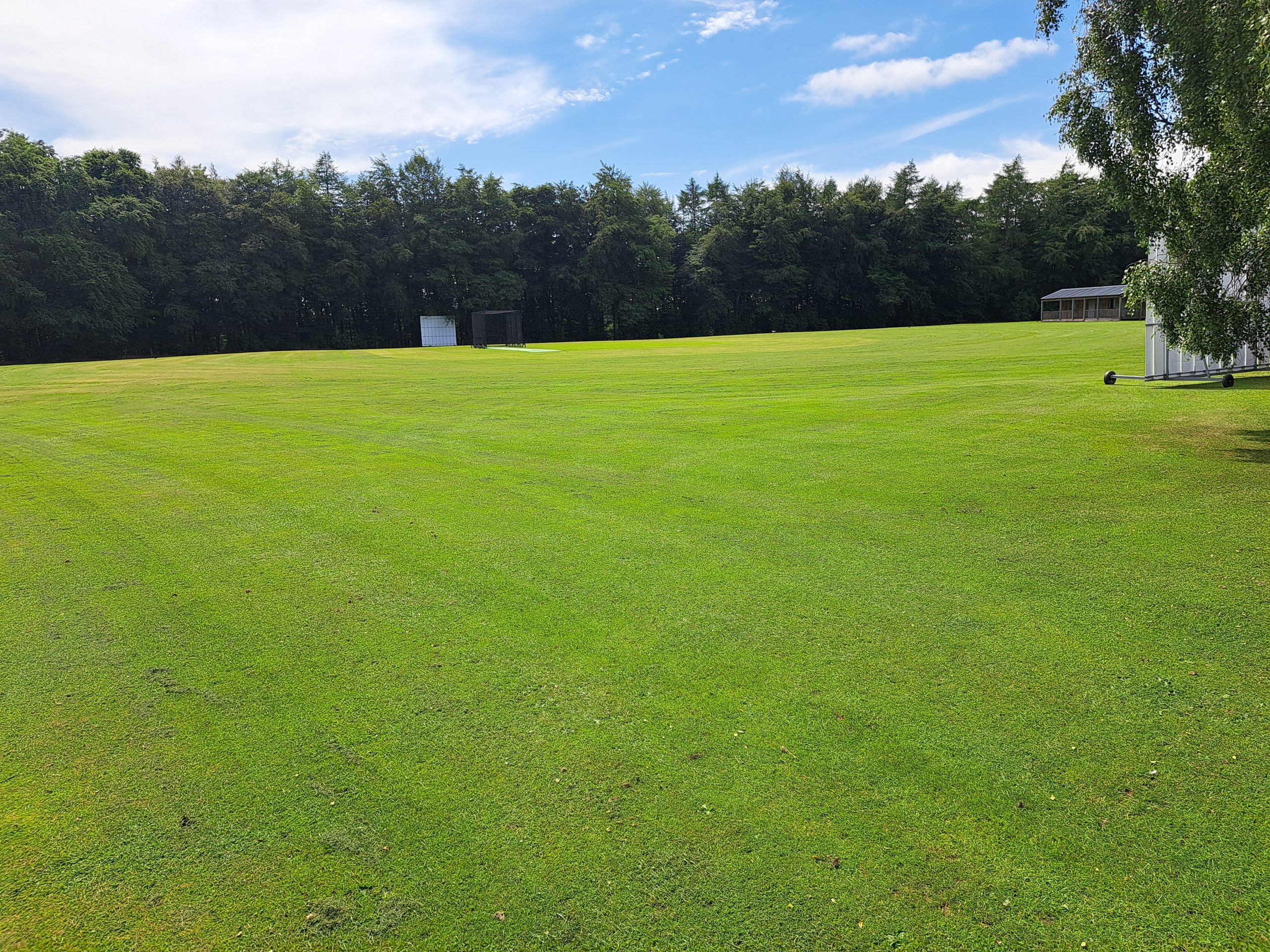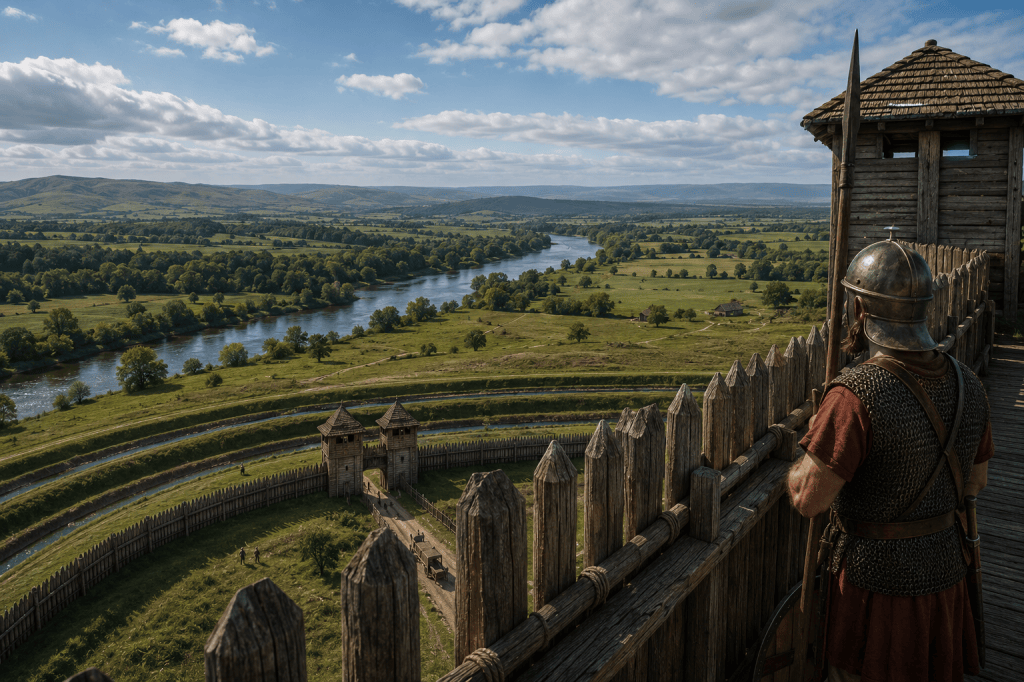
Standing on a natural plateau above the River Teith, the Roman fort at Doune occupies one of the most strategically important locations in central Scotland. Although almost invisible today, beneath the grass lie the remarkably well-preserved remains of a timber fort built during Rome’s first attempt to conquer northern Britain in the late first century AD. The site is now protected as a Scheduled Monument because of its exceptional archaeological importance.
Visit Doune Roman Fort
📍 Location: Doune, Stirling
👁 What survives: The fort is almost invisible at ground level; its well-preserved archaeology survives beneath the grass.
⭐ Best for: Understanding an Agricolan fort controlling the route towards the Highlands.
🥾 Visit: A grassy archaeological site with little visible masonry; expect uneven ground.
🏛 Nearby Roman places: Ardoch, Bochastle and the Roman route through central Scotland
Doune at a glance
| Occupation | Flavian period, late first century AD, associated with the campaigns of Agricola; precise dates are approximate. |
| Garrison | The resident unit has not been securely identified in the evidence summarised here. |
| Size | Approximately 3 hectares (7.4 acres), the overall estimate in the HES record. |
| Troop estimate | Around 700 is the working estimate used in this guide; neither a unit title nor a contemporary headcount confirms it. |
A Fort Built During Agricola’s Campaigns
The fort was probably established shortly after the campaigns of the Roman governor Agricola (AD 77–84). His armies advanced further into Scotland than any previous Roman force, establishing a chain of forts to secure newly conquered territory. The Roman historian Tacitus, Agricola’s son-in-law, describes these campaigns, and Doune fits closely with the network of forts created during this period. Some archaeologists have even suggested that it relates to Agricola’s fourth campaigning season, when he consolidated the line between the Forth and Clyde before pushing further north. Its size suggests around 700 troops, similar to Bochastle 9 miles further north-west
Why Was Doune Chosen?
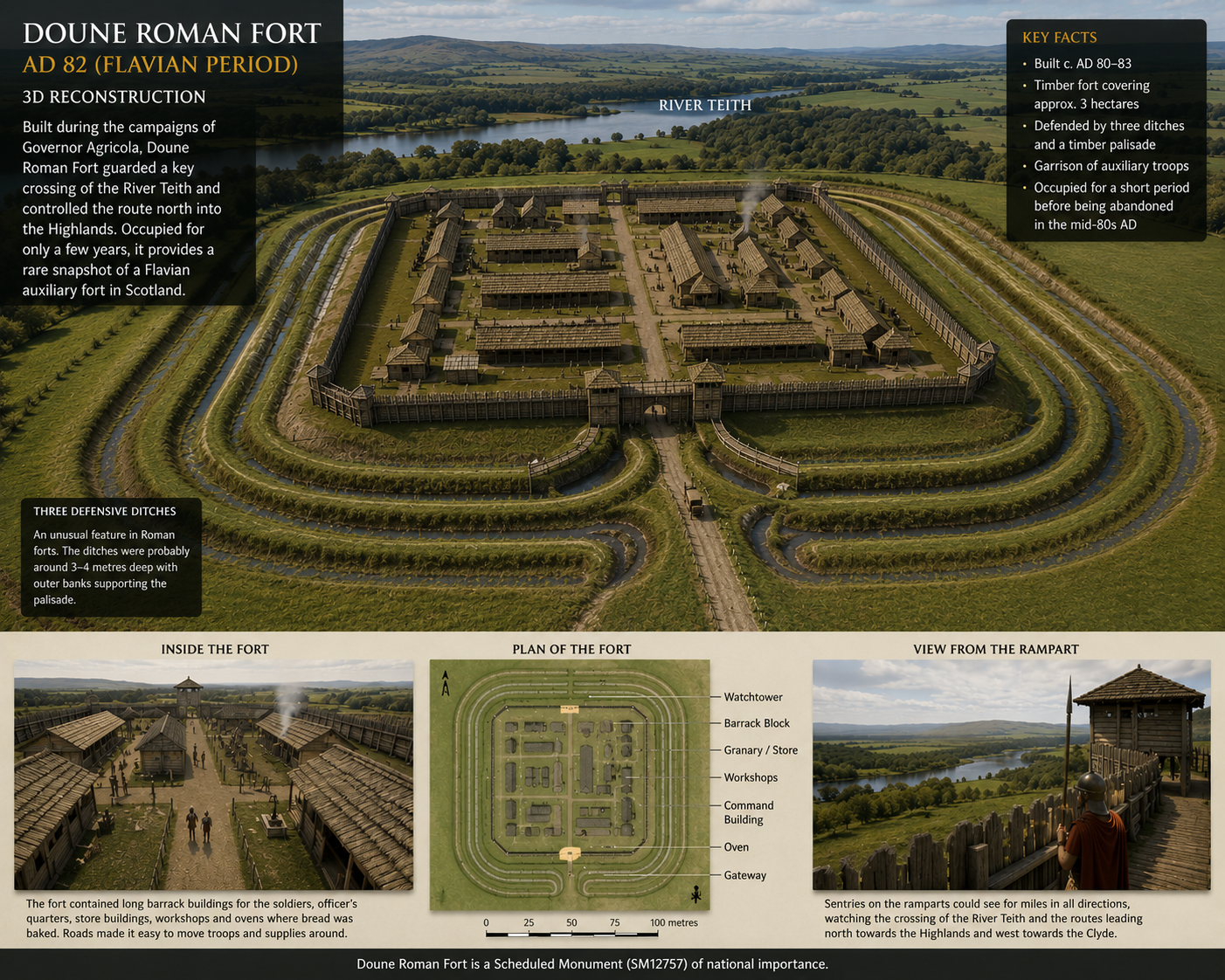
The Romans rarely chose sites by chance. Doune sits around 20 metres above the surrounding land, overlooking an important crossing of the River Teith. Anyone travelling north towards the Highlands or south towards the Forth had to pass close by.
From this position the garrison could:
- control movement across the River Teith;
- monitor the route leading towards Strathearn and Perthshire;
- protect Roman supply lines;
- act as a base for further military operations into northern Scotland.
Even today the military logic behind the choice of location is immediately apparent.
An Unusual Roman Fort
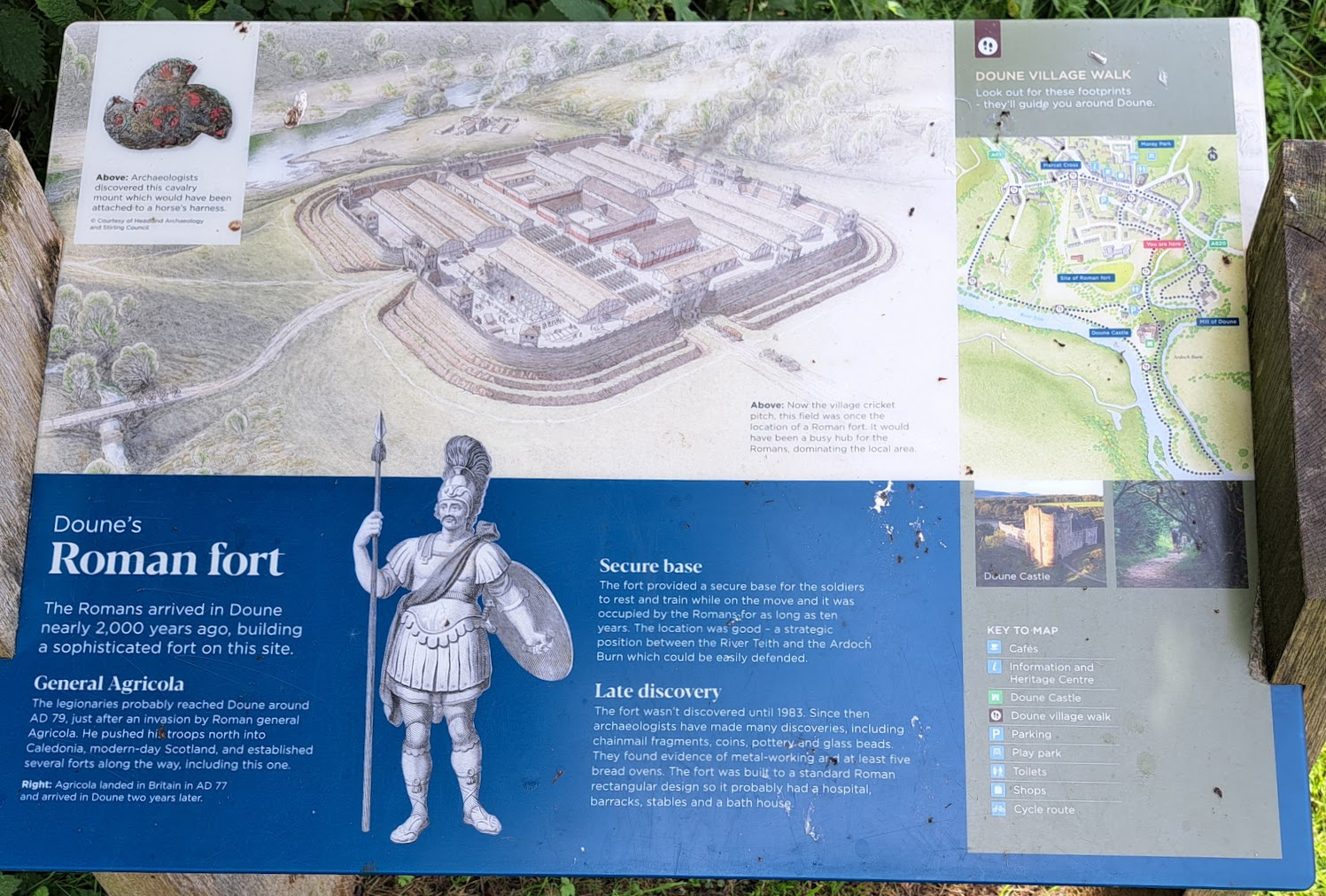
Covering approximately three hectares, the fort was defended by three substantial ditches—an uncommon feature in Roman Britain. Excavations have shown that the fort was built almost entirely of timber and included roads, barracks, demolition pits, and other military structures. Discoveries included a line of five circular bread ovens and an iron-smelting shaft furnace, a unique find for Roman Scotland.
One particularly interesting feature is the distinctive “parrot-beak” entrance, where the defensive ditches curve towards the gateway. This design is found on only a handful of Flavian forts, including Oakwood, Bocastle and Malling, helping archaeologists identify Doune as an early Flavian foundation. Unlike many Roman forts, the ditches also lack the narrow “ankle-breaker” slot often cut into their bases, making the defences at Doune unusual.
A Snapshot of Rome’s First Occupation
Perhaps the site’s greatest importance is that it appears to have been occupied only once.
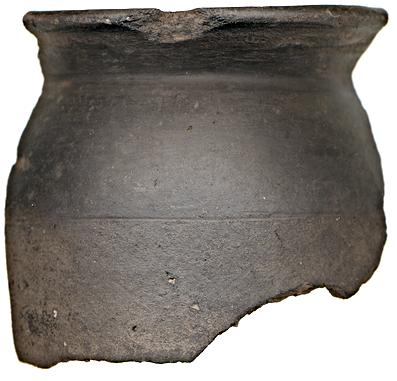
Many Roman forts in Scotland were rebuilt, enlarged or reused during later campaigns, making it difficult to distinguish one occupation from another. Doune, however, represents a single moment in history. Archaeologists have recovered large quantities of first-century black burnished and samian pottery together with exceptionally well-preserved structural remains, providing a rare snapshot of how a Flavian auxiliary fort functioned during Rome’s initial advance into Scotland.
Sling shot bullets and javelin heads were found on the site. A catapult bolt was also found. A trained Roman slinger could hurl these 50-gram lead projectiles at speeds exceeding 100 mph (160 km/h), delivering a blunt-force impact comparable to a modern handgun cartridge.
Part of a Wider Roman Strategy
Doune was not an isolated outpost. It formed part of a carefully planned network of Flavian forts stretching across central and eastern Scotland. Together with forts such as Elginhaugh, Strageath, Ardoch and Cardean, it helped secure communication routes, protect supply lines and support the Roman army as it expanded northwards.
These forts were largely occupied for less than a decade, making them invaluable evidence for understanding Roman military planning at the height of the Flavian Empire.
Visiting Today
Little survives above ground, but aerial photography clearly reveals the lines of the triple defensive ditches. The fort lies only a short walk from Doune Castle, allowing visitors to experience two very different periods of Scottish history in one visit: the Roman frontier of the first century AD and one of Scotland’s finest medieval castles, built over 1,300 years later.
Did You Know?
- The fort was discovered from the air by archaeologist Gordon Maxwell in 1983.
- It is one of the best-preserved single-phase Flavian forts known in Scotland.
- Excavations in 1984, 1999 and 2008 uncovered ovens, roads, timber buildings and hundreds of Roman artefacts.
- Its location suggests it played a key role in controlling movement through central Scotland during Agricola’s conquest.
Inscriptions
No unit-identifying inscription is cited in this guide. That is a gap in the evidence presented, not a claim that no inscribed objects have ever been found.
References
Doune Roman Fort (Historic Environment Scotland)
Doune Roman Fort Excavation (June 2020)
Gallery