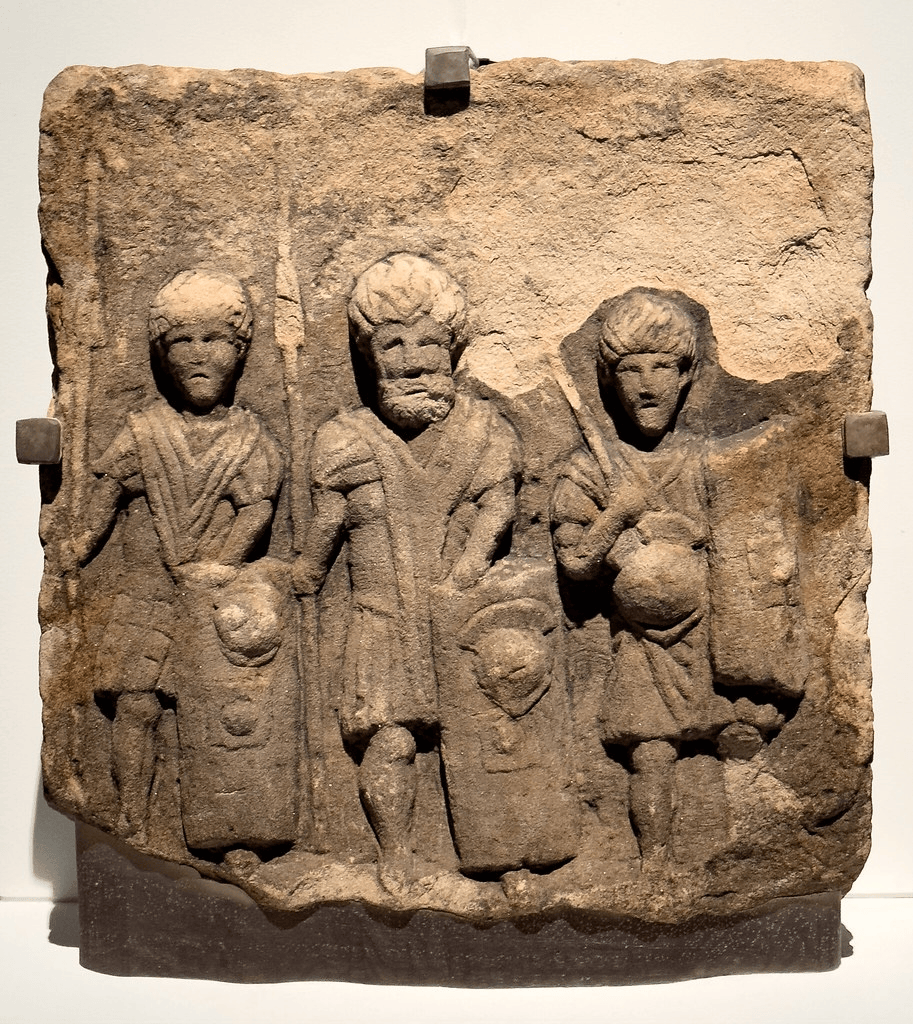
Plan a visit to Scotland’s Roman frontier and discover its surviving earthworks, forts, museums and interpretation sites.
The Antonine Wall once crossed central Scotland from the Firth of Forth to the Clyde. Built from around AD 142 on the orders of the emperor Antoninus Pius, it became the most northerly frontier of the Roman Empire.
Unlike Hadrian’s Wall, its main barrier was not a great stone wall. The frontier consisted of a substantial turf rampart built on a stone base, a huge ditch, forts and fortlets, and the Military Way connecting them.
Today the Wall survives very differently from place to place. Sometimes you can walk through a remarkably deep Roman ditch or stand inside the earthworks of a fort. Elsewhere only a low bank, a stone foundation or the outline of a structure remains.
The Antonine Wall has been part of the Frontiers of the Roman Empire World Heritage Site since 2008.
For the history and archaeology first, see The Antonine Wall 142 AD. Explore the history of the Antonine Wall
Teaching this topic? Explore Life on the Antonine Wall for CfE Second Level (P5–P7), with activities and an editable teacher pack.
Where should I visit?
| If you want to see… | Go to… |
|---|---|
| The best all-round surviving Roman frontier site | Rough Castle |
| The most impressive section of the great ditch | Watling Lodge |
| A Roman fort with spectacular views | Bar Hill |
| The Wall crossing a dramatic landscape | Croy Hill |
| A Roman bath-house and latrine | Bearsden |
| A visible Roman fortlet | Kinneil |
| The Military Way | Seabegs Wood |
| Wall remains, museum and family facilities together | Callendar Park |
| The finest collection of Antonine Wall artefacts | The Hunterian |
The surviving remains highlighted here broadly match the principal places recommended in David Breeze’s guide to where the Wall can still be seen.
Rough Castle
Best overall place to visit
If you only have time for one Antonine Wall site, make it Rough Castle near Bonnybridge.
It is the best-preserved fort on the frontier. You can see substantial stretches of the Wall’s rampart and ditch, the defences of the fort and annexe, gateways and part of the Military Way.
Most unusually, you can also see the famous lilia — rows of defensive pits in front of the Wall. Originally these would have contained concealed sharpened stakes.
The official Antonine Wall guide describes Rough Castle as the place where it is easiest to understand how the frontier and its forts worked together. (Antonine Wall)
Plan your visit to Rough Castle – official Antonine Wall site
Historic Environment Scotland visitor information
Allow: roughly 45–60 minutes.
Watling Lodge
Best place to appreciate the ditch
It can be difficult to imagine just how formidable the Antonine Wall’s ditch once was.
At Watling Lodge in Falkirk, you do not have to imagine quite so much.
The ditch survives here almost to its original profile and is regarded as perhaps the finest surviving section anywhere along the Wall. The fortlet which once guarded this area is no longer visible. (Antonine Wall)
Walk down beside the ditch and look back up towards the top. It gives a much better impression of the scale of the Roman frontier than a plan or reconstruction can.
Plan your visit to Watling Lodge
Allow: about 20–30 minutes.
Good combination: Watling Lodge + Rough Castle.
Bar Hill
Best for a Roman fort and the view
Bar Hill was the highest fort on the Antonine Wall, and the views are one of the reasons to visit.
The fort platform can still be recognised, together with remains of the eastern gateway, headquarters building and bath-house. The high position also makes it easier to understand how individual forts fitted into the wider frontier landscape. (Antonine Wall)
This is less of a roadside archaeological stop than Rough Castle. The walk up from Twechar is part of the visit, and the final approach crosses uneven ground.
Allow: around 1–2 hours including the walk.
Croy Hill
Best for walking the frontier landscape
Croy Hill offers a very different experience.
Here you can follow the line of the Wall through an upland landscape and see where Roman soldiers had to cut the great ditch through solid rock.
The fort and fortlet themselves are no longer visible above ground, but the ditch and two raised features traditionally known as expansions can still be recognised. The hill also gives wide views towards Bar Hill and across central Scotland.
Allow: around 1–2 hours.
Good combination: Croy Hill + Bar Hill.
Bearsden
Best for everyday Roman life
Bearsden is one of the most rewarding Antonine Wall sites because here the archaeology takes you beyond walls, ditches and military defences.
The Roman fort is now largely beneath the modern town, but part of its annexe survives and the bath-house and latrine block are exposed.
They are among the finest surviving Roman stone structures anywhere on the Antonine Wall. The modern Roman Road also follows the line of the principal Roman road through the fort. (Antonine Wall)
Excavation at Bearsden has produced remarkable evidence for food, sanitation, buildings and the everyday lives of the people who occupied the fort.
Plan your visit to Bearsden Roman Fort and Bathhouse
Allow: around 30–45 minutes.
Nearby: New Kilpatrick Cemetery
Bearsden also offers something much less spectacular but archaeologically important: visible sections of the stone foundation on which the Antonine Wall’s turf rampart was constructed.
The official Antonine Wall guide identifies New Kilpatrick Cemetery as the best place to see this part of the Wall’s construction. (Antonine Wall)
Seabegs Wood
Best place to see the Military Way
West of Bonnybridge, Seabegs Wood preserves several components of the Roman frontier in an attractive woodland setting.
You can see the ditch, rampart and outer mound, but the real attraction is the Military Way — the Roman road that linked the forts and fortlets along the Wall.
The Military Way is particularly well preserved here and the official Antonine Wall guide regards Seabegs as the best place to see it. A fortlet once stood here too, although it is no longer visible above ground. (Antonine Wall)
Plan your visit to Seabegs Wood
Historic Environment Scotland – Seabegs Wood
Allow: about 1–1½ hours including the walk to the site.
Callendar Park
Best combination of archaeology, museum and family visit
The Antonine Wall survives surprisingly well through Callendar Park in Falkirk.
You can walk alongside a substantial stretch of the ditch and then visit Callendar House, where permanent displays include Roman material and interpretation of the Antonine Wall. The park also has a Roman-themed play area. (Antonine Wall)
This makes Callendar Park particularly useful if you are visiting with children, or if you want to combine outdoor archaeology with a museum.
Visit the Antonine Wall at Callendar Park
Plan a visit to Callendar House
Allow: 1–2 hours if also visiting the museum.
Kinneil
Best place to see a fortlet
Near Kinneil House at Bo’ness is something unique.
Kinneil is the only Antonine Wall fortlet whose remains are laid out and visible today.
Original stone kerbing survives in places, while paving and timber markers help show the line of the fortlet and the positions of its gateways and buildings. Part of the Antonine Wall ditch can also be traced nearby. (Antonine Wall)
The visit can be combined with Kinneil Estate, Kinneil Museum and, when open, Kinneil House.
Plan your visit to Kinneil fortlet
Allow: around 45–60 minutes.
See the objects from the Wall
Some of the most impressive evidence from the Antonine Wall is no longer beside the Wall at all.
It is in Scotland’s museums.
The Hunterian, Glasgow
If you want to understand the Antonine Wall after walking it, The Hunterian Museum should be high on your list.
Its permanent Antonine Wall: Rome’s Final Frontier displays contain sculpture and objects recovered from the frontier, including the remarkable carved distance slabs erected by the Roman legions.
The displays explore construction of the Wall, its army, the lives of soldiers, interaction with local people and the eventual abandonment and rediscovery of the frontier. (University of Glasgow)
Plan your visit to The Hunterian Museum
Explore The Hunterian’s Antonine Wall resources
National Museum of Scotland, Edinburgh
The National Museum of Scotland holds some of the most important Roman finds from Scotland, including material connected with the eastern end of the Antonine frontier.
One of the highlights is the spectacular Bridgeness Distance Slab, one of the finest pieces of Roman sculpture found in Britain.
Plan your visit to the National Museum of Scotland
Discover the Romans in Scotland through five objects
How long do you need?
You do not need to attempt the entire Antonine Wall in one trip.
If you have about two hours
Visit Rough Castle, then drive the short distance to Watling Lodge.
That gives you the best surviving fort and one of the finest stretches of the Roman ditch.
If you have half a day
Try:
Rough Castle → Watling Lodge → Callendar Park
You will see a fort, rampart, ditch and museum displays without trying to cover too much ground.
If you have a full day
One possible route is:
Bearsden → Bar Hill or Croy Hill → Rough Castle → Watling Lodge → Callendar Park
For a more leisurely day, choose four rather than trying to visit every site.
Walking the Antonine Wall
The Antonine Wall is not one continuous visible monument.
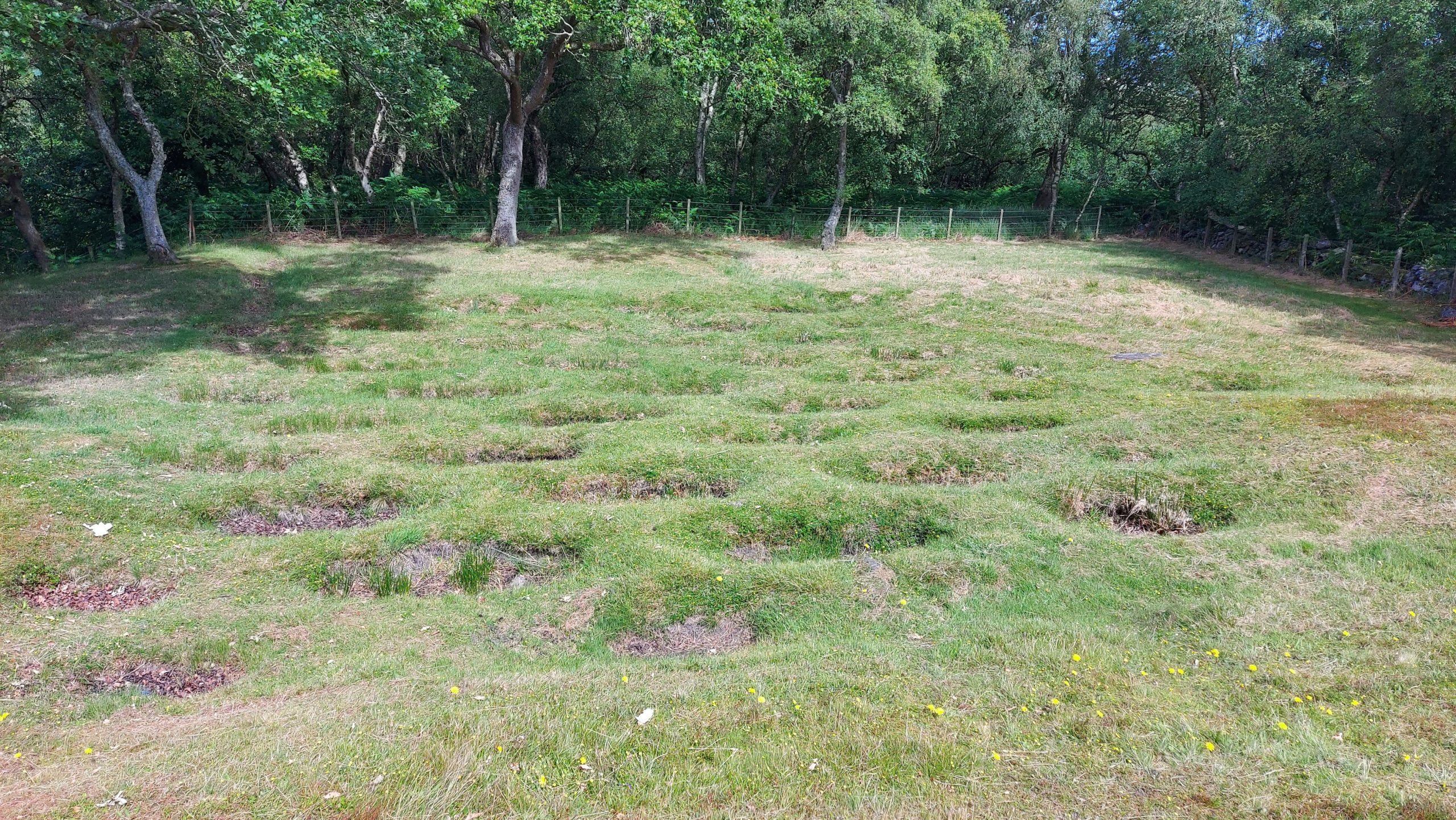
Its surviving archaeology passes through modern towns, parks, woodland, farmland and open countryside. At some locations the ditch dominates the landscape; elsewhere the archaeology is subtle and you may be looking for a low bank or the line of the Military Way.
The official Antonine Wall website provides maps and guides to sites along the entire frontier.
Explore the official Antonine Wall website and interactive map
Before setting out, use the individual visitor links above to check access, parking, path conditions and any temporary restrictions.
Explore the Antonine Wall on Romans in Scotland
Want to know more about what you have seen?
The Antonine Wall – history, forts and construction
Roman Forts in Scotland – Complete Guide
Explore the Roman Army in Scotland

