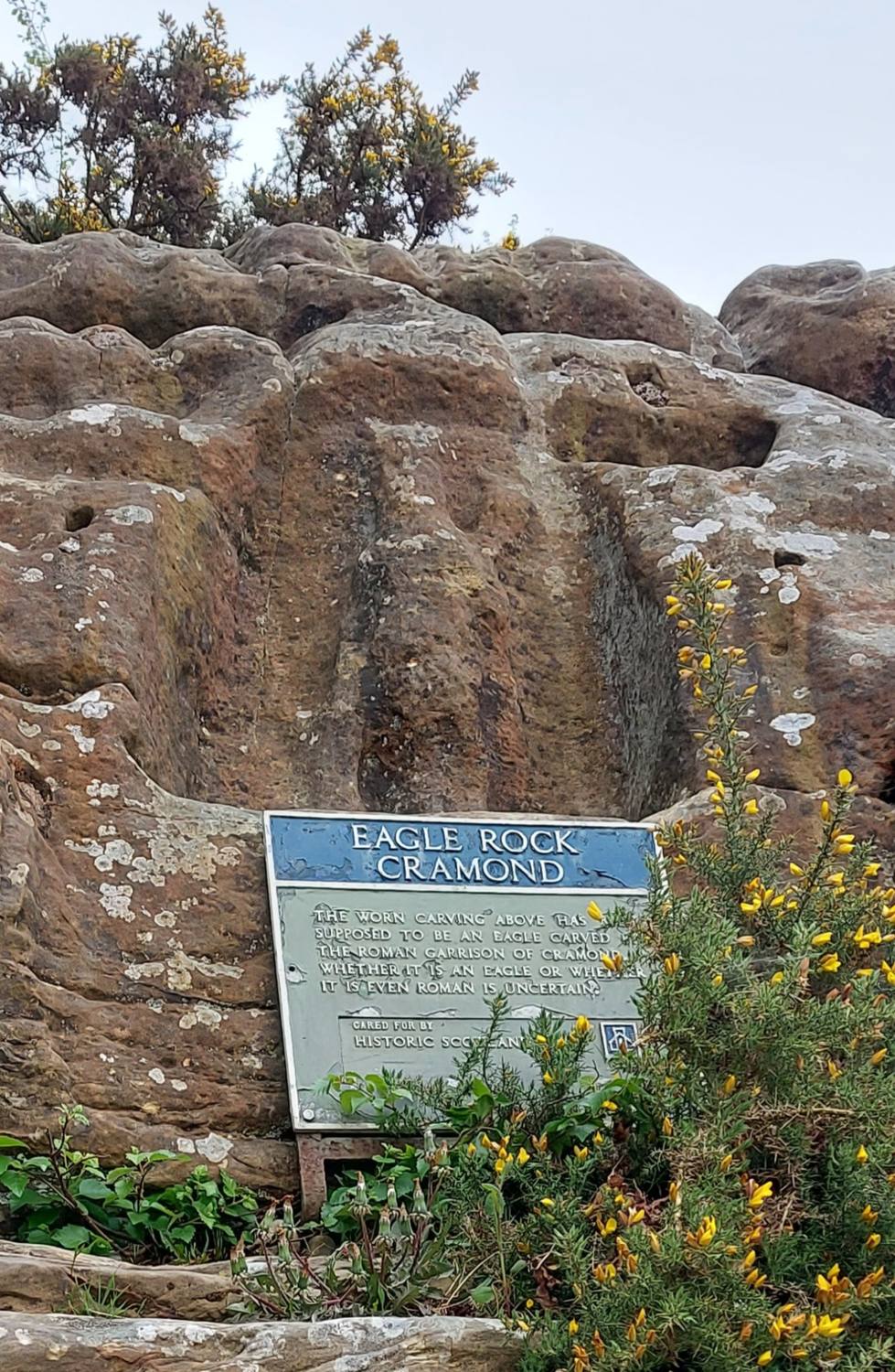
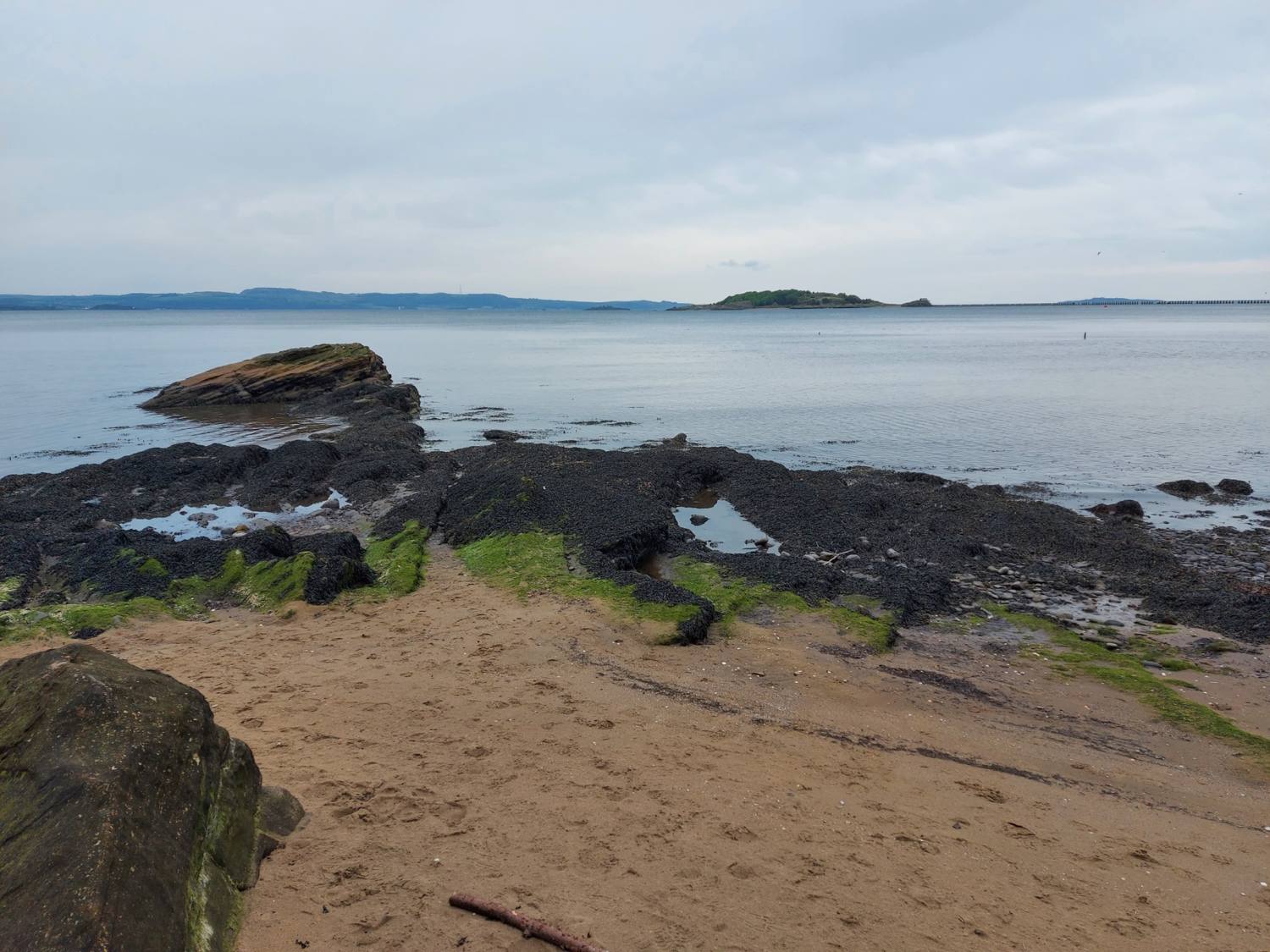
On the shoreline west of Cramond stands a weathered sandstone outcrop known as Eagle Rock, or Hunter’s Craig. Its almost-erased carving has puzzled visitors and antiquarians for centuries. New research published in 2026 suggests that the figure may not be an eagle at all, but the Roman goddess Fortuna.
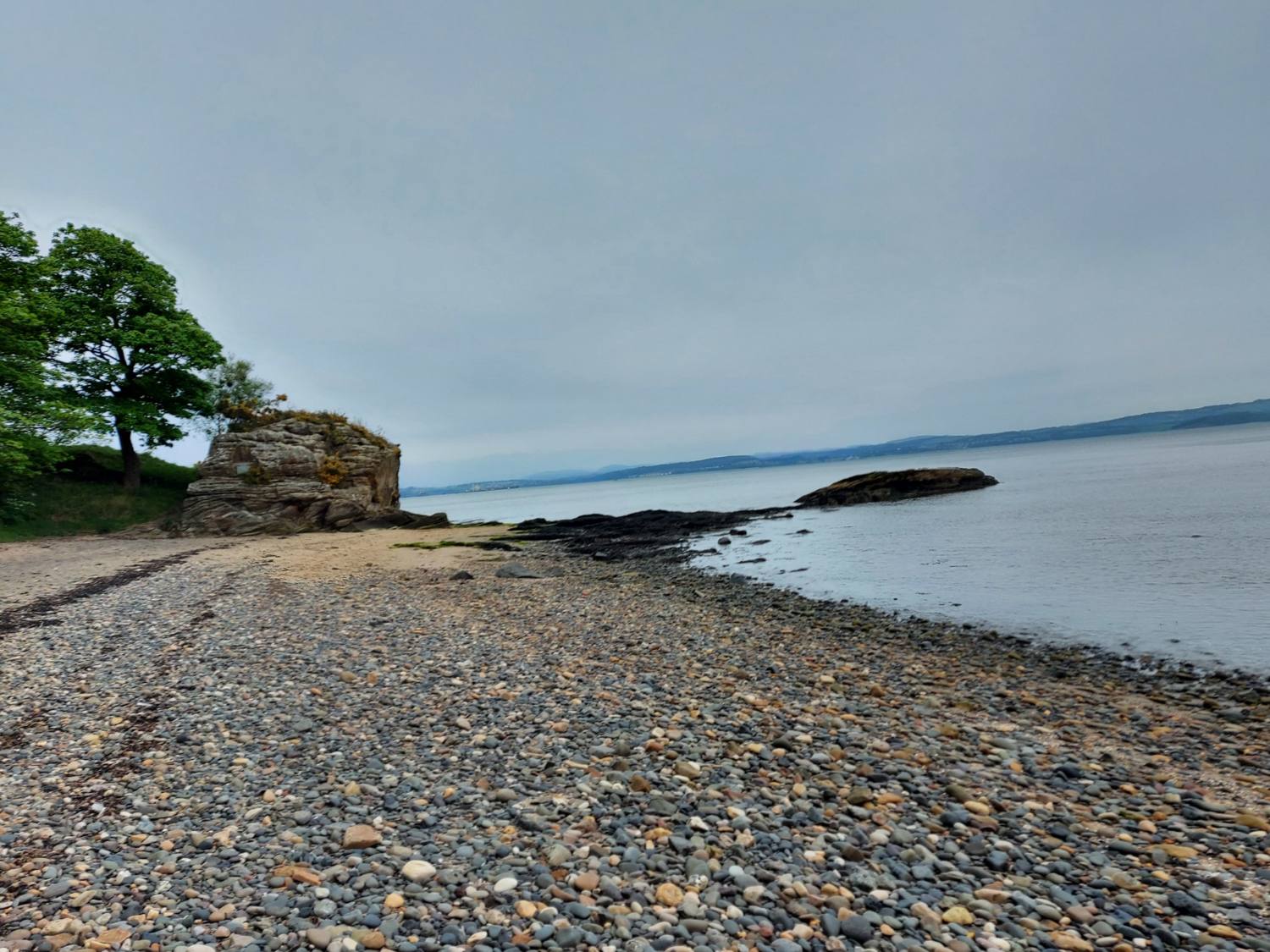
What is carved on Eagle Rock?
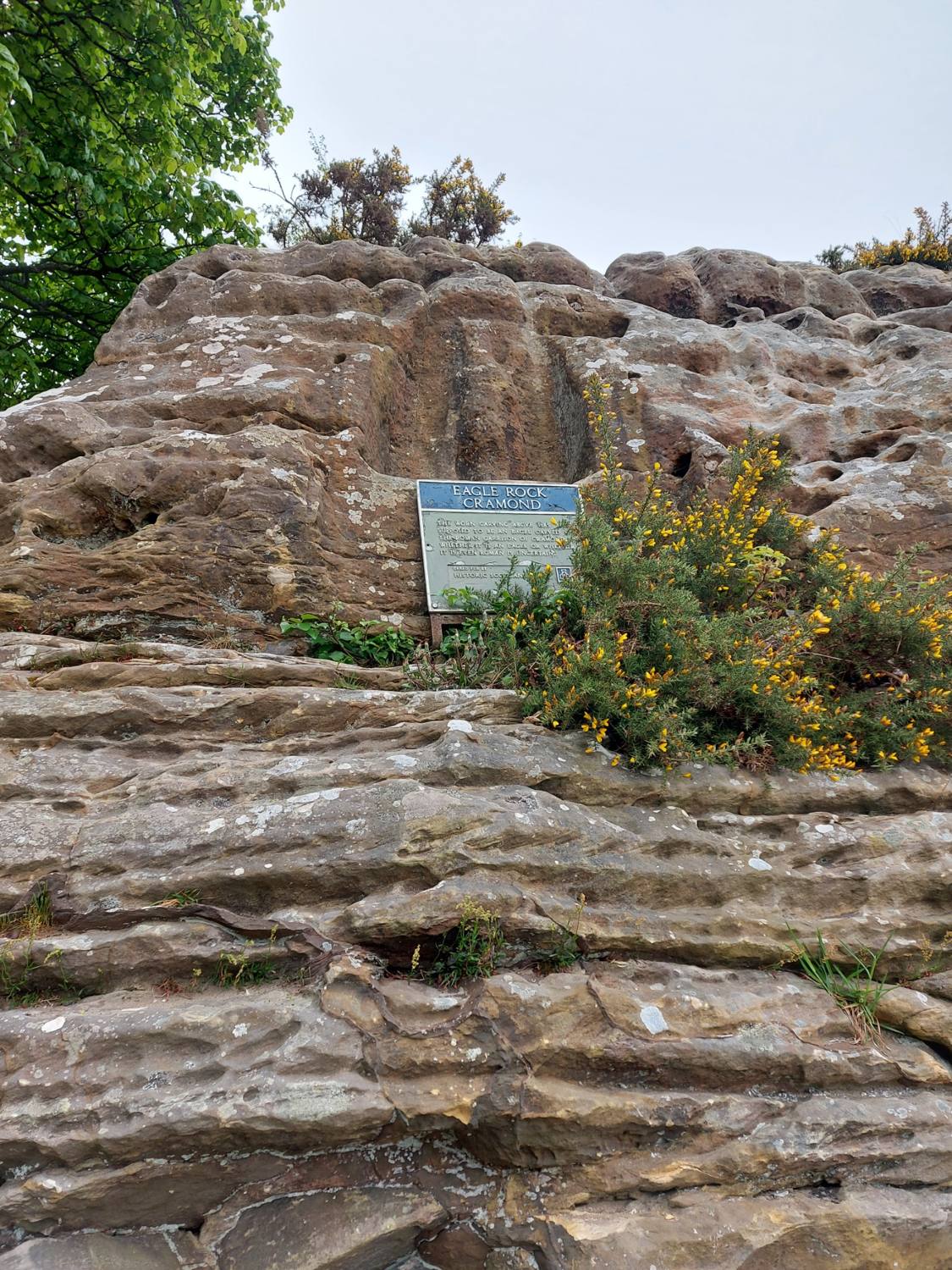
The rock bears an upright relief figure within a shallow niche. Centuries of exposure have made its features extremely difficult to distinguish. The name Eagle Rock reflects an older interpretation, but scholars have also suggested a human figure, Mercury or a protective spirit (Genius). Historic Environment Scotland records the niche as approximately 85 cm high and 73 cm wide.
A new interpretation: Fortuna Redux
In his 2026 study, archaeologist Ben Russell reviews earlier descriptions and uses new imaging techniques to reassess the relief. He argues that the figure represents Fortuna, specifically Fortuna Redux, a form of the goddess invoked for protection and safe return. This is a new scholarly interpretation, not an identification that can be regarded as certain given the carving’s condition.
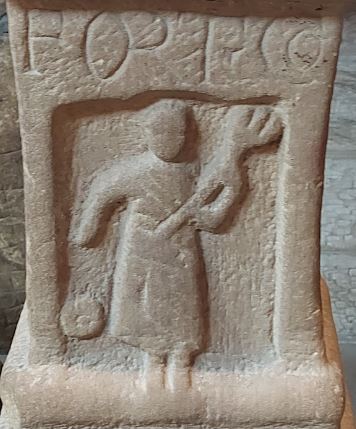
Why would Roman soldiers carve a goddess here?
Russell also examines evidence for Roman-period quarrying around Eagle Rock. His proposal is that soldiers working stone for the nearby Roman fort at Cramond carved the goddess as a protective image overlooking their difficult work. The association with quarrying is plausible but remains a hypothesis; no inscription on the rock identifies the carvers or the deity.
Eagle Rock and Roman Cramond
Cramond fort lies about 800 metres to the south-east. Established around AD 140, it was associated with the Roman military presence on the Forth and was also used during the Severan period in the early third century. The carving’s precise date cannot be determined from its surviving appearance alone.
What changes with this research?
Rather than treating Eagle Rock simply as an eroded Roman eagle, we can now consider it alongside evidence for religious practice, stoneworking and the daily lives of soldiers stationed at Cramond. The identification remains debated, and future access to Russell’s illustrated study and imaging may help readers assess the proposal.
Read more: Fortuna: Goddess of Fate; Ben Russell, “The Poor Battered Image” (2026); Historic Environment Scotland scheduled monument record.

