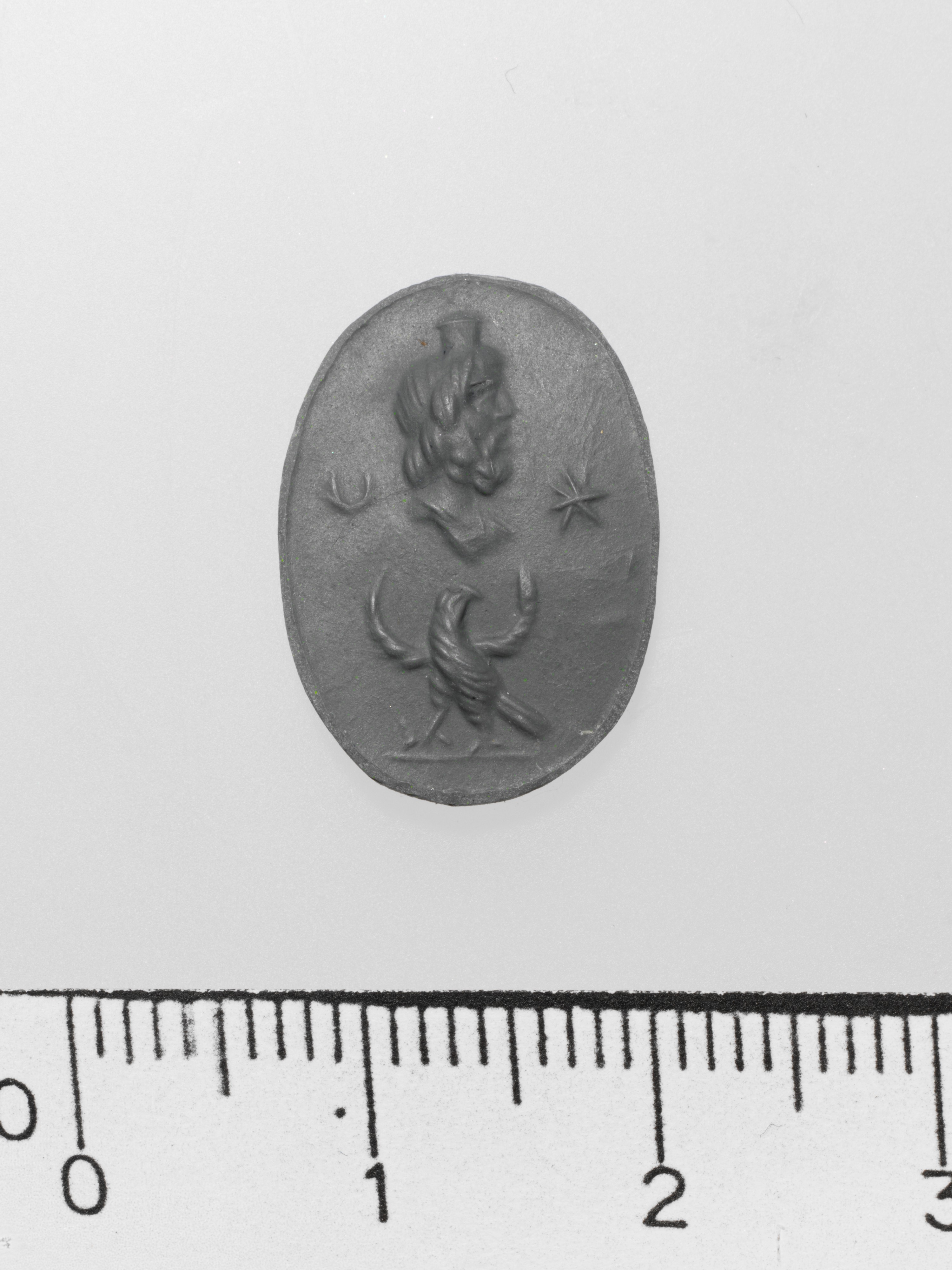
In 1998 Walter Elliot found a small piece of red jasper in a ploughed field at Newstead. A portrait of the emperor Caracalla survives on its face. The ring that once held it has disappeared. National Museums Scotland suggests the setting was probably gold.
Two crafts in one ring
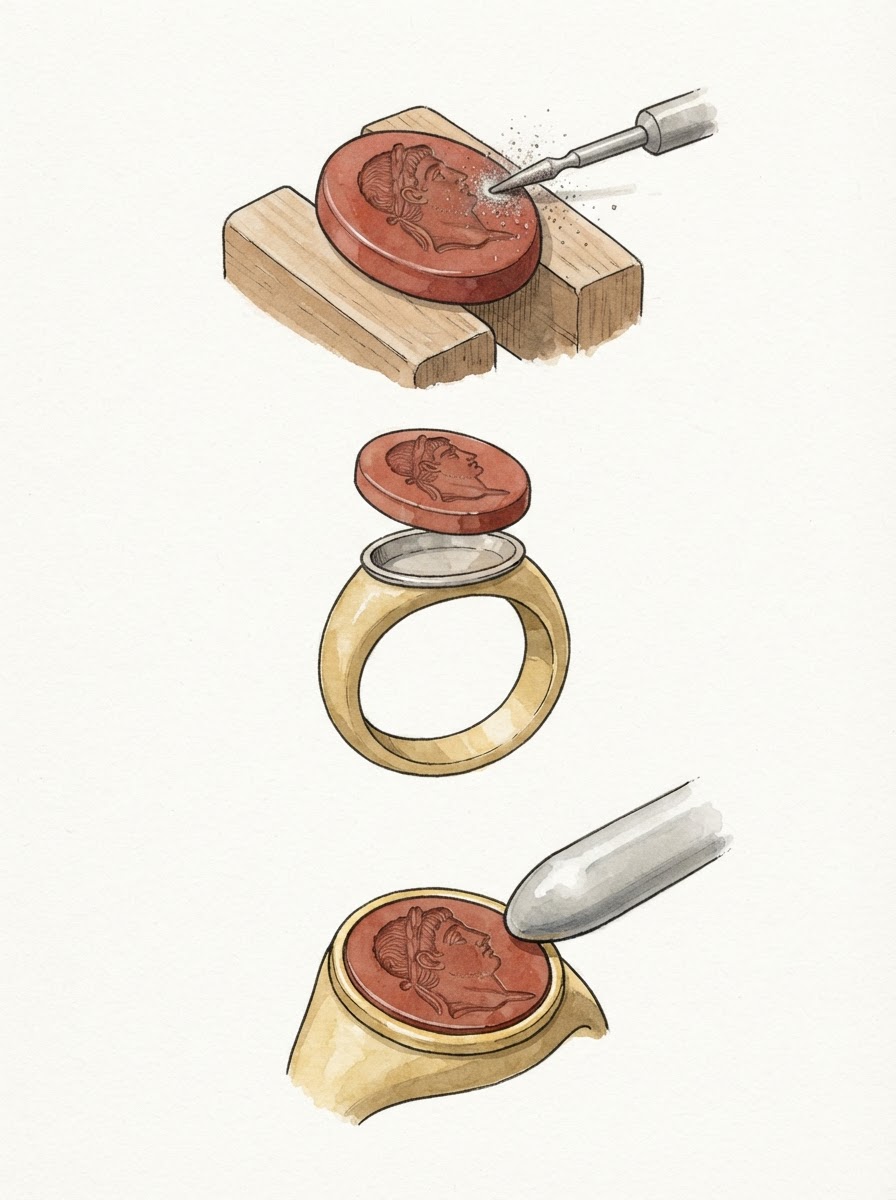
The gem cutter had to fit a recognisable face onto an oval stone small enough to wear on a finger. Cutting into the stone produces an intaglio. When pressed into soft wax, the recessed lines leave a raised impression, and the design appears the other way round. The curl of the emperor’s hair and the line of his nose are worth looking for in the museum photograph.
The jeweller had a different task. One way to mount a gem is to form a seat above the ring band, fit the stone closely and press a narrow rim of metal over its edge. Too little overlap leaves the stone loose. Too much hides the carving. This explains what a setting must achieve, although the missing Newstead mount leaves its exact construction open.
Rona Dalgleish at the jeweller’s bench
Rona Dalgleish of Wasted Remains Jewellery draws on excavated objects, museum visits and her experience working with gemstones and recycled metals. The museum lists her for Roman jewellery-making. Her own photographs offer another Scottish comparison, the rings she makes after the later Pictish find from Burghead. Look at them alongside the Newstead jasper to see how much of a ring’s character can lie in the metalwork itself.
Visit Wasted Remains Jewellery · See Dalgleish’s bronze and silver Burghead rings · See the Caracalla gemstone, object 9
Part of the Romans in Scotland series inspired by Meet the Makers at the National Museum of Scotland, 21–22 November 2026.


