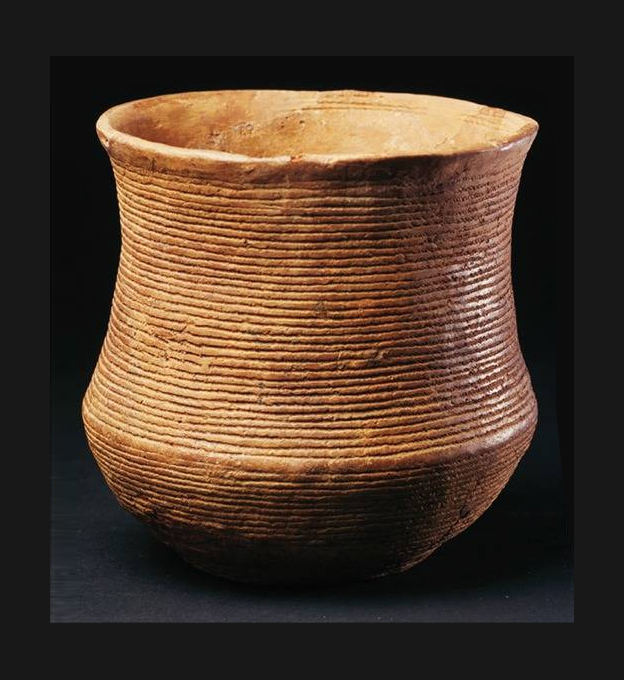
A row of tiny dents around a Scottish Beaker records a moment before the pot went into the fire. The clay had to be firm enough to hold its shape in the potter’s hand and soft enough to take the mark of a comb or a length of cord.
Building the pot and marking the clay
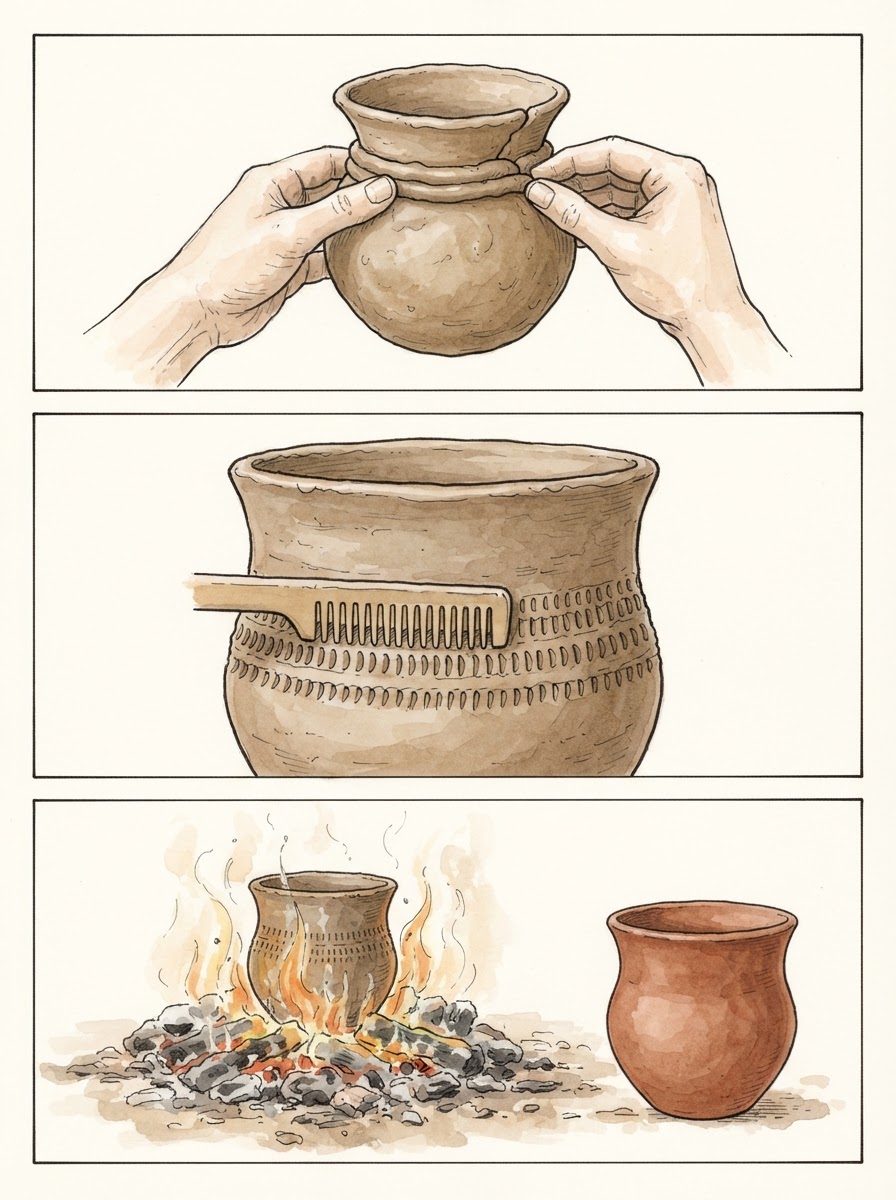
The potter first prepared the clay. Some surviving Beakers contain small fragments of previously fired pottery, called grog. A potter could build the body by hand, joining and smoothing successive additions of clay. On early, thin-walled examples, scraping the inside helped reduce the thickness. Smoothing the outside gave the decoration an even surface.
A twisted cord pressed into the wall left a line of closely spaced marks. A toothed comb made a different impression, repeatable in bands around the vessel. At Balblair in the Highlands, researchers identified impressions from two different combs. Once dry, the vessel could be fired. An open fire, carefully managed, can produce the even reddish-brown colour seen on some Scottish finds.
Emma Harrison’s Perthshire pottery
Emma Harrison runs Bog Born Crafts in Perthshire. Trained in experimental archaeology, she works with local clay, experiments with temper and fires pottery in bonfires. She makes Beaker designs for the museum event. In her online gallery she describes her Neolithic and Bronze Age pots as pieces inspired by archaeology. It is a good place to see what a potter can do with the same small repertoire of tools and a different arrangement of marks.
Meet Emma Harrison at Bog Born · See Harrison’s archaeological pottery gallery · Read the Scottish evidence for Beaker manufacture · Examine the Balblair excavation report
Part of the Romans in Scotland series inspired by Meet the Makers at the National Museum of Scotland, 21–22 November 2026.


