66 minutes 22 seconds · Full-length talk
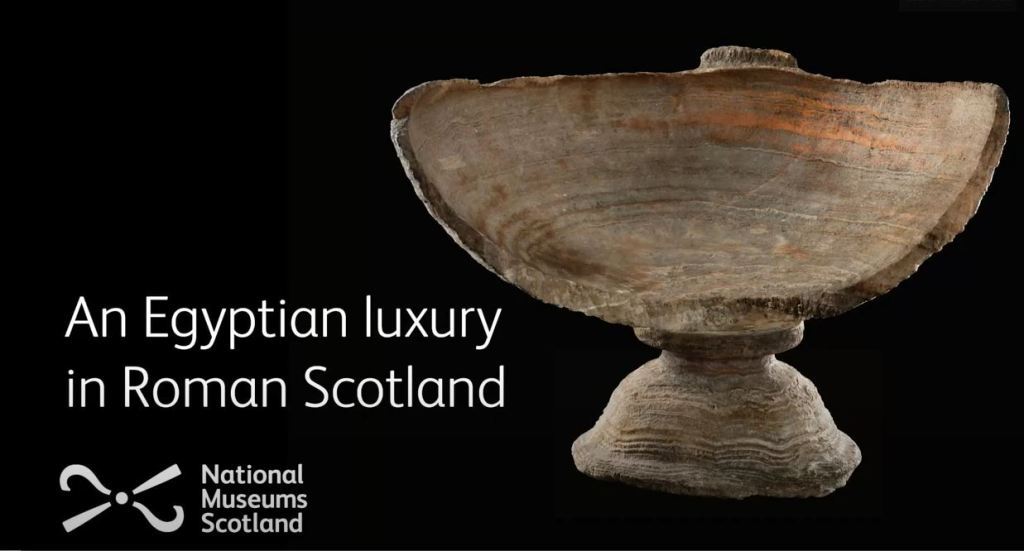
A remarkable burial urn from Camelon connects Roman Scotland with Egypt and the wider Mediterranean.
What this video covers
A stone burial urn found near Camelon in 1849 spent many years in museum storage after its Roman identification was rejected. Later investigation at National Museums Scotland reopened the question and identified the object as Roman, made from an unusual Egyptian stone.
In this recorded museum event, Fraser Hunter and Dan Potter discuss the object, its origins and the questions raised by its presence in Scotland. Their discussion considers the movement of an exotic material and Roman interest in Egyptian beliefs about death and the afterlife.
The event includes a panel discussion and audience questions chaired by Bettany Hughes. It offers an example of how revisiting museum collections can change the interpretation of a find long after its discovery.
For readers of Roman Scotland, the urn provides a focused starting point for thinking about long-distance connections. Its material can be investigated, while the precise personal story behind its arrival and use requires more cautious interpretation.
About the video
Speaker: Dr Fraser Hunter and Dr Dan Potter; chaired by Professor Bettany Hughes
Publisher/channel: NationalMuseumsScotland
Uploaded: 8 February 2021
Captions: Caption tracks available on YouTube.
Overview based on the publisher’s description; this is not a transcript.

