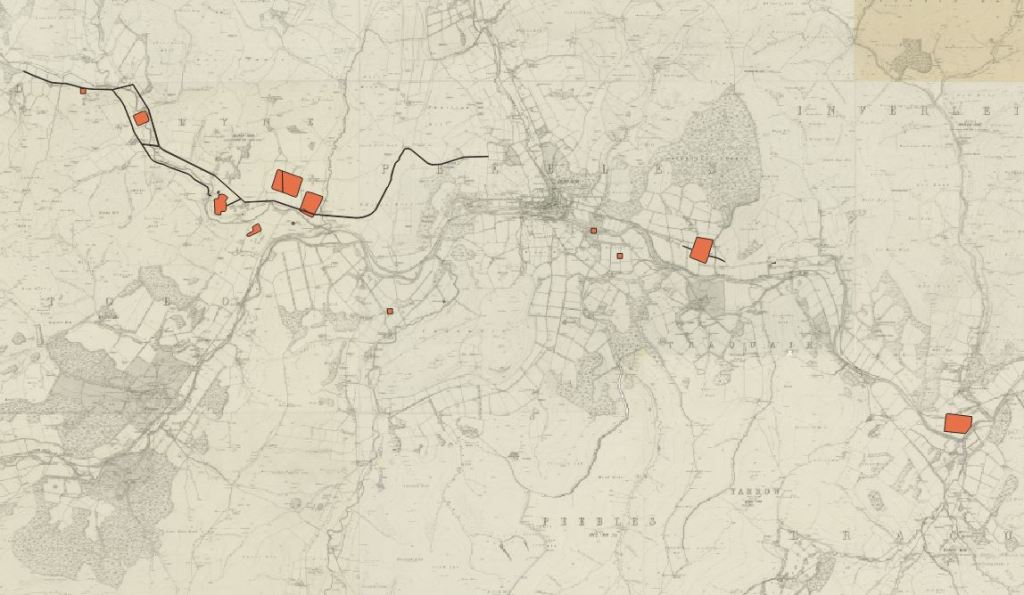
The Romans used riverways to transport goods, as this was the most efficient way to move large amounts of goods, and established their forts and camps near fresh water. The Tweed and its valley were therefore an excellent thoroughfare for the Romans to penetrate Scotland,
Before the Romans
Scotland’s Celtic culture before the Romans was quite sophisticated, with hillforts, chariots and metalworking common. Celtic culture had spread across Europe, and the Romans had battled Celtic tribes through France, Germany, the Low Countries and England before coming to Scotland in 79 AD.
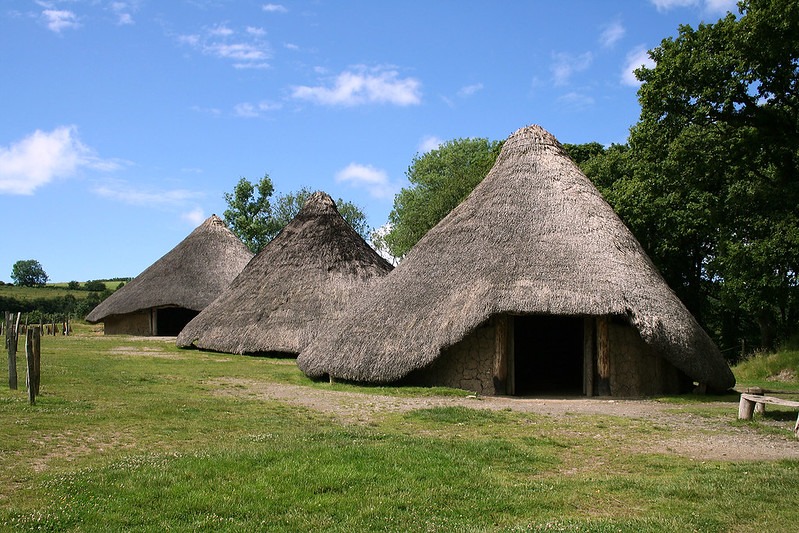
(copyright eleda 1)
Celtic hillforts around Peebles are on the interactive map below. Dating these forts can be hard, and some may have been built after the Romans left.
The Roman invasions and military occupation.
Roman activity in Tweeddale appears confined to the late 1st through 2nd centuries AD, coinciding with general campaigns into southern Scotland (Agricola and Antonine). The earliest incursion (Agricola, c.AD75–84) likely placed temporary camps (like Eshiels I) and scouting posts, but left little tangible legacy here. In the Antonine period (c.AD142–160), a road was built linking Trimontium (Newstead) westward via Lyne, and the large permanent fort at Lyne was constructed. The overlapping camps (Eshiels I & II) may have been reused in successive campaigns (e.g. the later Antonine push under Antoninus or even Severus’s reoccupation c.AD208–210). After AD 160, the Romans abandoned most of Scotland, and the Tweed Valley saw no new Roman bases. By the early 3rd century, all military sites were deserted.
The first forts in Peebles would have been of turf and timber.
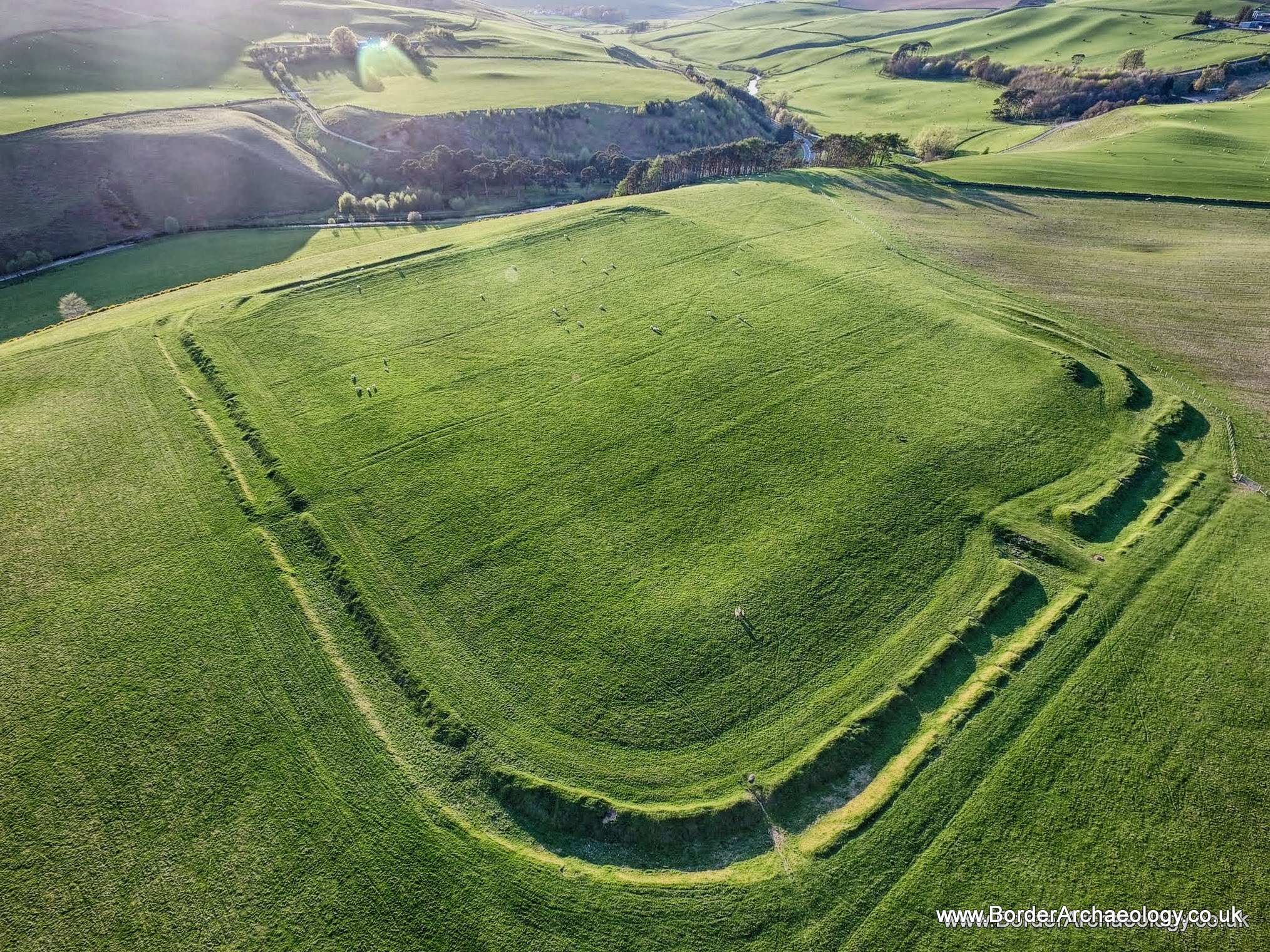
The Tweed Valley is seen as a transit area, as there is no evidence of a vicus of houses near the forts, no watch towers, and very few finds. There are Roman marching camps to the west and east of Peebles.
References

