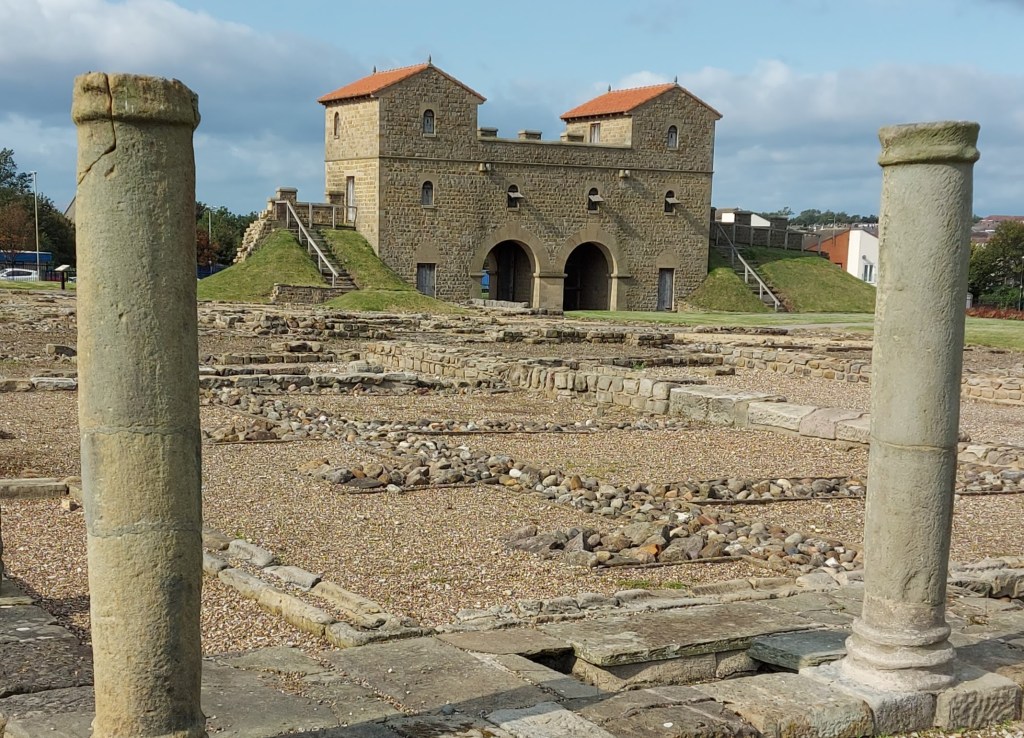
The fort was a supply base for Hadrian’s wall and Septimus Severus’s campaign in Scotland. The fort has the Regina Tombstone for a woman born in St Albans and married to a Syrian man Barates.
Visit Arbeia
Visit Arbeia in South Shields to see excavated remains, reconstructed buildings and museum displays. Check the operator’s current visitor information.
Arbeia at a glance
| Occupation | Second-century fort, expanded as a supply base in the Severan period; later Roman occupation. |
| Garrison | Successive units include the Fifth Cohort of Gauls; later evidence includes the Tigris boatmen. |
| Size | The fort was enlarged and reorganised as a depot; its area needs to be tied to a particular phase. |
| Troop estimate | Changed as accommodation was converted to storage; no single total applies. |
Inscriptions
Victor’s memorial (RIB 1064) and Regina’s tombstone illuminate the wider community; personal memorials are not garrison headcounts.
Sources for this summary
- 129 AD The fort was built as a supply base for troops along Hadrian’s wall. It had an exceptional concentration of granaries, with as many as 24 at one stage; stone-built granaries are also known at other forts. In
- 163 AD, the stone version was built
- 206 – 207 extended as a supply base
- 275 AD there was a fire in the fort that burnt down barracks
- 350 AD minor alterations and its use as a supply base may have ended. OIccupation appears to have continued into the fifth century
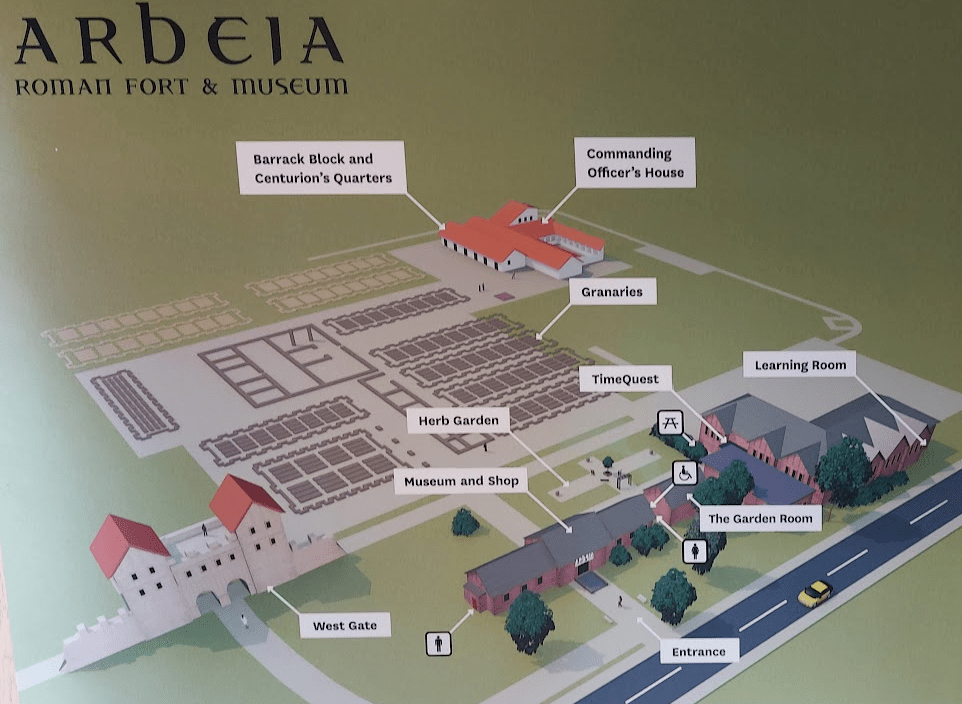
Military Units
- Ala Primae Pannoniorum Sabiniana (Hungry)
- Ala I Hispanorum Asturum (Spain)
- Cohors V Gallorum (French – transferred from Cramond)
- Tigris Boatmen
References
- South Shields Roman Fort (Historic England Research Records)
- Tyne and Wear HER(914): South Shields, Arbeia Roman fort – Details (South Tyneside Historic Environment Record)
- RIB 1064. Funerary inscription for Victor (Asturum funeral stone)


Leave a Reply