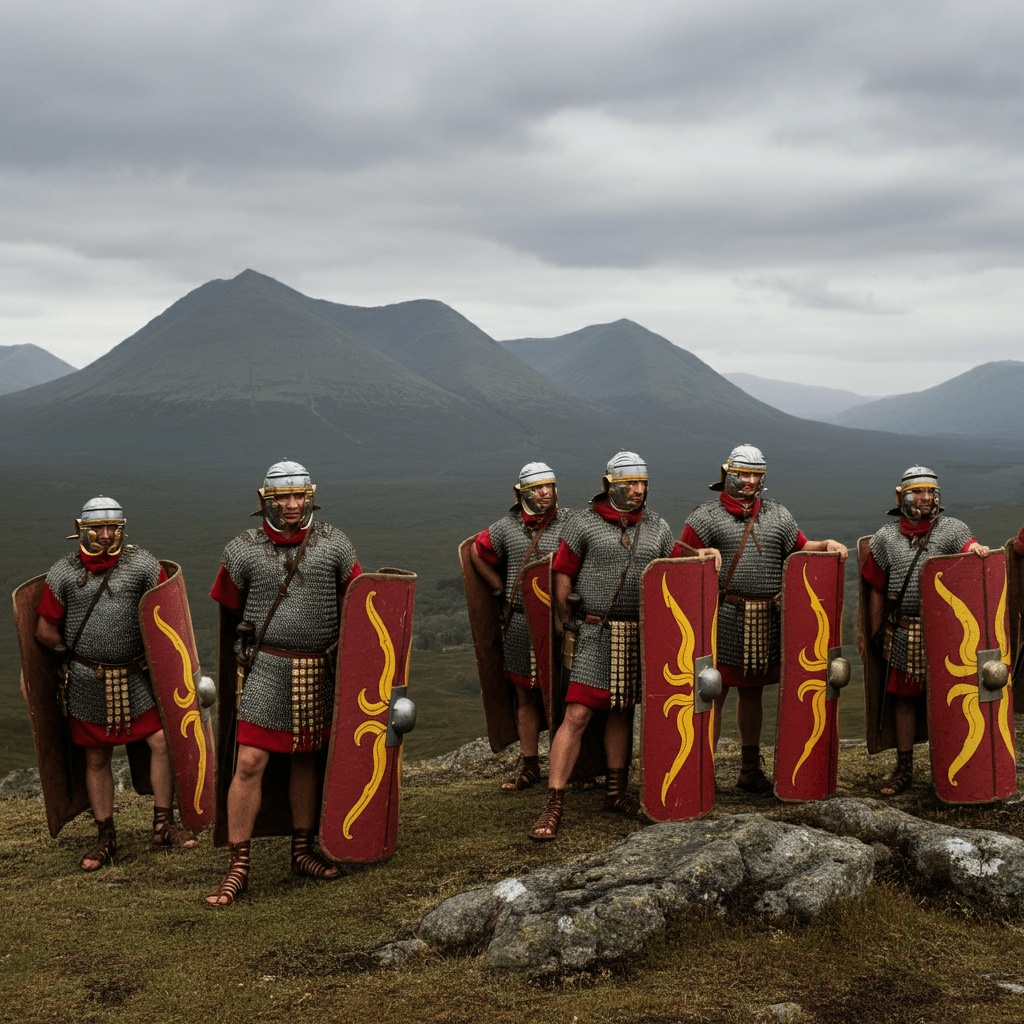
The heavy infantry behind Rome’s invasions and frontier building
The legions formed the core of the Roman army. A legion was a large body of heavily trained Roman citizen soldiers, nominally numbering several thousand men and commanded by senior officers.
But when we talk about a legion being “in Scotland”, an important distinction has to be made. The whole legion did not necessarily march north together.
Roman commanders frequently sent detachments, known as vexillationes, to campaign, build roads and forts, construct frontiers or reinforce other parts of the army.
This is particularly important for understanding Scotland.
Legions and the conquest of Scotland
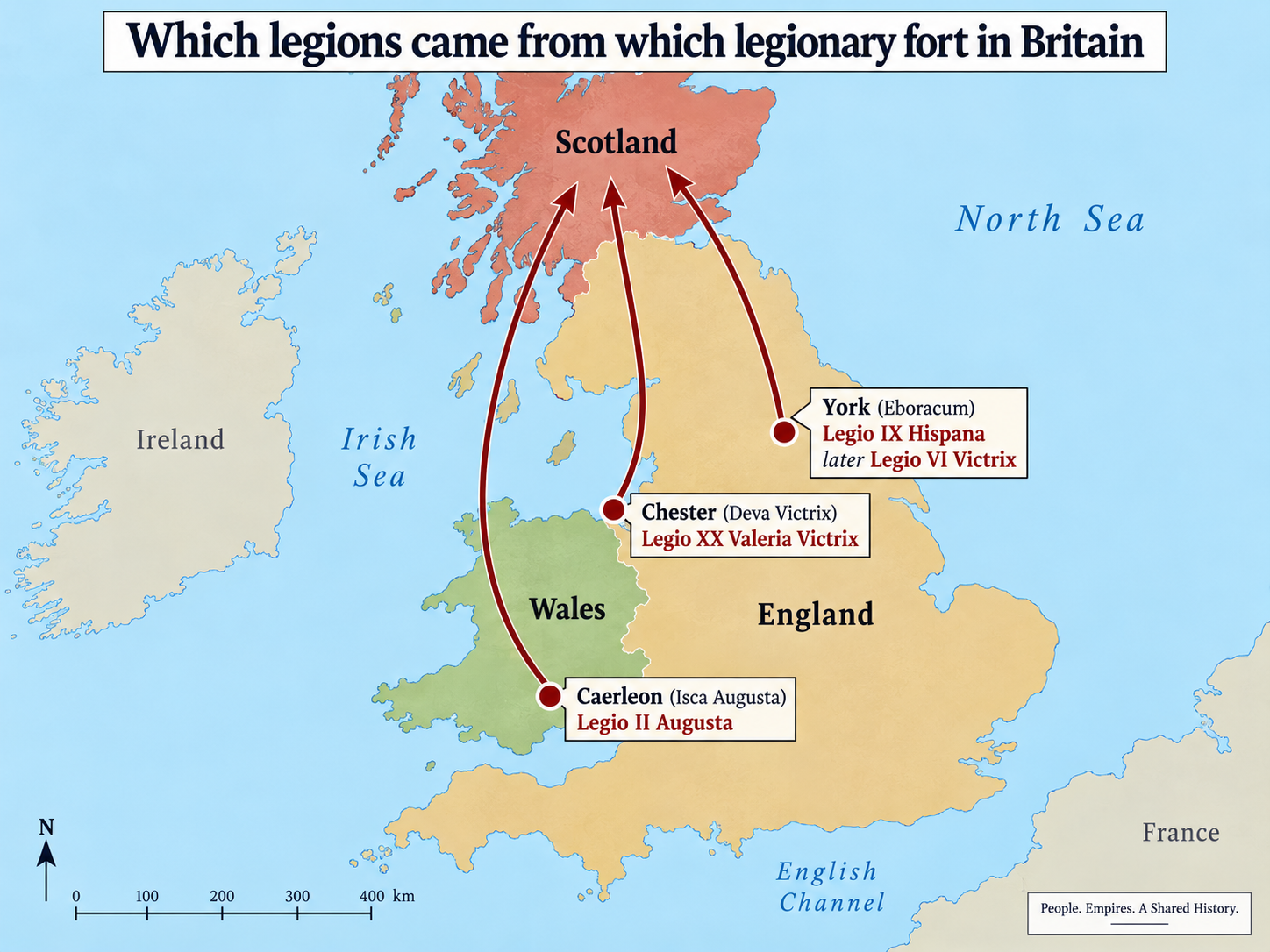
Several legions were involved in the Roman campaigns into northern Britain during the late first century.
Legio IX Hispana — the Ninth Legion
The Ninth Legion is one of the most famous units in Roman Britain. It was heavily involved in the northern campaigns and appears prominently in Tacitus’ account of Agricola.
During one campaign, the Caledonians attacked the Ninth’s camp at night and broke into the defences before Agricola arrived with reinforcements. The legion later disappeared from the surviving British record, producing centuries of speculation about its fate.
Legio XX Valeria Victrix
The Twentieth Legion played an important part in Rome’s operations in Scotland. Its soldiers constructed the great legionary fortress at Inchtuthil during Agricola’s campaigns. The legion later returned north to work on the Antonine Wall.
Legio II Adiutrix
The Second Adiutrix was also involved in the northern campaigns before being transferred away from Britain during the reign of Domitian.
The three legions of the Antonine Wall
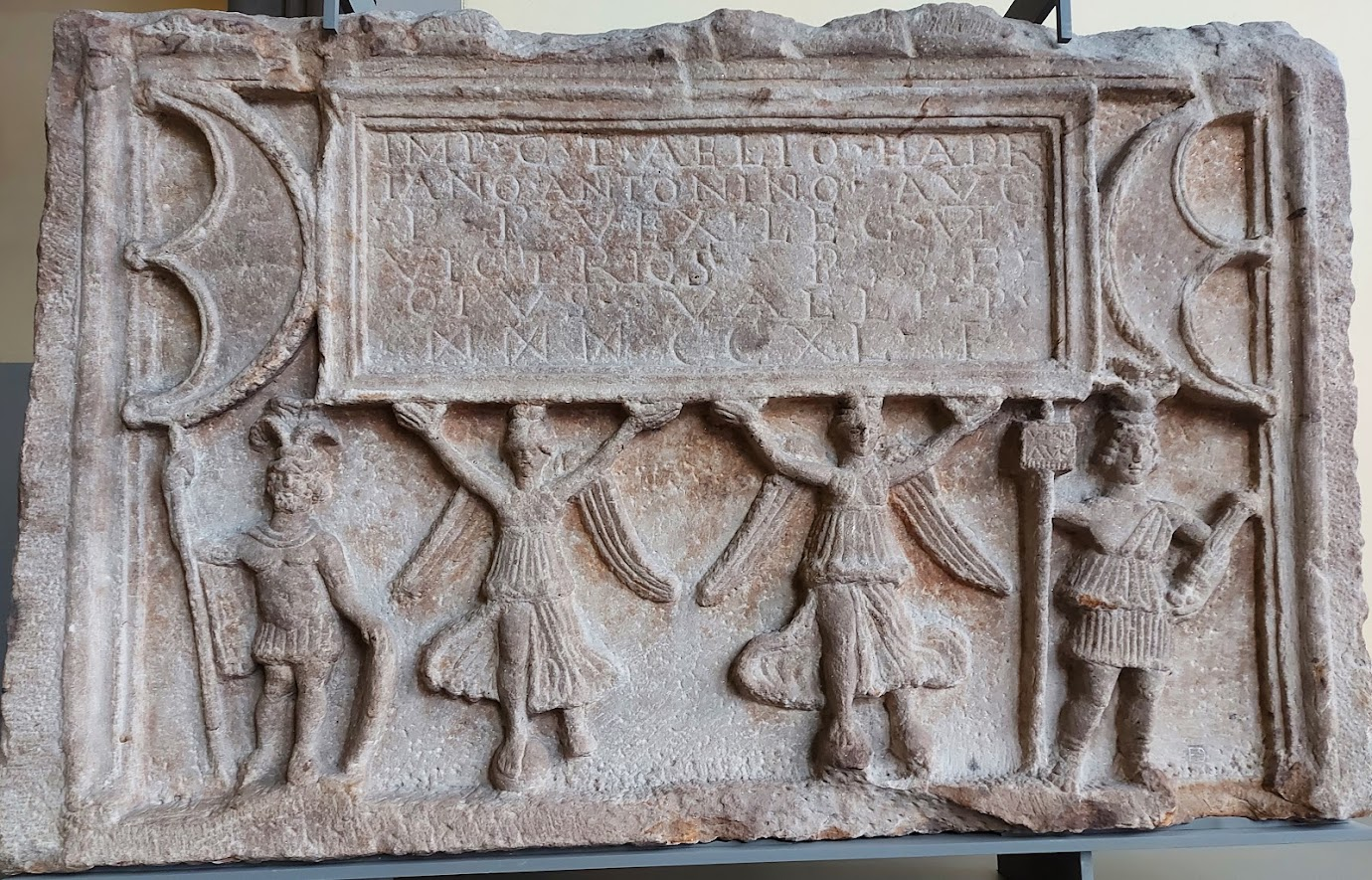
The Antonine Wall provides some of the strongest evidence for legionary activity anywhere in Scotland. Its famous distance slabs record the soldiers who constructed sections of the frontier.
Three legions are particularly well attested:
Legio II Augusta
Normally based at Caerleon in Wales.
Detachments travelled hundreds of miles north to take part in the construction of the Antonine frontier.
Legio VI Victrix
The Sixth Legion arrived in Britain during the reign of Hadrian and was based at York.
Its soldiers helped construct the Antonine Wall, and members of the legion appear repeatedly in inscriptions from Scotland.
Legio XX Valeria Victrix
Based at Chester, the Twentieth also supplied building detachments.
The elaborate sculptures on the Antonine Wall distance slabs were not simply construction records. They proclaimed that Roman soldiers had conquered, measured and physically transformed the landscape.
See the Antonine Wall Distance Slabs
Did legionaries garrison forts?
Usually the permanent garrisons of forts in Scotland were auxiliary units. Legionaries were more commonly associated with major bases, campaigning and construction.
But Scotland does not always fit the simple model. Evidence from Croy Hill, for example, suggests that a legionary detachment may actually have formed part of the garrison there.
Castlecary has also produced evidence for legionary troops alongside auxiliary units. The Roman army could adapt its deployments according to circumstances.
Other legionary detachments
The site also contains pages relating to other legions whose connections with northern Britain are more limited or depend upon small detachments rather than an entire legion.
Legio XXII Primigenia — elements of
These should be distinguished from the much stronger evidence for II Augusta, VI Victrix and XX Valeria Victrix on the Antonine Wall.
Legions built as well as fought
It is easy to imagine Roman legionaries mainly in battle.
Much of their work in Scotland was less dramatic but equally important.
Legionary soldiers:
- built forts
- constructed roads
- dug ditches
- built the Antonine Wall
- quarried and moved stone
- erected inscriptions
- constructed bridges and other infrastructure
Temporary camps found beside the Antonine Wall show where some of the building detachments lived while the frontier was under construction.
The Roman conquest of Scotland was therefore an enormous engineering operation as well as a military campaign.

