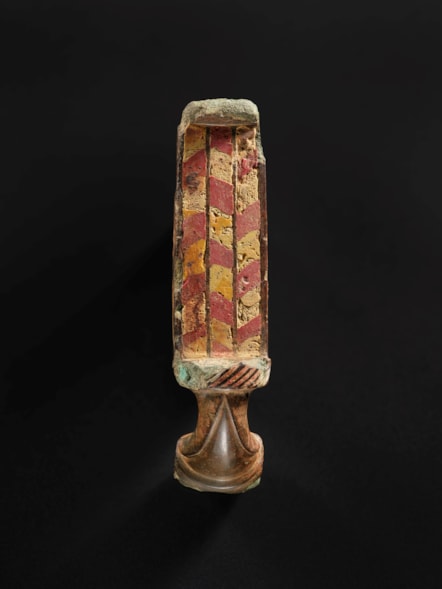
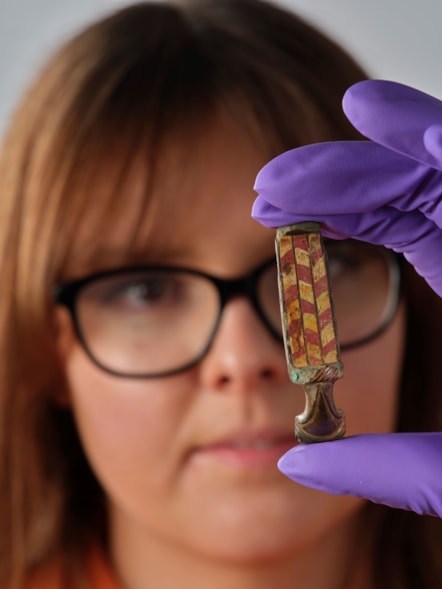
In 2022, a small copper-alloy brooch was discovered near Pathhead in Midlothian. Measuring just 6 cm across, it is an unusual find because its design combines Roman influences with decorative traditions already established in Iron Age Scotland.
National Museums Scotland announced the discovery in June 2026, ahead of the brooch going on display in its exhibition Roman Scotland: Life on the Edge of Empire.
What makes the brooch unusual?
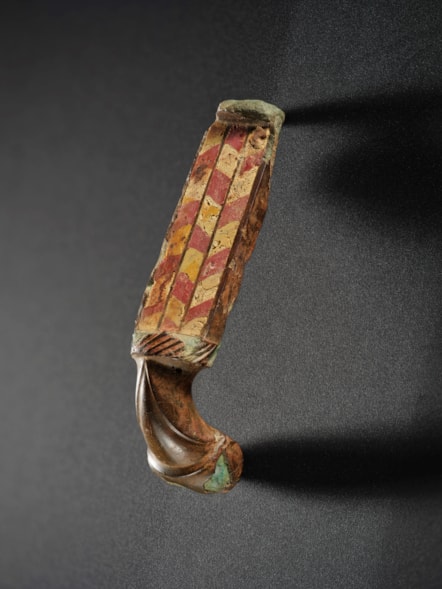
The brooch would originally have looked rather different from how it appears today. Scientific examination suggests that it was coated with tin, giving the metal a silvery appearance. Red and yellow enamel provided additional colour.
Its design is particularly interesting. Although it shows Roman influence, it also incorporates elements of local Iron Age art. Rather than simply copying a Roman object, whoever made it appears to have combined different artistic traditions.
Brooches were commonly used to fasten clothing, but some were also decorative objects. We cannot know who owned this particular example or whether it was made locally.
Romans and the people of Scotland
Roman objects are found well beyond the forts and military installations occupied by the Roman army in Scotland.
Some may have arrived through trade or the exchange of gifts. Others could have been carried by people moving between Roman-controlled territory and communities farther north.
The Pathhead brooch is interesting because it appears to combine influences from both worlds.
This does not necessarily mean its owner was Roman, or that Roman soldiers were stationed nearby. Objects can travel considerable distances, and local craftspeople may adopt foreign designs without adopting the culture or identity of the people who introduced them.
The brooch is therefore useful evidence of contact and artistic influence, although it cannot tell us exactly how that contact took place.
What can we learn from it?
Much of the archaeology of Roman Scotland concerns forts, marching camps, roads and frontier defences. These provide evidence of where the army operated, but tell us rather less about everyday contact between soldiers and the people already living in Scotland.
Small finds such as brooches, pottery, coins and jewellery help fill some of those gaps.
The Pathhead brooch is particularly interesting because its decoration suggests that Roman and local artistic traditions were not always kept separate.
There are still questions we cannot answer. Where was it made? Who wore it? Was it acquired through trade, given as a gift or passed between generations?
We may never know, but the object provides another piece of evidence for understanding relations between Roman Britain and the communities living beyond its military frontiers.
Where can you see it?
The brooch is due to feature in Roman Scotland: Life on the Edge of Empire at the National Museum of Scotland in Edinburgh, opening on 14 November 2026.
Source and photographs
National Museums Scotland – Unique Roman brooch discovered in Scotland to go on display for the first time, 5 June 2026.

