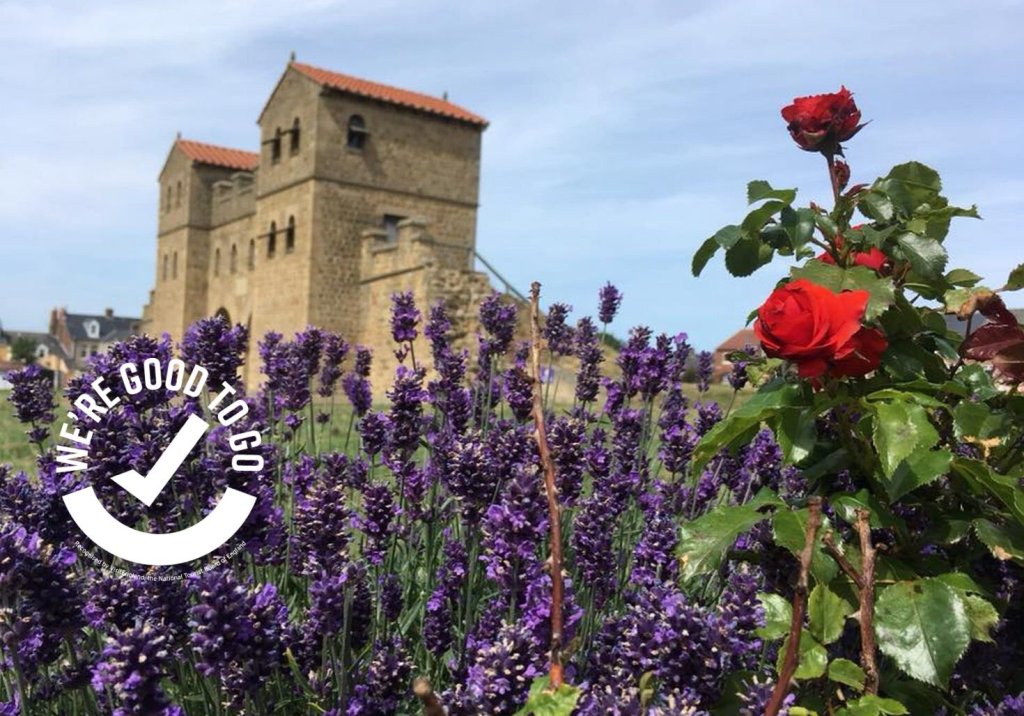
Arbeia guarded the mouth of the River Tyne and became an important supply base for Hadrian’s Wall. Its museum, excavated remains and reconstructed buildings make it one of the most vivid Roman sites in northern Britain.
The site combines original archaeology with full-scale reconstructions, allowing visitors to move through spaces based on a Roman gatehouse, commanding officer’s house and soldiers’ barrack. Displays explain the fort’s changing role and the people linked with it.
Plan your visit
Location: Baring Street, South Shields, NE33 2BB
Roman focus: Supply, movement and life at the mouth of the River Tyne
Admission and opening: Check current arrangements before travelling
Official website: Visit the museum’s official website
Map: Open in Google Maps
Arbeia at a glance
| Occupation | Second-century fort, expanded as a supply base in the Severan period; later Roman occupation. |
| Garrison | Successive units include the Fifth Cohort of Gauls; later evidence includes the Tigris boatmen. |
| Size | The fort was enlarged and reorganised as a depot; its area needs to be tied to a particular phase. |
| Troop estimate | Changed as accommodation was converted to storage; no single total applies. |
Inscriptions
Victor’s memorial (RIB 1064) and Regina’s tombstone illuminate the wider community; personal memorials are not garrison headcounts.
References
What can you see?
Highlights include:
- reconstructed Roman gatehouse, barrack and commanding officer’s house
- excavated fort remains and granaries
- inscriptions, sculpture and personal objects
- evidence for the diverse people who lived and died at Arbeia
Why does it matter?
Arbeia demonstrates the enormous supply system required to maintain Rome’s northern frontier. Ships arriving on the Tyne could bring food, equipment and personnel for forts along Hadrian’s Wall and for operations farther north.
Combine your visit with
Before travelling: Displays, opening arrangements and admission charges can change. Check the museum’s official website for current information.

