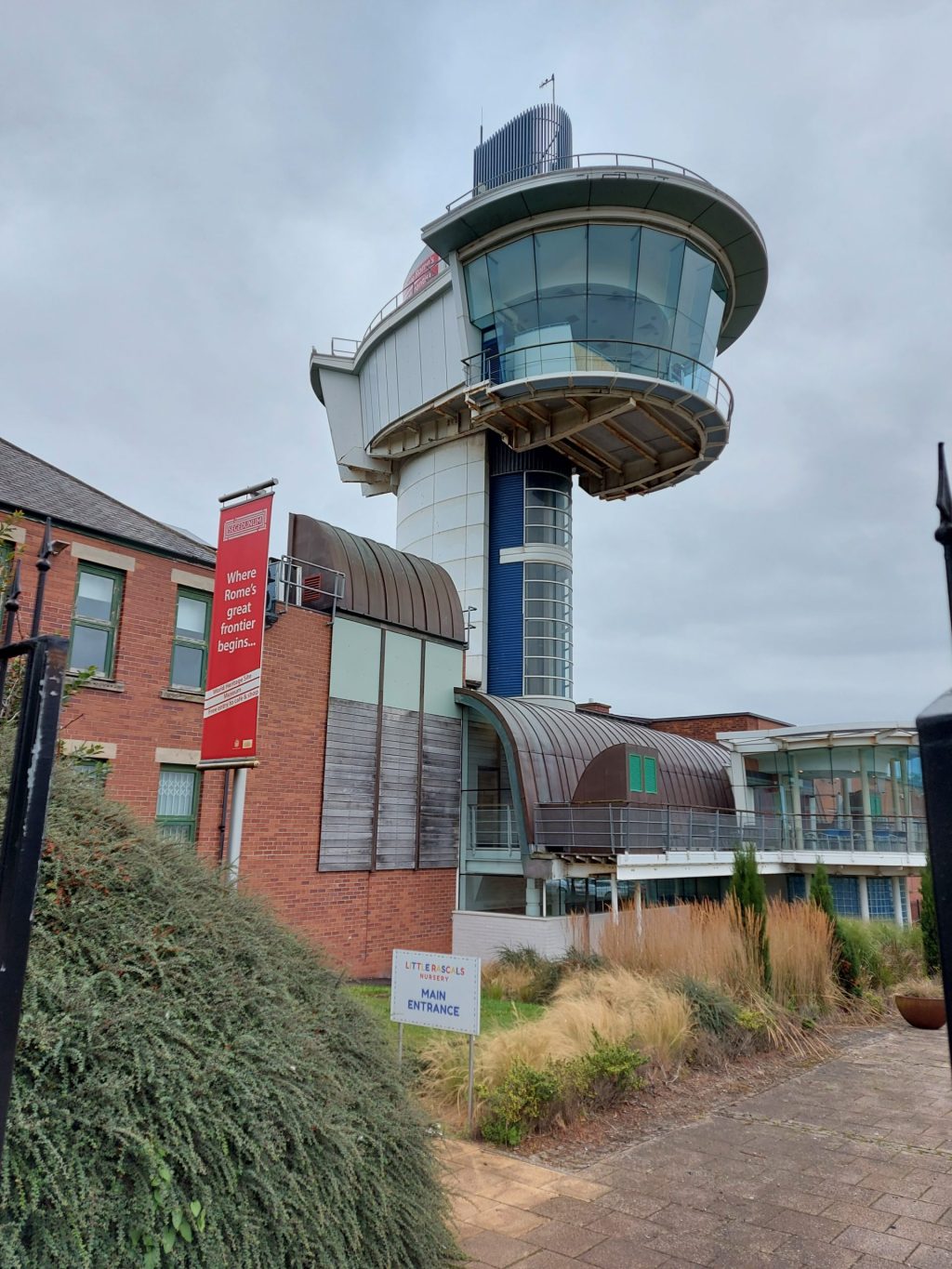
Segedunum stands at the eastern end of Hadrian’s Wall beside the River Tyne. The museum and excavated fort provide one of the clearest places to understand how the frontier began, how a Roman garrison was organised and how the site later became part of an industrial landscape.
Visitors can explore the fort plan, reconstructed bathhouse and museum displays. A viewing tower gives an elevated view over the archaeology and the line of the Wall, helping to turn foundations on the ground into a recognisable military base.
Plan your visit
Location: Buddle Street, Wallsend, NE28 6HR
Roman focus: The eastern end of Hadrian’s Wall
Admission and opening: Check current arrangements before travelling
Official website: Visit the museum’s official website
Map: Open in Google Maps
Segedunum at a glance
| Occupation | Hadrianic foundation from around AD 122; repeated changes through the late Roman period. |
| Garrison | A part-mounted auxiliary cohort; composition changed over time. |
| Size | A reliable phase-specific internal area is not established in the sources summarised here. |
| Troop estimate | Around 600 at nominal establishment in the early layout: about 480 infantry and 120 cavalry. |
Inscriptions
The Wallsend corpus preserves unit and building evidence. Interpret each inscription alongside its date and the changing fort layout.
References
What can you see?
Highlights include:
- the excavated remains of the Roman fort
- a reconstructed Roman bathhouse
- museum displays about the garrison and Hadrian’s Wall
- views over the Wall’s eastern terminus and the River Tyne
Why does it matter?
Although Segedunum lies outside Scotland, it provides vital context for the frontier system from which armies, supplies and officials moved north. It is particularly useful when comparing Hadrian’s Wall with the later Antonine Wall.
Combine your visit with
Before travelling: Displays, opening arrangements and admission charges can change. Check the museum’s official website for current information.

