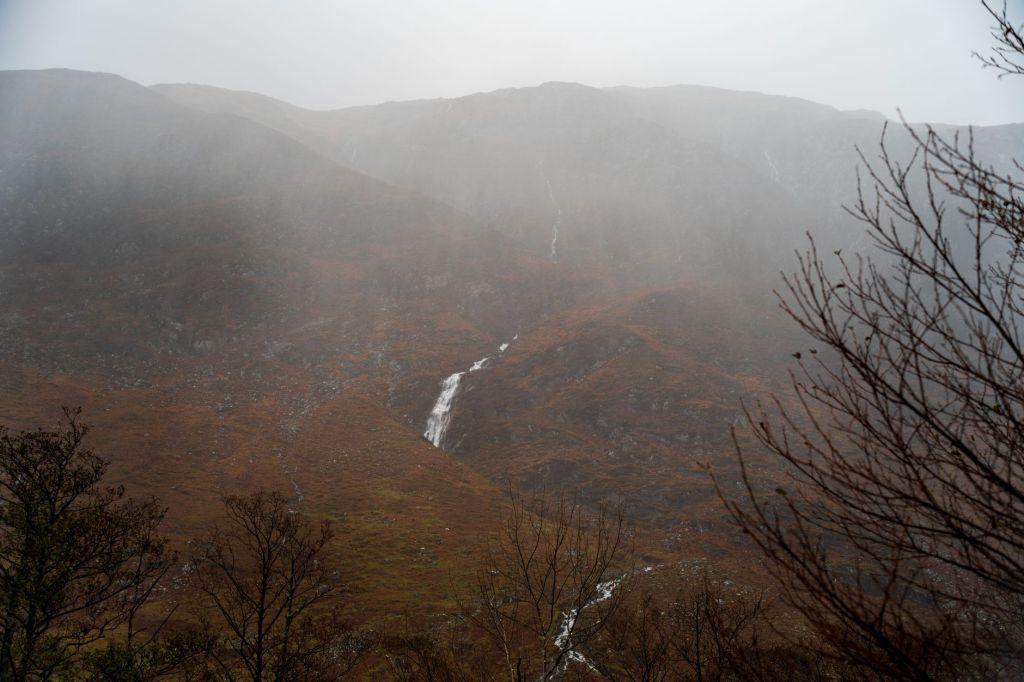
Climate change is often regarded as a modern problem, but the people of prehistoric Scotland experienced dramatic environmental changes thousands of years ago.
For much of the Bronze Age, farming communities in the Stirling area prospered. Forests were cleared, settlements expanded and agriculture spread across the landscape. Roundhouses appeared on hillsides and in valleys, while communities cultivated crops and grazed livestock across ever larger areas of land.
Then the climate began to change.
From around 1500 BC onwards, Scotland experienced a gradual shift towards cooler and wetter conditions. Although the changes occurred over centuries rather than decades, their impact was profound. Areas that had once been suitable for farming became increasingly difficult to cultivate. Peat bogs expanded, drainage deteriorated and agricultural productivity declined.
For the people of Bronze Age Stirling, these changes presented a challenge unlike any they had previously faced.
The archaeological evidence suggests that communities responded in a variety of ways. Some adapted successfully, while others may have abandoned settlements and moved elsewhere. The changing climate reshaped both the landscape and the societies that depended upon it.
A Different Bronze Age Climate
The early and middle Bronze Age generally coincided with a relatively favourable climate.
Temperatures were slightly warmer than today, and conditions were often suitable for farming even in areas that would later become marginal. Communities expanded into upland regions and established settlements in locations that are now covered by peat or rough grazing.
Archaeological evidence from across Scotland demonstrates that farming was practised at higher elevations than is common today.
The Stirling area benefited from these conditions. Communities occupied a variety of landscapes, from the fertile lowlands of the Forth Valley to higher ground in the surrounding hills.
For many centuries, the combination of agriculture, livestock farming and expanding settlements appears to have supported a growing population.
The Climate Begins to Deteriorate
Around the middle of the second millennium BC, environmental conditions started to change.
The climate became progressively wetter and cooler. Increased rainfall affected drainage, while lower temperatures shortened growing seasons and reduced agricultural productivity.
Although these changes may seem modest by modern standards, they had significant consequences for prehistoric farming communities.
Unlike modern farmers, Bronze Age people possessed no machinery, artificial fertilisers or sophisticated drainage systems. Their survival depended directly upon local environmental conditions.
Even relatively small changes could have major consequences.
The archaeological record suggests that these environmental shifts were felt across much of Scotland, including the Stirling region.
The Expansion of Peat Bogs
One of the most visible consequences of climatic deterioration was the growth of peat.
Peat forms when plant material accumulates in waterlogged conditions and fails to decompose fully. Over time, thick layers build up, creating bogs that can cover extensive areas.
As rainfall increased and drainage worsened, peat began to spread across parts of Scotland.
The Stirling area contains some of the country’s most important peat landscapes, including Flanders Moss. Although the moss continued to develop over thousands of years, environmental changes during the Bronze Age contributed significantly to its expansion.
Areas that may once have been suitable for cultivation or grazing gradually became less productive.
The growing bogs altered the landscape and reduced the amount of land available for agriculture.
Losing Valuable Farmland
The spread of peat and the deterioration of climatic conditions placed increasing pressure on farming communities.
Fields became wetter and more difficult to cultivate. Crops were more vulnerable to failure, while grazing land became less reliable.
Some upland settlements appear to have been abandoned during this period. Areas that had once supported farming could no longer sustain permanent occupation.
Archaeologists have identified evidence suggesting that settlement patterns changed as communities adjusted to the new environmental realities.
People may have concentrated increasingly on lower and more productive land, while marginal areas were gradually deserted.
The landscape was becoming less forgiving.
Pressure on Communities
As productive land became scarcer, competition for resources may have intensified.
The archaeological evidence suggests that population levels remained substantial, even as environmental conditions deteriorated. This created pressure on the most valuable agricultural land.
Communities that had previously expanded into new areas now found their options increasingly restricted.
Such pressures may have encouraged social change. Greater competition for land and resources could have increased tensions between neighbouring groups and contributed to the emergence of more organised leadership.
People needed ways to protect what remained valuable.
The Rise of Defended Settlements
One of the most striking developments towards the end of the Bronze Age and into the Iron Age was the increasing appearance of defended sites.
Across Scotland, communities began constructing settlements protected by ditches, embankments and other defensive features.
Not every defended settlement was necessarily built because of warfare. Some may have served as symbols of status or centres of local authority. Nevertheless, their growing popularity suggests that security had become an important concern.
The reasons remain debated.
Competition for land, livestock and resources may have played a role. Environmental pressures could have increased tensions between neighbouring groups, making defence more important than it had been during earlier periods.
The changing climate may therefore have contributed indirectly to the emergence of more defensive societies.
Adapting to a New Reality
Despite these challenges, Bronze Age communities were remarkably resilient.
People adapted their farming practices, adjusted settlement locations and developed new strategies for survival. The archaeological record demonstrates continuity as well as change.
Agriculture did not disappear. Communities continued to cultivate crops and raise livestock, although often under more difficult conditions.
Human societies have always adapted to environmental challenges, and the people of prehistoric Stirling were no exception.
Their ability to respond to changing circumstances helped ensure the survival of farming communities throughout central Scotland.
Lessons from Flanders Moss
Few places illustrate these environmental changes more clearly than Flanders Moss.
Today the moss is one of Britain’s largest remaining raised bogs, covering a vast area west of Stirling. To modern visitors it appears as a natural wilderness, but its history reflects thousands of years of interaction between climate, environment and human activity.
The development of the moss transformed the surrounding landscape. Areas once used by prehistoric communities were gradually engulfed by expanding peat deposits.
At the same time, the waterlogged conditions preserved valuable archaeological evidence, allowing modern researchers to reconstruct aspects of prehistoric life and environmental change.
Flanders Moss stands as a reminder of how dramatically landscapes can evolve over time.
Climate and Human History
The story of Bronze Age climate change highlights an important truth.
Human history cannot be separated from environmental history.
The communities that lived around Stirling were not passive observers of the natural world. Their success depended upon understanding and responding to environmental conditions. When the climate changed, they were forced to adapt.
The archaeological evidence demonstrates that even gradual climatic shifts can influence settlement patterns, economic activity and social organisation.
The people of Bronze Age Stirling experienced these challenges firsthand.
Preparing for the Iron Age
By the end of the Bronze Age, the landscape and society of the Stirling area had changed significantly.
Communities had adapted to a cooler, wetter environment. Peat bogs had expanded, some settlements had been abandoned and pressure on valuable farmland had increased.
At the same time, social structures were becoming more complex, and defended settlements were beginning to appear across Scotland.
These developments helped lay the foundations for the Iron Age world that followed.
When iron technology eventually arrived around 700 BC, it entered a society already shaped by centuries of environmental challenge and adaptation.
The climate crisis of the Bronze Age did not destroy the communities of the Stirling area. Instead, it transformed them, creating the conditions that would give rise to the tribal societies encountered by the Romans more than a millennium later.

