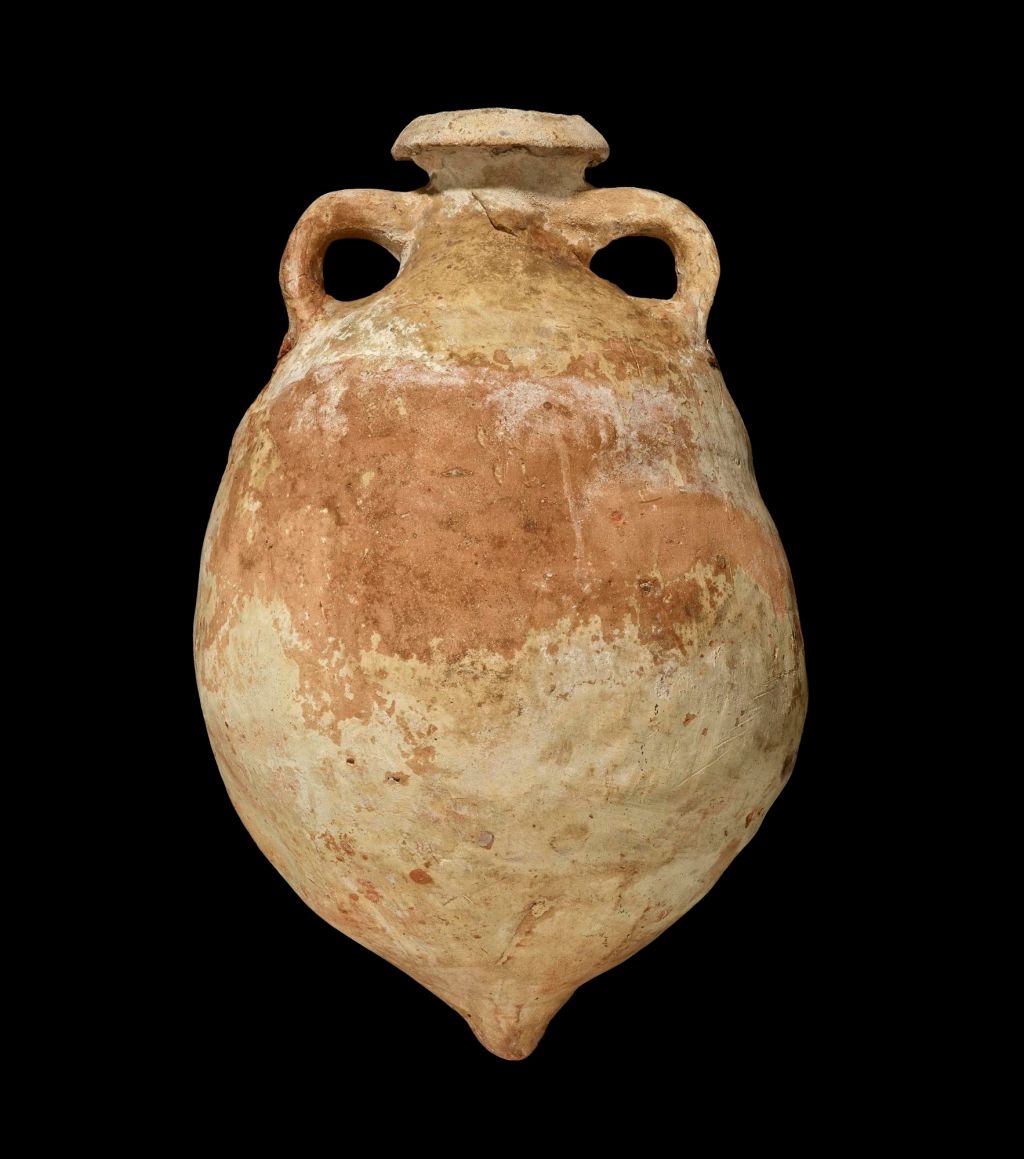
An amphora is a tall jar with two handles that the Romans used to carry things like oil, wine, or water.
There are various types found in Scotland
Summary Comparison Table
| Amphora Type | Primary Origin | Primary Cargo | Scottish Fort Occurrences | Key Visual Feature |
| Dressel 20 | Baetica (Southern Spain) | Olive Oil | Inchtuthil, Newstead, Antonine Wall forts | Large spherical body, thick loop handles |
| Gauloise 4 | Gallia Narbonensis (France) | Wine | Bearsden, Bar Hill, Cramond | Flat base, pear-shaped body |
| Dressel 2–4 | Italy, Spain, Gaul | Wine | Inchtuthil, Strageath, Newstead | Double-rod (“bifid”) handles, long spike |
| Beltrán II / Dressel 7–11 | Southern Spain / Portugal | Garum & Salt Fish | Newstead, Inveresk, Cramond | Flared rim, interior pitch lining |
| Rhodian Type | Aegean / Eastern Mediterranean | Sweet Wine / Figs | Newstead |
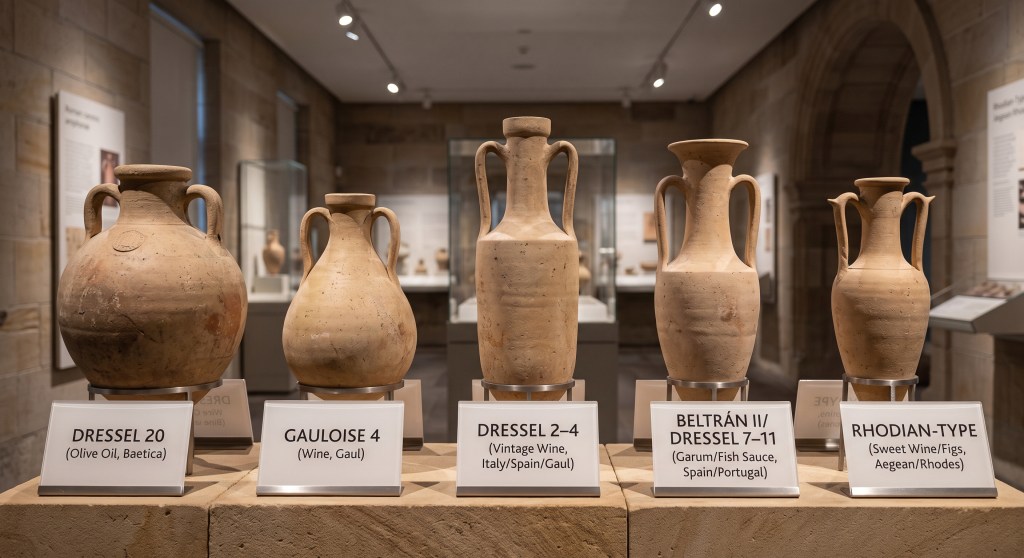
Dressel 20 – Olive oil from Seville and surrounding region.
https://sketchfab.com/3d-models/dressel-20-amphora-25bcd0ab213c4411843e2b762074f428
The Dressel 20 is by far the most abundant amphora type found on military sites across Scotland and northern Britannia. These robust vessels carried roughly 65–70 litres of olive oil and weighed over 30 kg empty.
Because olive oil was essential not only for cooking, but for bathing, lighting lamps, and cleaning military leatherwork, vast quantities were shipped along the Atlantic sea route and up British rivers. Dressel 20 amphorae are notable for their epigraphy: stamped handles identify kiln owners and estate names, while painted inscriptions (tituli picti) recorded weights and tax inspections.
These have been found along the Antonine Wall, with the remains of 17 found in Bearsden alone.
References
Roman Amphora – Society of Antiquities of London
Dressel 20 – Archaeology Data Service
2. Gauloise 4 (Pélichet 47): Gaulish Flat-Bottomed Wine Jars
- Origin: Gallia Narbonensis (Southern France) and the Rhône Valley
- Contents: Wine
- Date Range in Scotland: Mid-1st century AD to 3rd century AD (heavily represented in the Antonine period)
- Key Features: Distinctive flat base (requiring no separate stand), rounded pear-shaped body, short neck, and ribbon handles.
As wine production boomed in southern Gaul during the 2nd century AD, the Gauloise 4 began replacing Italian and Spanish wine imports in the northern provinces. Their flat bases made them easier to store aboard river barges and sea transports without the heavy ring-stands or sand beds required by spike-bottomed vessels.
- Scottish Finds: Prominent in Antonine Wall forts, notably Bearsden, Bar Hill, and Rough Castle, reflecting the shift toward Gaulish suppliers in the AD 140s–160s.
3. Dressel 2–4 / Camulodunum 184: Italian and Mediterranean Table Wine
- Origin: Campania, Etruria, and Latium (Italy); later replicated in Tarraconensis (Catalonia) and southern Gaul
- Contents: Vintage and everyday wine
- Date Range in Scotland: 1st century BC to mid-2nd century AD
- Key Features: Tall, cylindrical body; long narrow neck; distinctive “bifid” (double-rod) handles forming an acute angle at the top; long solid spike.
Derived from Greek prototypes from the island of Kos, the Dressel 2–4 carried higher-grade wines across the Mediterranean. The double-rod handles and pointed spike allowed for tight stacking in ship holds and easy pouring into flagons.
- Scottish Finds: Flavian levels at Inchtuthil, Strageath, and Newstead.
4. Beltrán II / Dressel 7–11 (Camulodunum 186): Fish Sauces (Garum and Liquamen)
- Origin: Baetica and Lusitania (modern Southern Spain and Portugal)
- Contents: Garum, liquamen, muria (salted fish products and fermented fish sauce)
- Date Range in Scotland: 1st century AD to 2nd century AD
- Key Features: Flaring bell-shaped rim, long conical neck, ovate body tapering to a hollow or solid spike, wide strap handles.
The Roman military diet was far more varied than simple grain rations. Fermented fish sauces (garum and liquamen) were vital seasoning agents used across all ranks. Amphorae of the Beltrán II and Dressel 7–11 families frequently preserve resin or pitch linings on their interiors to keep the salty brine from seeping through the porous earthenware.
- Scottish Finds: Excavated at Cramond, Inveresk, and Newstead.
5. Rhodian & Rhodian-Type (Camulodunum 189): Sweet and Flavoured Wines
- Origin: Rhodes and the Aegean; later copied in western provinces
- Contents: Sweet fortified wine, defrutum (grape syrup), and preserved dried figs
- Date Range in Scotland: Late 1st to mid-2nd century AD
- Key Features: Long, narrow body; single-rod handles with a sharp elbow bend (“horned” appearance); delicate sand-tempered pale fabric.
Rhodian wine had a reputation across the empire for medicinal qualities and distinctive sweetness. While less common than Dressel 20 or Gauloise 4 vessels in Scotland, stamped Rhodian handles show that exotic eastern Mediterranean luxuries reached frontier command posts.
- Scottish Finds: Recorded among early assemblages at Newstead and Elginhaugh.

