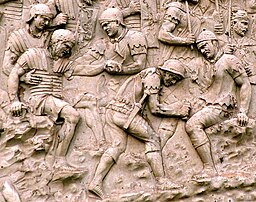
How did the Romans treat a wounded soldier in Scotland almost 2,000 years ago? They had doctors, surgical tools and, at some forts, buildings set aside for the sick. They could stitch wounds, set broken bones and remove objects lodged in the body. But they could not prevent many infections, and operations without modern anaesthetics were frighteningly painful.
The best evidence does not come from a medical textbook. It comes from Roman forts, soldiers’ records, discarded tools and even ancient sewage. Together, these discoveries give us a clearer picture of health and illness on Rome’s northern frontier.
A Roman army sick list
At Vindolanda, near Hadrian’s Wall, a wooden writing tablet records the strength of the First Cohort of Tungrians, a Roman auxiliary unit. The report lists 752 men in the cohort, although many were away on duty elsewhere. Of the 296 present at Vindolanda, 15 were sick, six were wounded and ten were suffering from inflammation of the eyes. That left 265 fit for duty.
It is a strikingly ordinary document. The army needed to know not just how many soldiers it had, but how many were well enough to work or fight. Eye trouble, wounds and other illnesses were practical problems for commanders, not merely private troubles for the men affected.
The tablet dates from the late first century AD, before Hadrian’s Wall was built. It does not tell us what treatment each man received, but it shows how carefully the garrison’s health could be recorded. Read Vindolanda Tablet 154 and its translation.
Did Roman forts have hospitals?
Some larger Roman military bases contained hospitals, known as valetudinaria. Archaeologists have identified buildings with rooms arranged around corridors or courtyards that appear suitable for treating and accommodating patients. A hospital allowed injured soldiers to recover away from crowded barracks.
It is important not to assume that every Roman fort in Scotland had a hospital. Some buildings have been identified as possible medical facilities, but their original purpose can be disputed. The size of the garrison, the fort’s date and the surviving archaeology all matter.
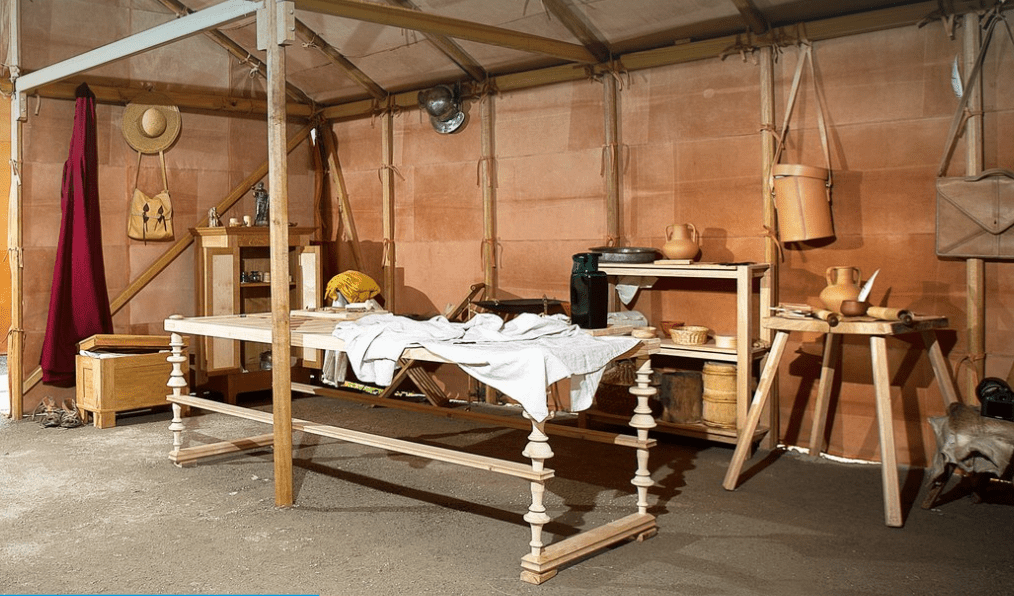
Doctors and medical attendants served the Roman army, although exactly how its medical service was organised varied across time and place. Military care could include the treatment of injuries, illness and longer periods of recovery.
Cramond: evidence for surgery in Roman Scotland
Cramond, on the western side of Edinburgh, has produced an important group of Roman medical and surgical instruments. These finds provide much more direct evidence for medical practice than a building whose function is uncertain.
Roman medical tools included probes, forceps, hooks and sharp instruments used for cutting or treating wounds. Some tools are recognisable in shape to a modern visitor, although that does not mean Roman procedures were as safe as today’s.
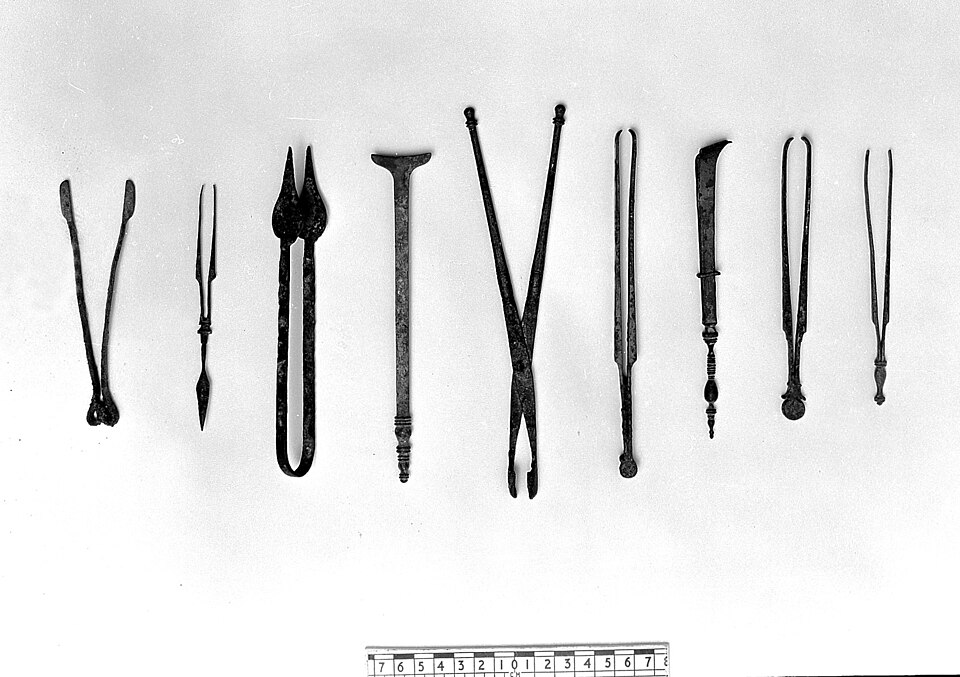
The Cramond assemblage has been the subject of a specialist study by A. G. Gilson. For the wider history of the site, see Cramond Roman Fort. Finding medical instruments does not by itself prove that a particular building was a hospital, or tell us precisely which procedures were performed there.
What could a Roman surgeon do?
Roman practitioners could clean and dress wounds, set broken bones and use instruments to remove splinters or missiles. The medical writer Celsus, who lived in the first century AD, described procedures and the tools needed to perform them. His work, De Medicina, is one of our most valuable written sources for ancient surgery.
Pain was a serious problem. Doctors used substances including opium and other plant-based preparations, but they had nothing comparable to modern reliable general anaesthesia. There were also no antibiotics. A patient might survive the original injury only to die from infection afterwards.
The Romans did not know about bacteria in the modern sense. Nevertheless, some practitioners recognised the importance of wound care, washing and removing foreign material. Their practical knowledge could be impressive, even when their theories about the causes of disease were mistaken.
Bearsden: the soldiers who had worms
The Roman fort at Bearsden, on the Antonine Wall near Glasgow, has provided some of the most revealing evidence about everyday health in Roman Scotland. Excavators uncovered a bathhouse, a latrine and deposits of ancient sewage.
Analysis of the sewage revealed eggs of whipworm and roundworm, two intestinal parasites. A human flea was also recovered. These were soldiers who had access to Roman bathing and drainage facilities, yet they still lived with parasites.
The find challenges a familiar picture of Roman sanitation as an uncomplicated triumph. Baths, drains and flushing latrines were remarkable pieces of engineering, but shared facilities did not necessarily prevent infection. Parasites could spread through contamination of hands, food or water.
Researchers also found moss in the latrine deposits. It may have been used for personal cleaning after visiting the toilet. That explanation is plausible rather than absolutely certain, but it shows how archaeology can reveal details that Roman historians rarely bothered to record.
For more about the facilities themselves, see Roman Toilets and Roman Bath Houses.
Bathhouses, food and everyday health
Roman military bathhouses offered places to wash, warm up and meet other people. Bathers passed through rooms of different temperatures and could remove dirt and oil from the skin. For soldiers living in cold or damp conditions, the baths must often have been welcome.
Food mattered too. At Bearsden, archaeologists identified a varied diet, including cereals, fruit, nuts and imported ingredients. Romans also used plants as remedies, and some foods were valued for supposed medicinal benefits. We must be careful, however, not to treat every plant found in an ancient rubbish deposit as proof of medical use.
Another recent investigation at Vindolanda identified intestinal parasites in deposits associated with the bathhouse latrine, providing a useful comparison with Bearsden. Well-built sanitation systems and infectious disease could exist side by side.
What did Roman doctors believe?
Roman medicine drew heavily on earlier Greek learning. Hippocrates became associated with careful observation and natural explanations for illness. Galen, a Greek-speaking doctor who worked in the Roman Empire during the second century AD, wrote extensively about anatomy, disease and treatment.
One influential theory held that health depended on a balance of four bodily fluids, or humours. A doctor might prescribe changes in diet, exercise, bathing, drugs or bloodletting to restore that balance. We now know that many of these explanations were wrong, but they shaped medical practice for centuries.
Romans also prayed to healing gods, wore protective objects and sought religious help. Medicine and religion were not necessarily competing choices. A patient might consult a doctor and make an offering to a god.
Who received medical treatment?
The army had a strong practical reason to care for its soldiers: recruiting and training replacements was costly. That does not mean every soldier received equally good treatment, or that the medical service worked perfectly.
Civilians in Roman Britain had a less uniform range of options. Some could consult practitioners or obtain remedies, while others relied on household care, local knowledge and religious healing. Roman, indigenous British and other provincial traditions could influence one another.
What can we really know about health on the frontier?
Archaeologists rarely recover the whole story of a patient’s treatment. A surgical instrument shows that someone possessed specialist equipment, but not whether an operation succeeded. A hospital-shaped building suggests a function, but its identification may remain uncertain. A parasite egg establishes the presence of infection, not how ill its host felt.
Even with those limits, the evidence from Vindolanda, Cramond and Bearsden provides a vivid picture. Roman military medicine combined organisation and practical skills with serious gaps in knowledge. The Romans could treat injuries and build sophisticated facilities, but they could not make their forts free of disease.
Sources and further reading
- Roman Inscriptions of Britain: Vindolanda Tablet 154 — the First Cohort of Tungrians strength report
- Alan K. Bowman and J. David Thomas, “A Military Strength Report from Vindolanda”, Journal of Roman Studies 81 (1991), pp. 62–73. Journal record.
- A. G. Gilson, “A group of Roman surgical and medical instruments from Cramond, Scotland”, Medizinhistorisches Journal 18 (1983), pp. 384–393. Bibliographic record.
- Society of Antiquaries of Scotland: Bearsden excavation report and findings.
- Dig It! Scotland: Bearsden Roman Fort and its sewage discoveries.
- McMaster University: parasite infections at Vindolanda.
- Malton Museum: The Roman Army Medical Service.
- The Hospital Layout — Housesteads Fort (illustrated visitor account showing the hospital plan; treat its wider historical claims with caution).
- Military Hospital — Museum Aargau, Switzerland (Vindonissa).
- Segedunum Roman Fort — a short guide to buildings within the fort (including the hospital).
- Celsus, De Medicina, especially Book VII on surgical procedures, and Galen’s surviving medical writings.

