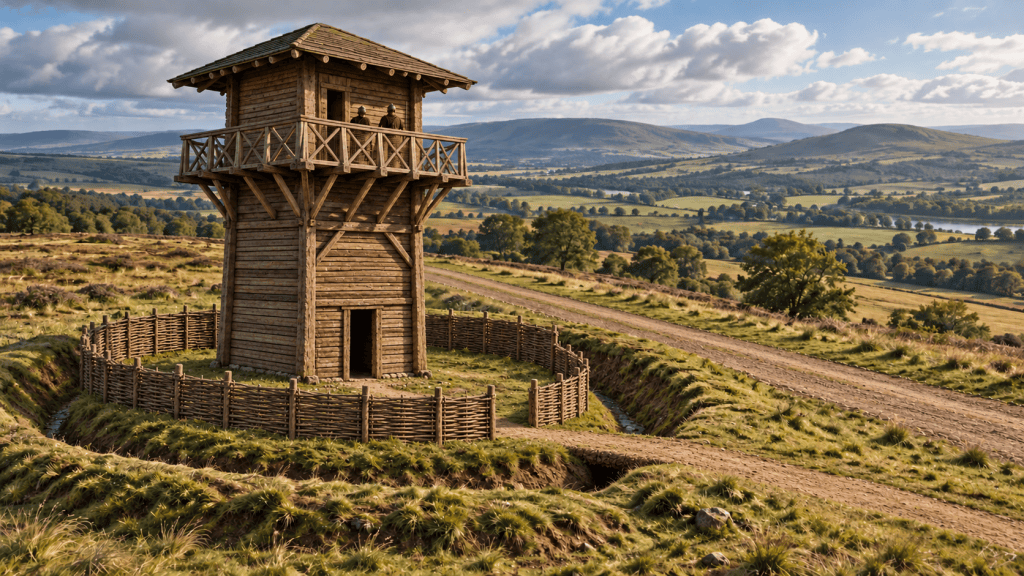
The Gask Ridge system linked Roman forts, fortlets and timber watchtowers along a road through Perthshire. The known line extends for about 37 km from Glenbank, north of Dunblane, to Bertha on the Tay near Perth. The ridge itself lies north of Strathearn. Unlike Hadrian’s Wall or the Antonine Wall, there was no continuous barrier joining the posts.
It belongs to Rome’s first-century occupation of Scotland, broadly the late 70s and 80s AD, and is regarded as one of the earliest known Roman frontier systems. Its precise beginnings and the relationship between individual sites remain debated. Historic Environment Scotland places its abandonment around AD 87–88; that broad chronology should not be mistaken for a securely established construction and abandonment date for every tower.
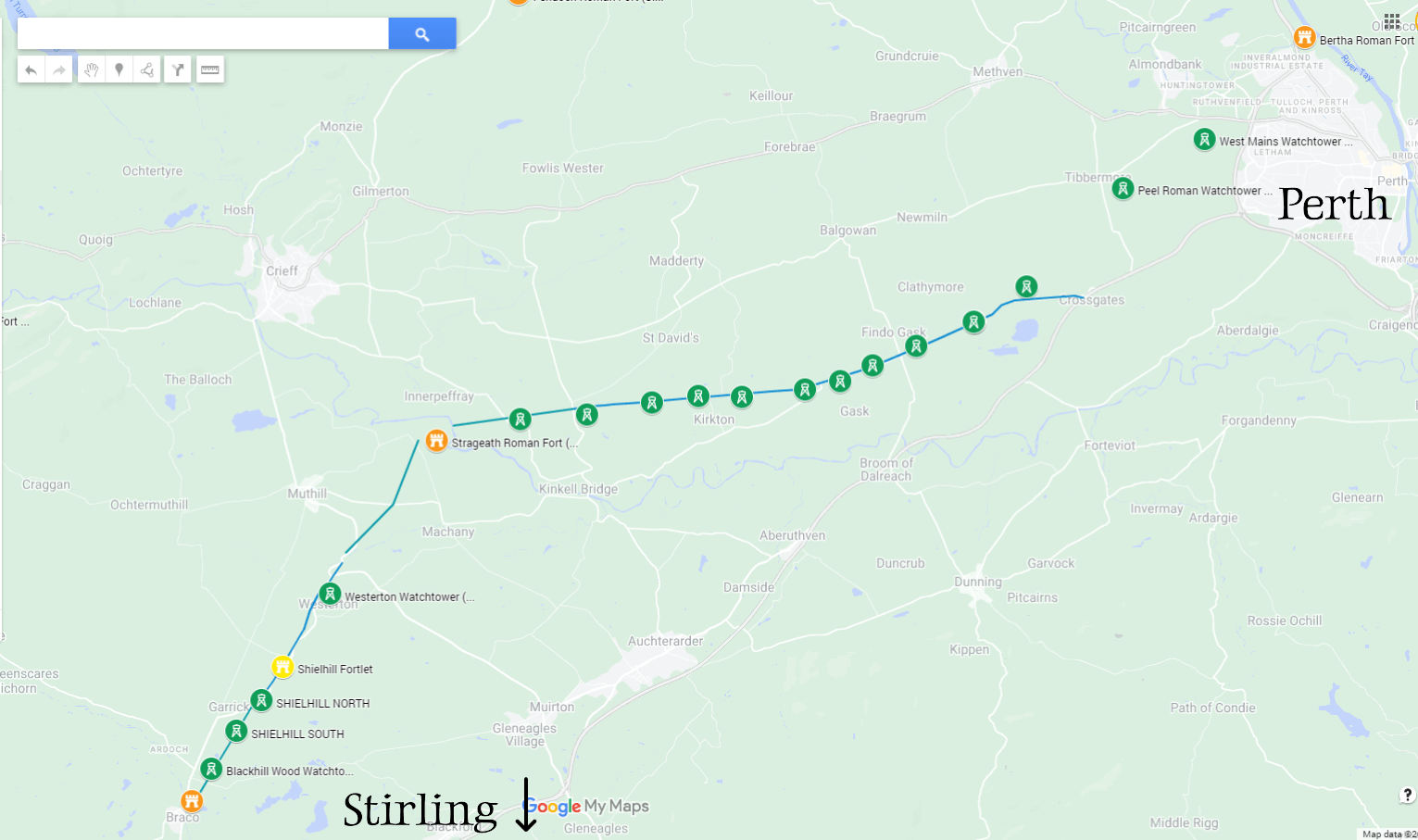
The road connected garrison bases including Ardoch, Strageath and Bertha. The towers offered places from which soldiers could watch movement and raise an alarm. Whether the whole line is best understood as a frontier, a protected military road, or a system serving both purposes is still discussed.
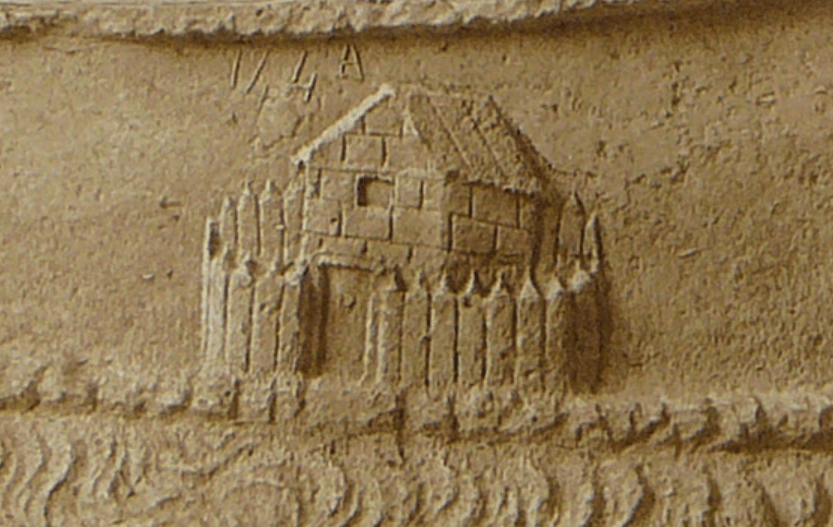
What did the towers look like?
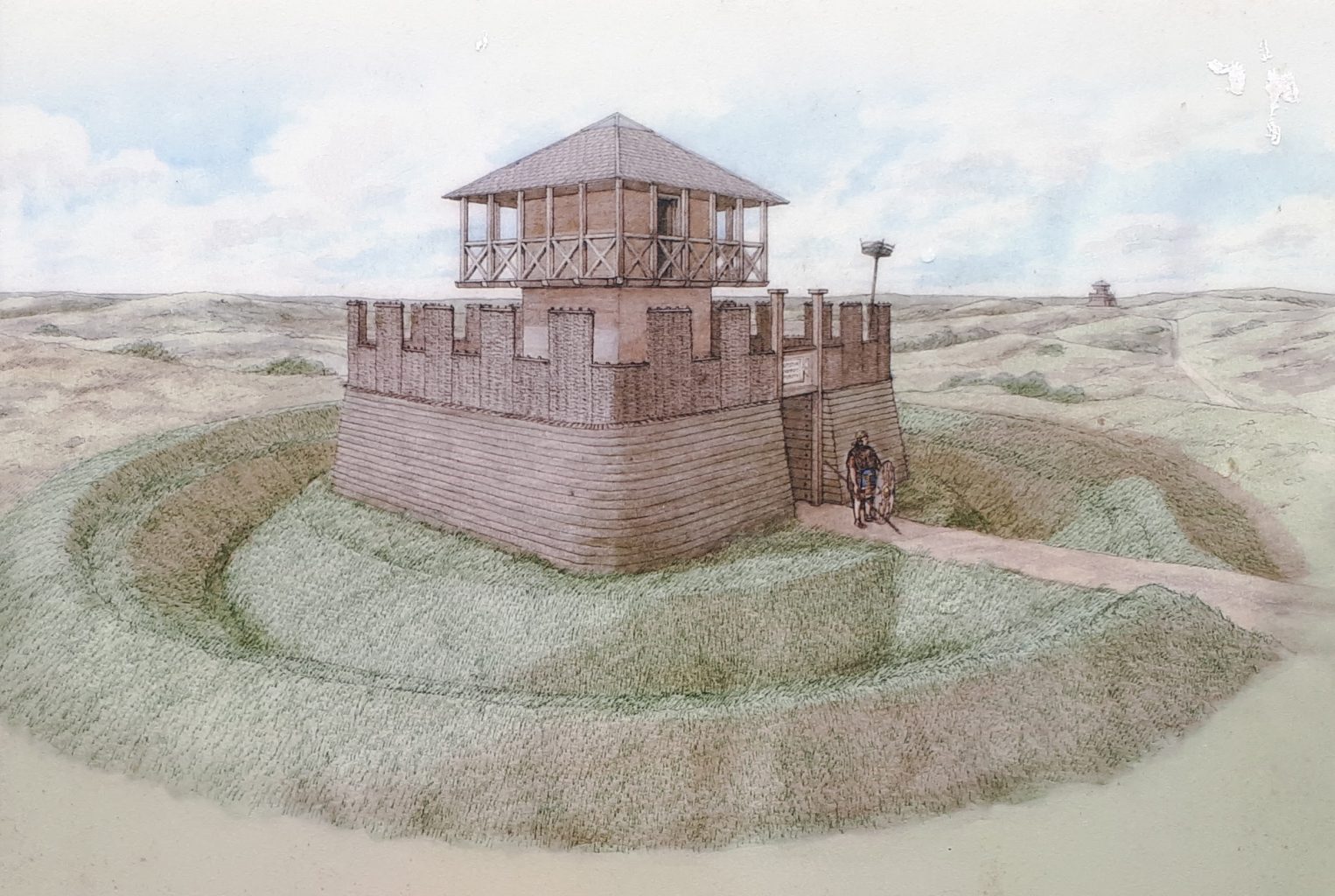
At Muir o’Fauld, Historic Environment Scotland describes a square timber tower within surrounding earthworks, with a causeway towards the Roman road. The wood has gone, leaving the mound, ditch and bank. These remains establish the character of the installation more securely than its appearance above ground.
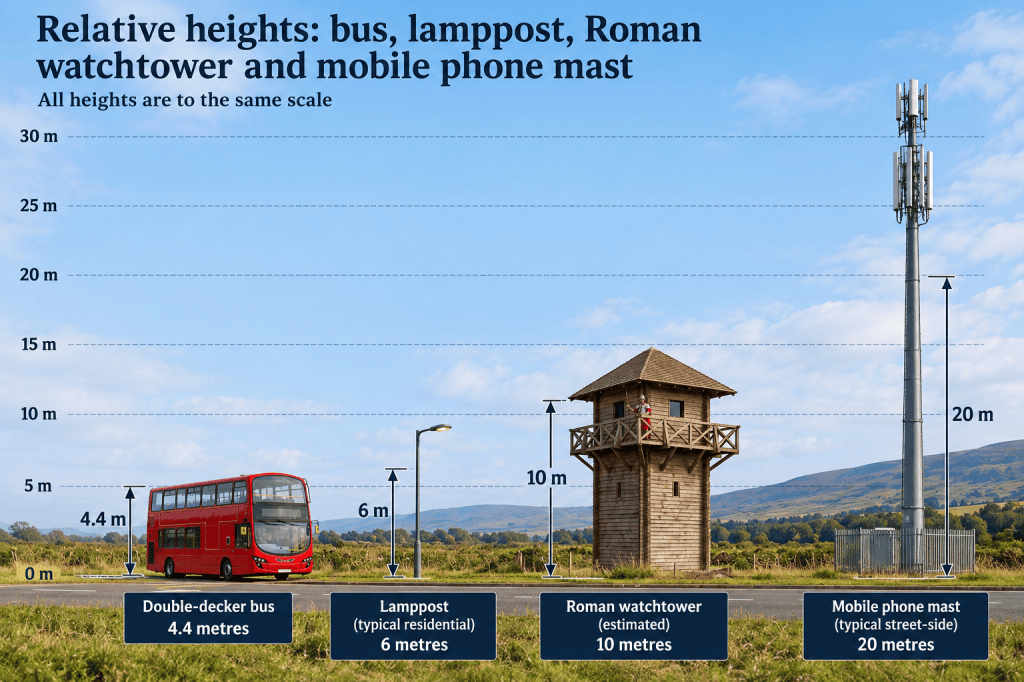
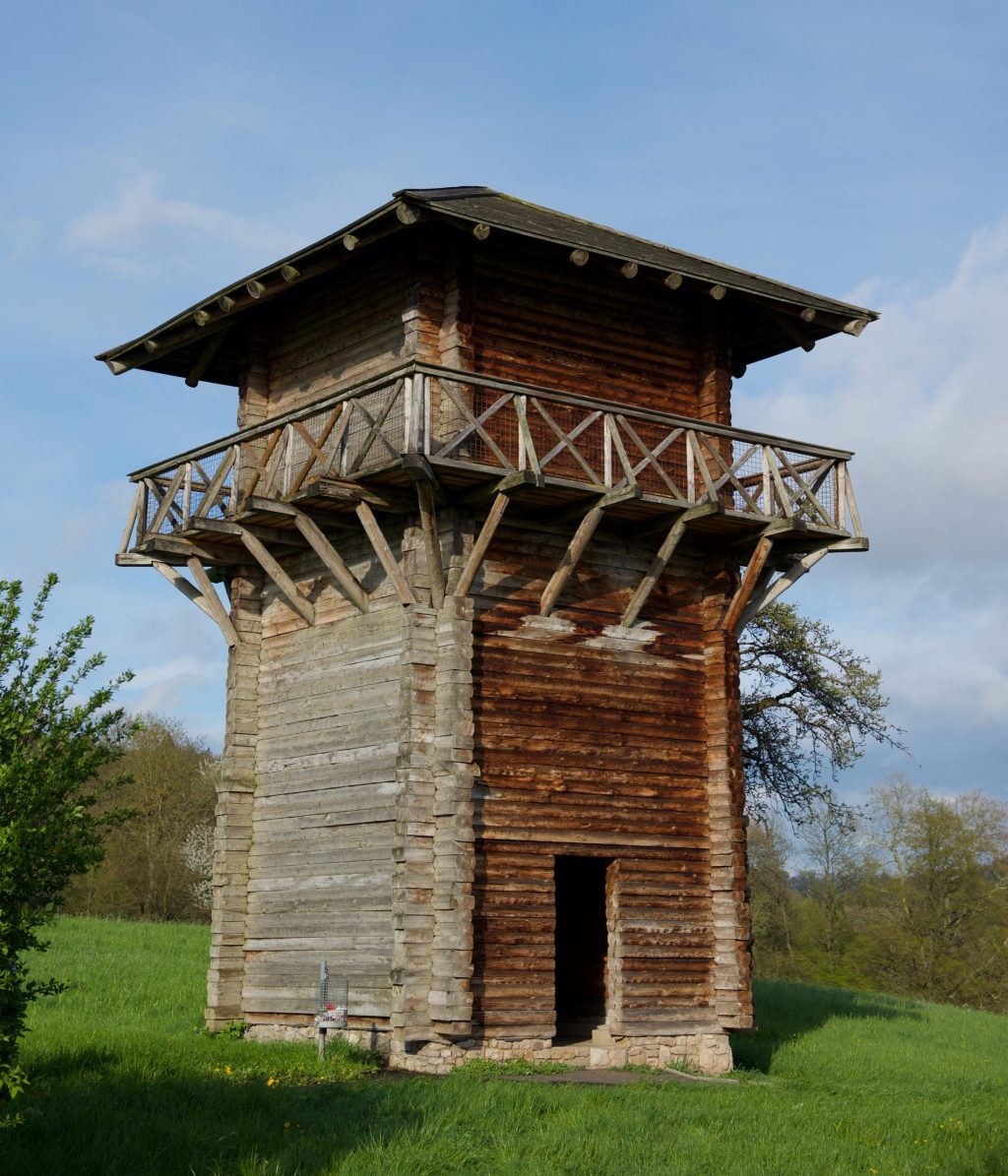
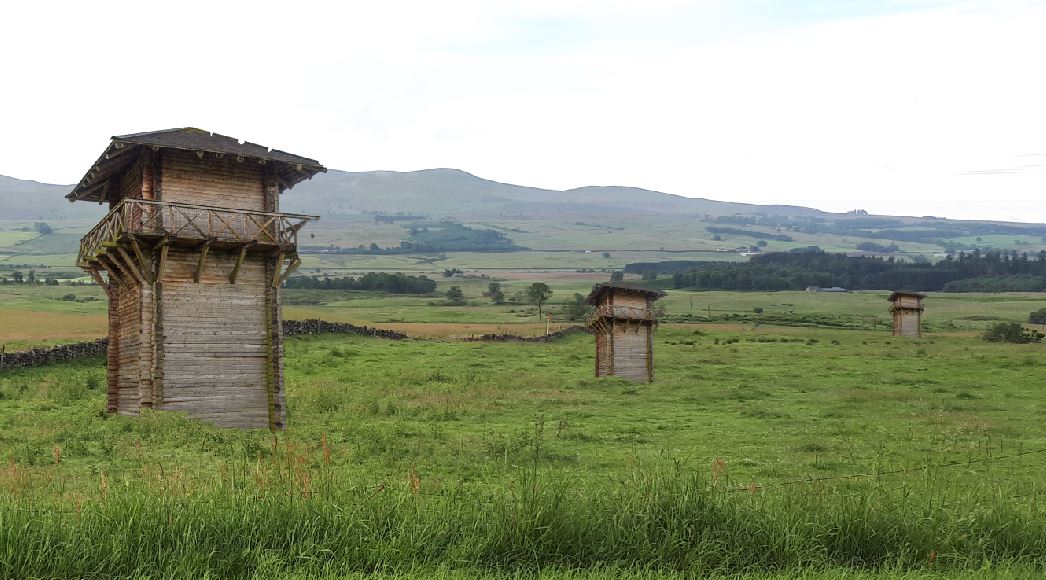
Reconstructions help us imagine the towers, but their exact height, number of floors and garrison strength are uncertain. Joseph Lewis’s visibility study tested tower heights of 7 m and 10 m as plausible alternatives, rather than measured surviving heights. The German reconstructions below are useful comparisons; they do not prove that a Gask tower had the same rooms, equipment or eight-man crew.
How might signalling have worked?
A signal needed a clear line of sight between sender and receiver. David Woolliscroft’s study found that most known posts could see their immediate neighbours, but he argued that warnings need not travel through every tower. A direct signal to a fort, or a short relay, would be more useful.
His reconstruction gives specific examples: the known towers between Glenbank and Kaims could communicate directly with Ardoch; Westerton could signal to Strageath. Raith could receive signals from ridge-top towers as far east as Midgate and relay them to Strageath. Huntingtower had a clear view towards Bertha. These are proposed routes based on visibility, not recorded Roman messages.
A complete end-to-end network is less certain. Gaps in the known sites and doubts about whether some towers and fortlets operated together prevent a firm reconstruction. Woolliscroft’s study of signalling and the design of the Gask system sets out both the possible links and their limitations.
Fire signals, torches and messages
Fire offered one way to send a visible warning. A prearranged beacon could communicate a simple event, provided the receiving soldiers already understood its meaning. An illustrative message such as “help required” is easy to imagine, but no Gask signalling code survives.
More complicated techniques were known in the ancient Mediterranean. In Histories 10.43–47, Polybius discusses the limitations of simple beacons and describes arrangements using torches, including a method of spelling letters through two groups of torch signals. His account predates the Gask towers. It shows what ancient signalling could achieve, not which system soldiers used in Perthshire.
We should therefore distinguish a plausible alarm beacon from an elaborate coded message. Neither a specific torch code nor a hydraulic signalling apparatus has been demonstrated for the Gask Ridge. Fog, terrain and vegetation would also matter: a tower’s theoretical view does not guarantee a usable signal in every condition.

Why were the towers so close together?
On the ridge proper, the tower spacings studied by Lewis range from about 800 m to 1,520 m. Close spacing makes sense for observing people and traffic, even where a visible signal could travel farther. Seeing a beacon is a different task from recognising what someone on a road is doing.
Lewis’s 2020 study compared the known tower positions between Strageath and Westmuir with simulated alternatives. The results supported the interpretation that their locations were selected to improve observation of the Roman road. That strengthens the case for surveillance alongside signalling, although a landscape model cannot tell us every duty carried out by a tower crew.
In Woolliscroft’s interpretation, overlapping views explain why there were more posts than a simple beacon chain required. The likely combination was observation, early warning and communication with troops able to respond.
Exploring the Gask Ridge today
The map and site list below help locate the surviving posts. When visiting, consider the road as well as the distant horizon: what movement could the soldiers watch, and which other post could they contact? Modern woodland may conceal views that were once possible, while a view from ground level differs from one from a timber tower.
Below is a map of the watchtowers, forts and a Roman road which you can walk or cycle.
List of Watchtowers
- Huntingtower (West Mains)
- Peel
- Westmuir
- Midgate (Thorny Hill)
- Moss Side
- Witch Knowe
- Gask House
- Muir o’ Fauld
- Kirkhill
- Roundlaw
- Ardunie
- Raith
- Parkneuk
- Westerton
- Shielhill North
- Shielhill South
- Blackhill Wood
There is also a Greenloaning watchtower south of Ardoch
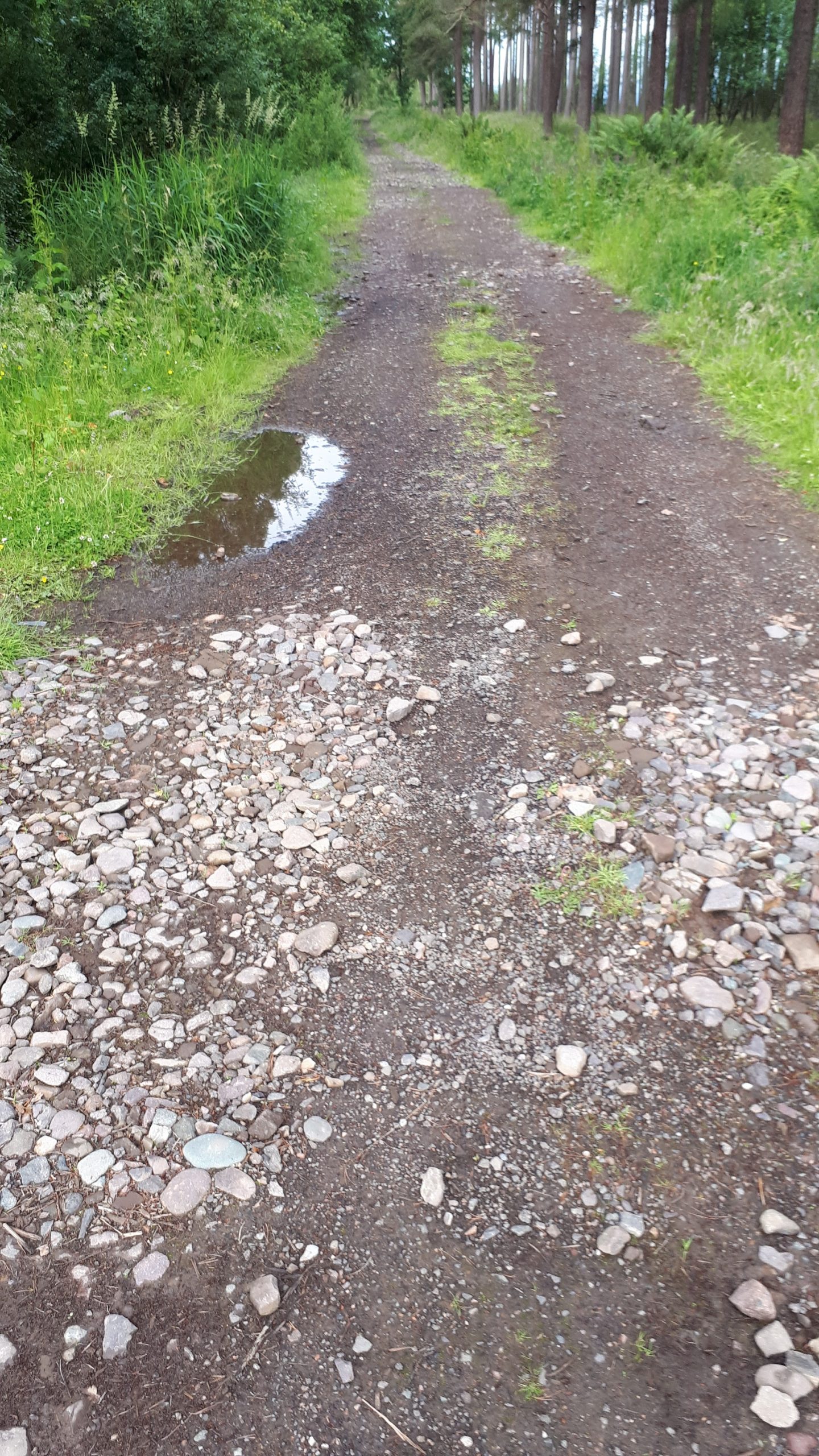
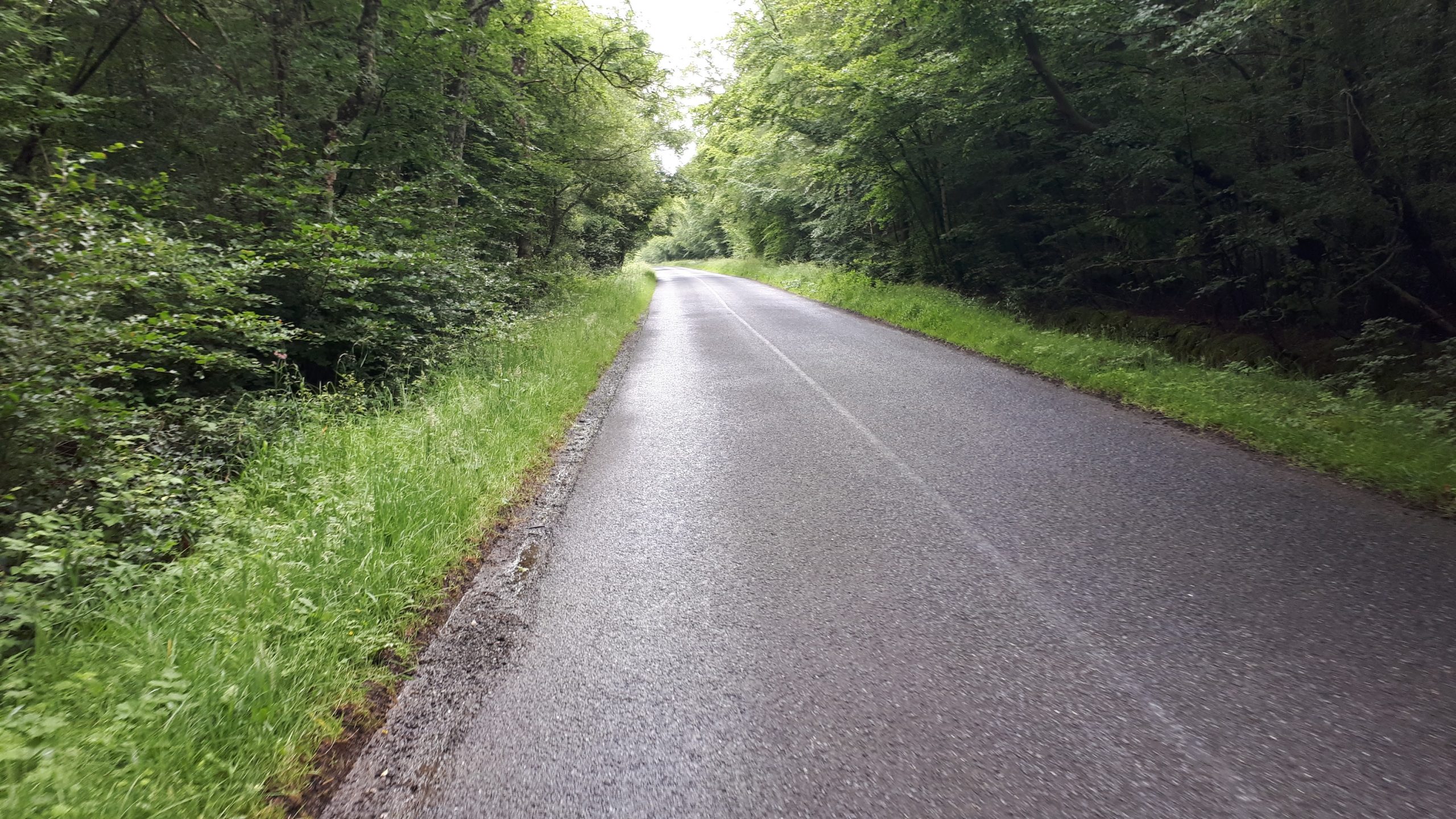
You can cycle or walk the Roman road along the ridge some of it tarmacked and some of it through forest ( which is more difficult by bike).
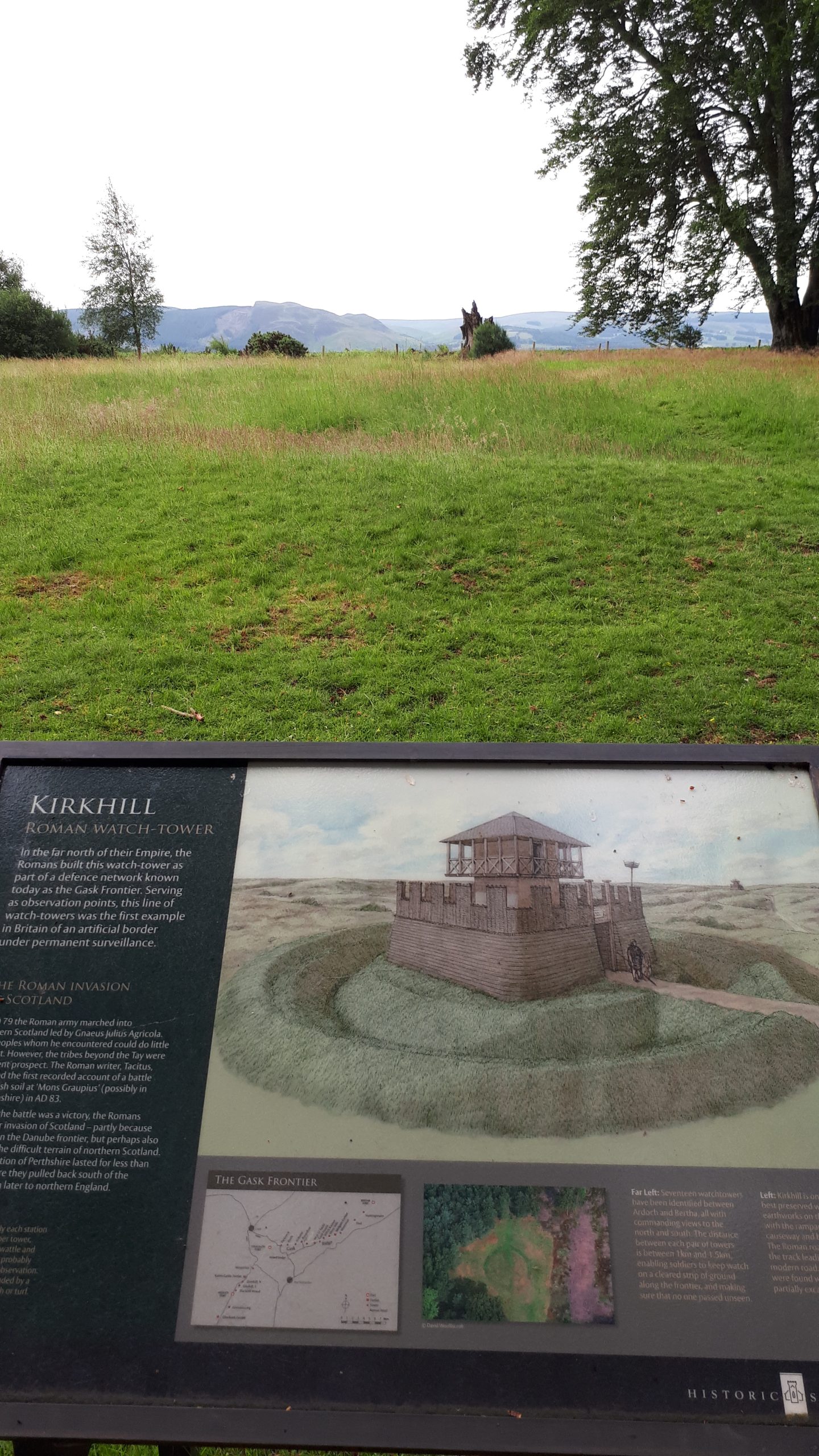
Roman Gask Ridge Project
This comprehensive website at http://www.theromangaskproject.org/ details a long-term academic programme to study the Roman Frontier works on and around the Gask Ridge in Perthshire, Scotland. Two professional archaeologists, Dr Birgitta Hoffmann and Dr David Woolliscroft, have spent many years studying the area.
Dating evidence from the smaller posts is limited. Finds from neighbouring forts provide context, but coins at Cargill cannot directly date a Gask watchtower. Strageath’s Flavian and later Antonine occupations also remind us that the Roman sites shown on a modern map need not all belong to a single phase.
German Watchtowers
The watchtower model was also used in Germany along the Rhine, and there were 100s built there.
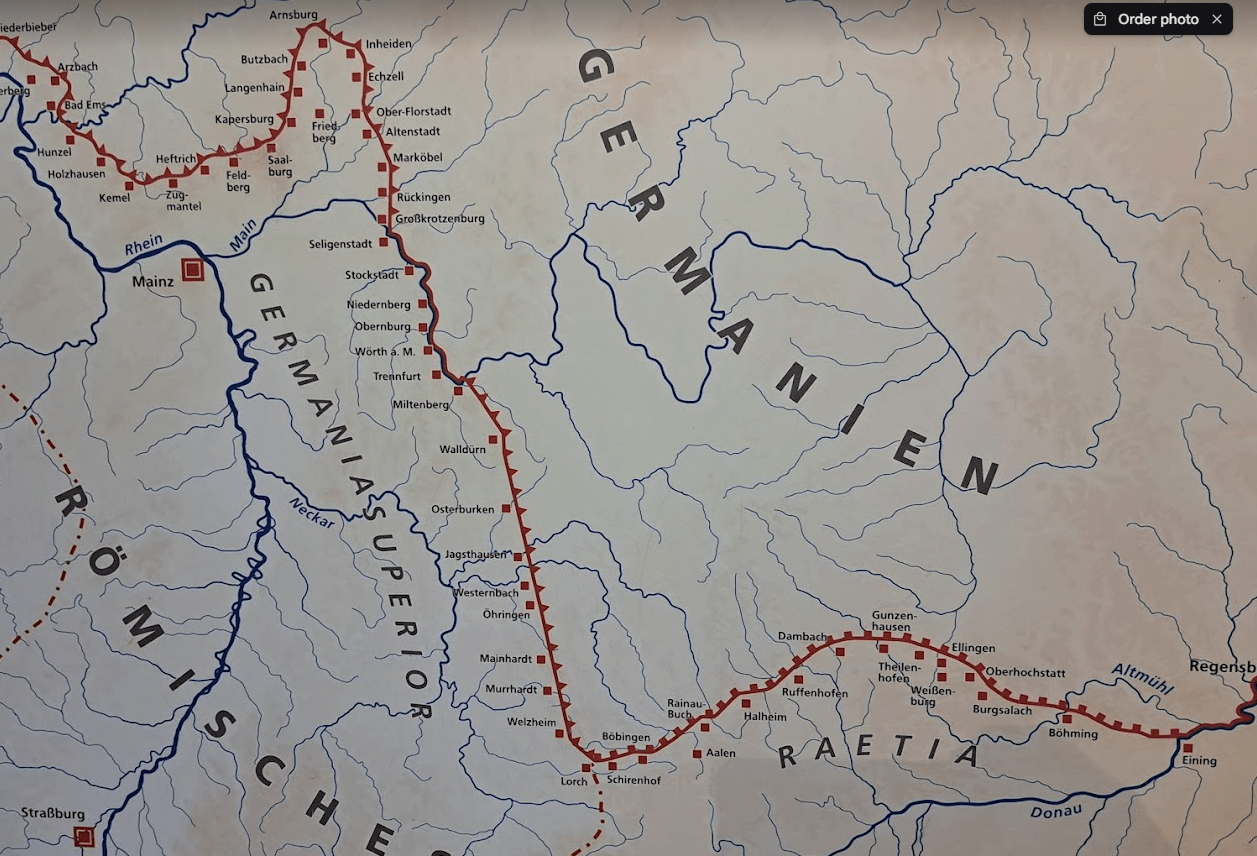
In Germany, the border stayed in place for many years and developed from turf and timber to stone-built barriers. The Gask tower line did not develop into a continuous stone barrier. Its first-century occupation ended during the Roman withdrawal from northern Scotland in the late 80s AD.
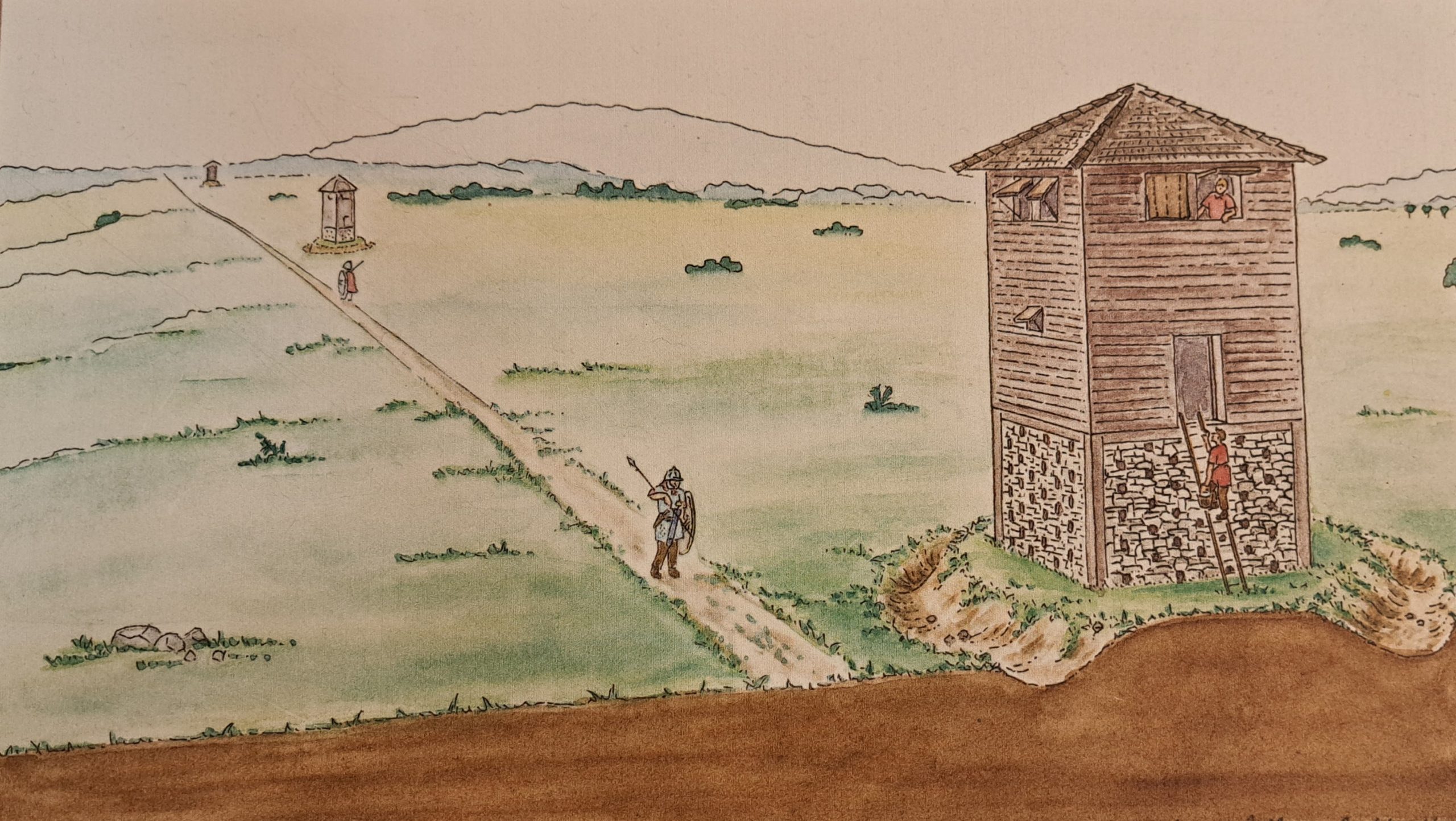
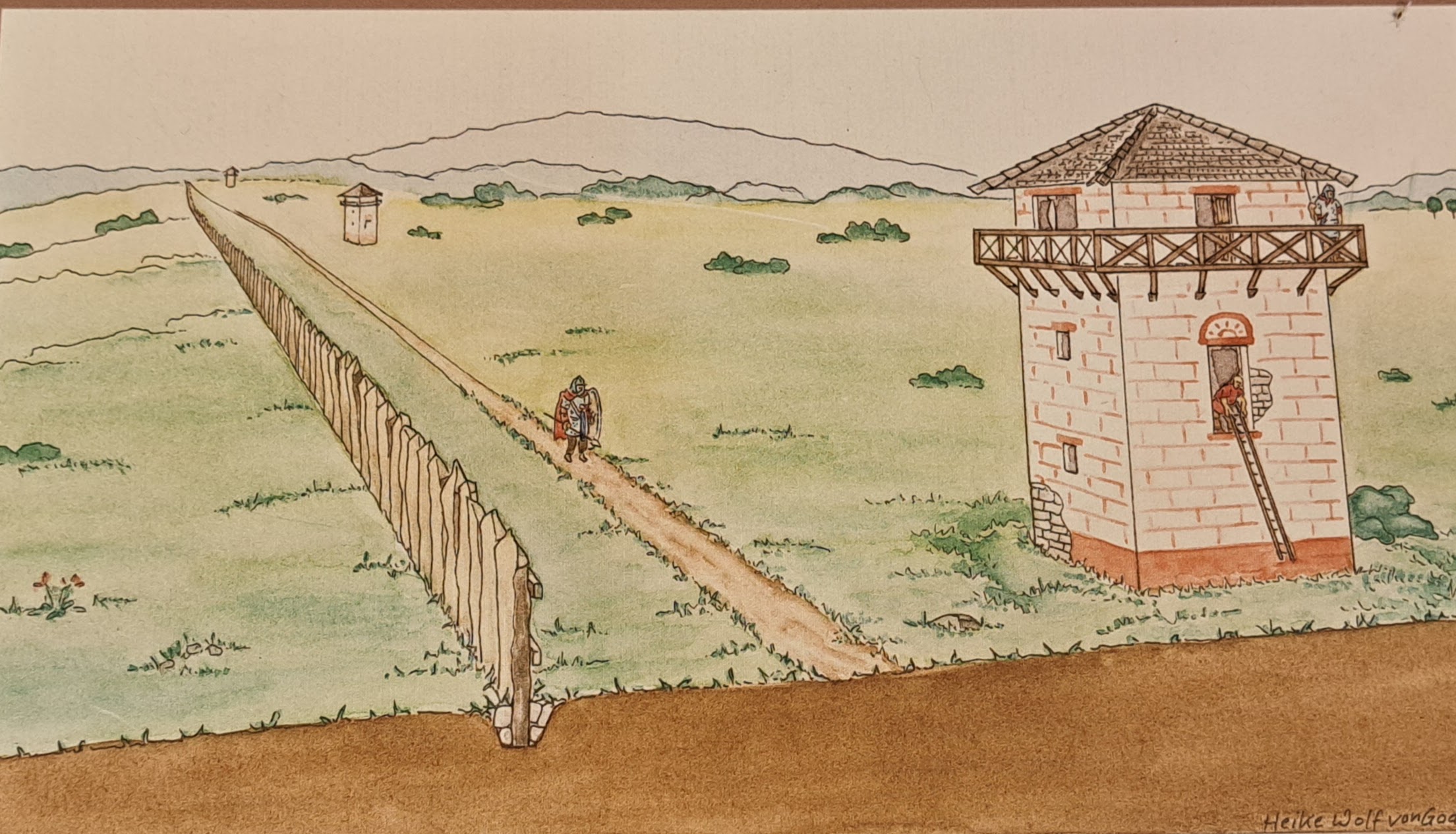
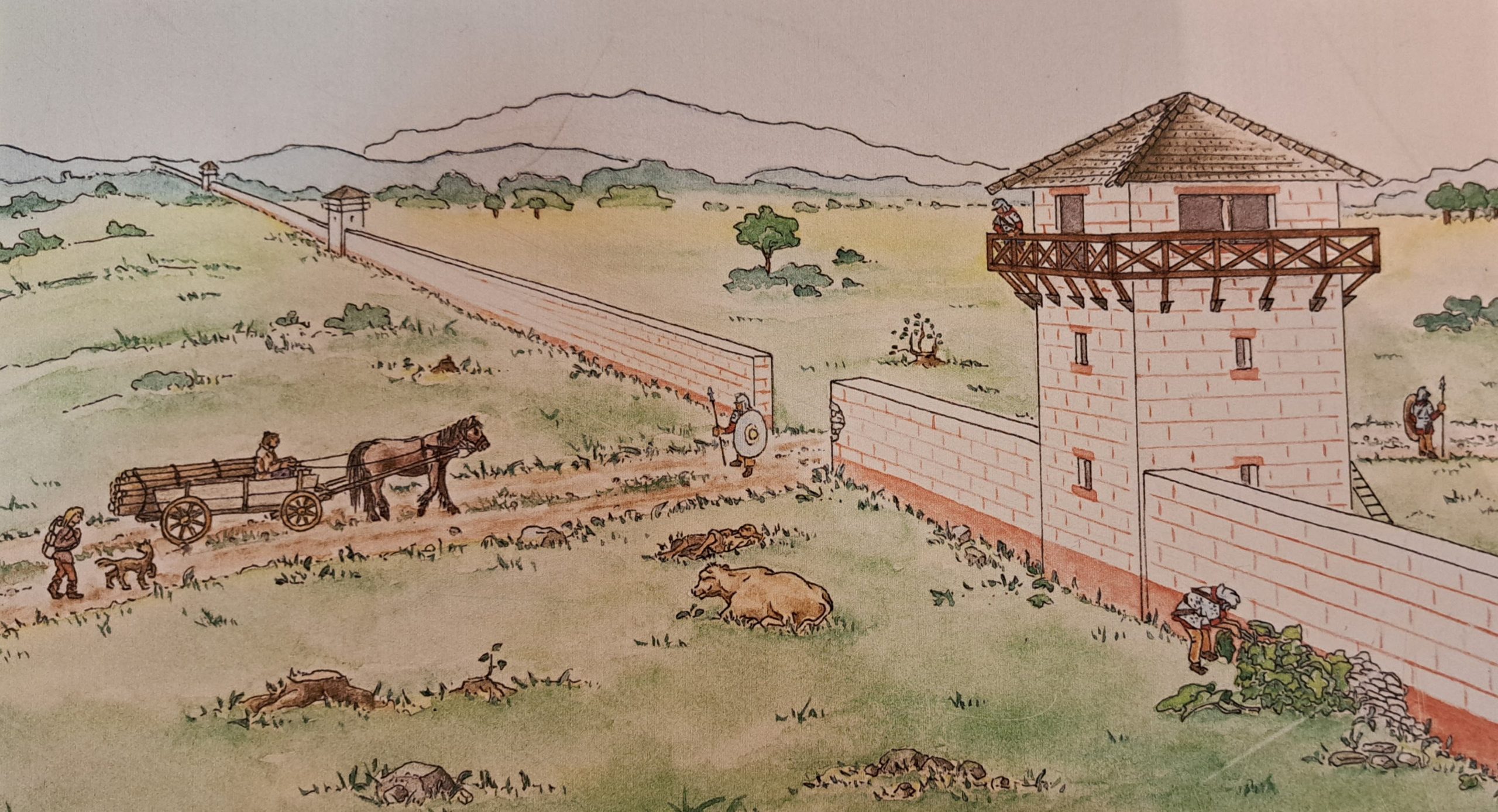
Inside a watchtower
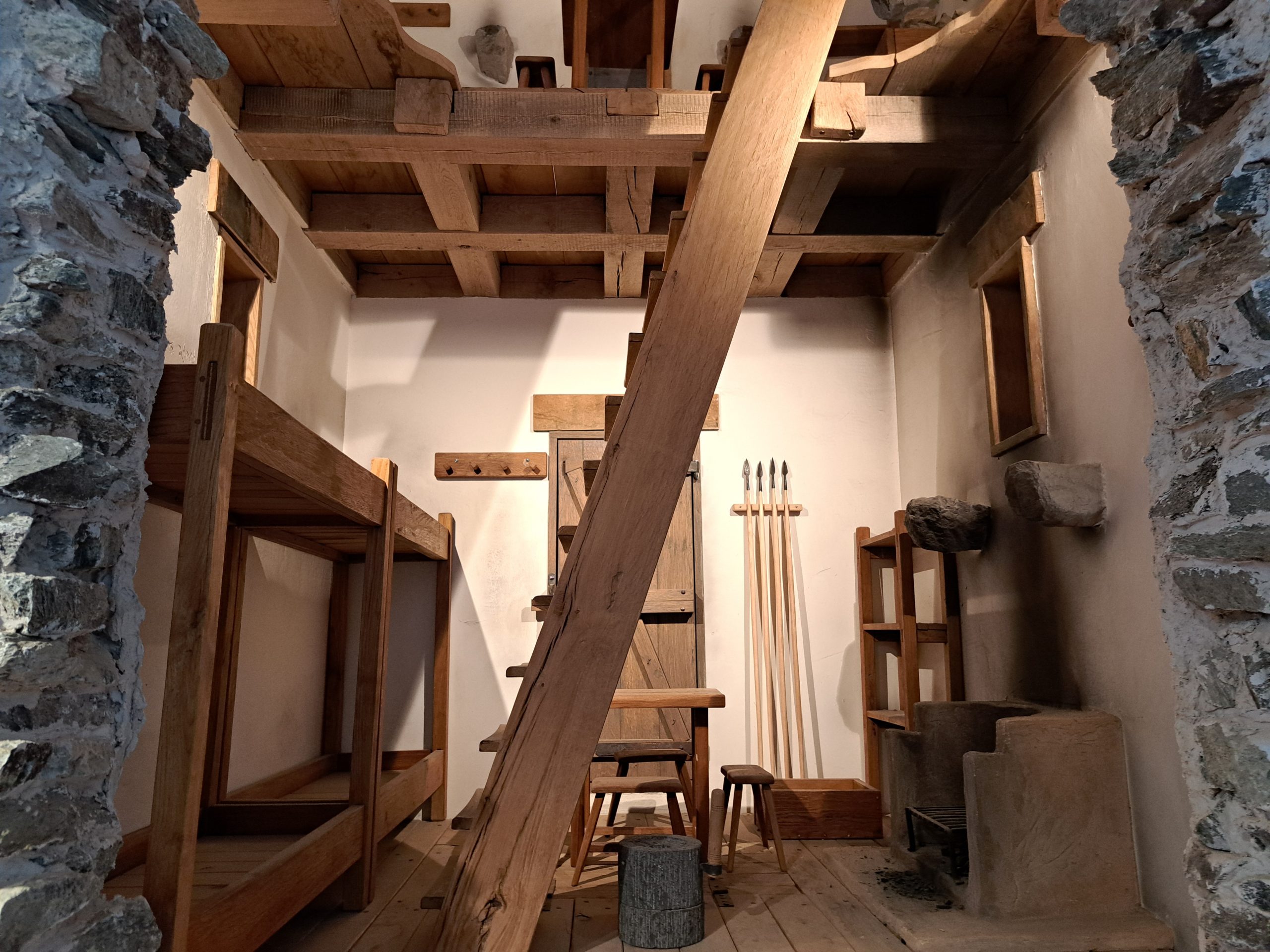
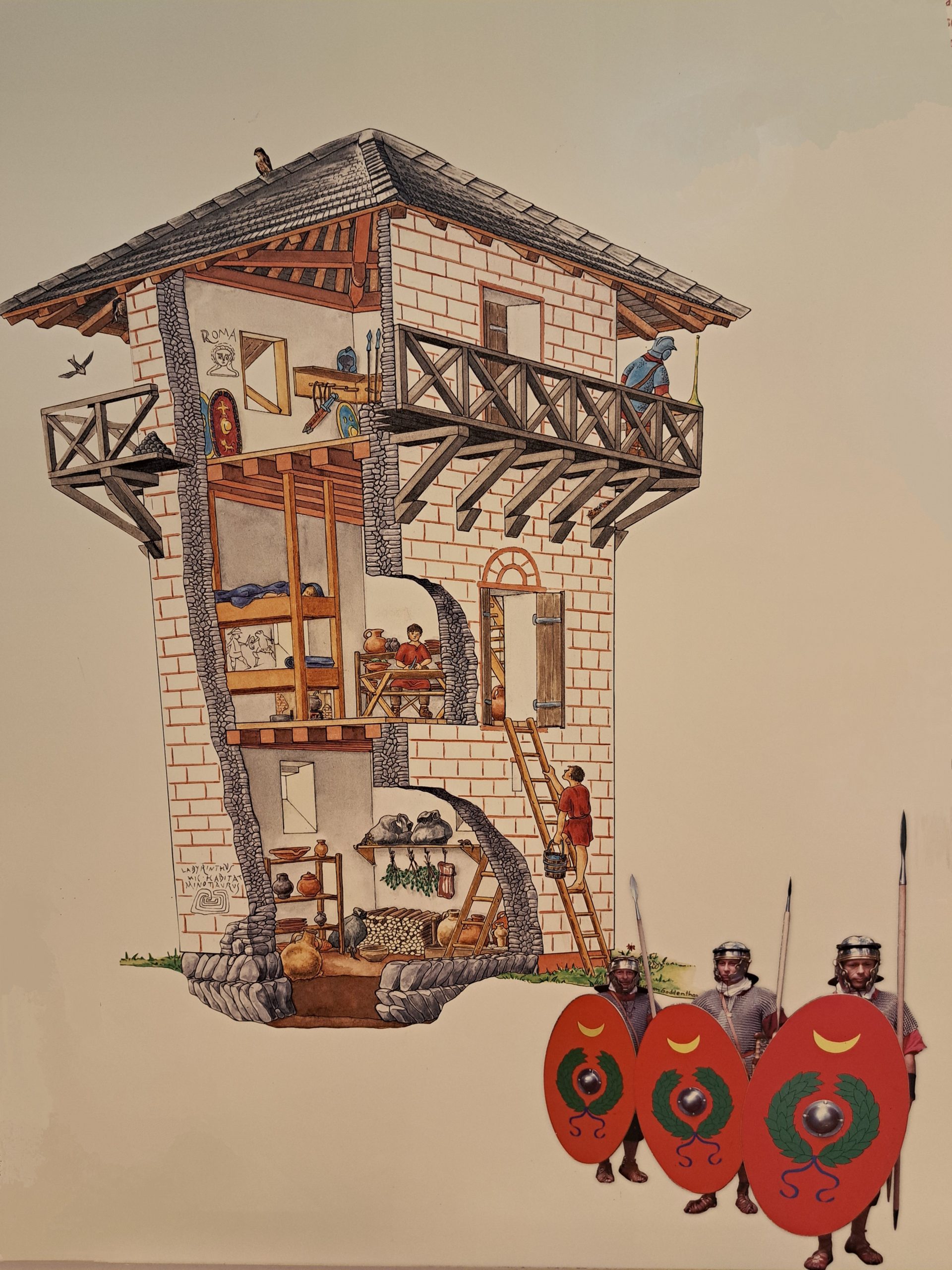
The pictures below show a reconstruction of a watchtower on the German Limes. Its three-storey arrangement is a useful illustration, but the floor plan and fittings of Gask towers are not known in this detail:
- The ground floor was used to store provisions. The storage room on the ground floor is equipped with large pottery vessels for storing grain, oil and other supplies
- The living quarters were on the middle floor with bunk beds and a hearth. They could only be reached via a retractable ladder.
- The guardroom on the top floor had windows and a timber gallery. From the surrounding gallery, a section of the Limes could be seen. The roof was covered with wooden shingles or slate
What was life like in a watchtower?
The first video shows wooden watchtowers across the empire
The following video shows the daily routine of a German watchtower troop using re-enactors
References
- D. J. Woolliscroft (1993), “Signalling and the design of the Gask Ridge system”, Proceedings of the Society of Antiquaries of Scotland, 123, 291–313. The principal discussion of possible signalling links and their uncertainties.
- Joseph Lewis (2020), “Visibility of the Gask Ridge road from simulated Watchtowers: A Monte Carlo testing approach”, Journal of Archaeological Science: Reports, 33, 102482. Read the accessible manuscript.
- Historic Environment Scotland: Muir o’Fauld Roman Signal Station — history and stories. Site remains and an overview of the frontier’s chronology.
- Polybius, Histories, Book 10, chapters 43–47. Ancient evidence for fire signalling, included for comparison rather than as evidence of a particular Gask technique.
- Roman Gask Project: background to the system.
- The Roman Gask Project: a long-term programme to study the Roman Frontier works on and around the Gask Ridge in Perthshire, Scotland.
- Gask Frontier Narrative from 1845
- GIS Intervisibility Study of the Roman Gask Frontier System By Dr Gavin Lindsay (2006)


Comments
2 responses to “Roman Gask Ridge Watchtowers”
[…] → Explore: Roman Gask Ridge Watchtowers […]
LikeLike
[…] Explore the Roman Gask Project […]
LikeLike