Bo’ness stands close to the eastern end of the Antonine Wall. Here the frontier met the Forth, while forts, fortlets and carved distance slabs proclaimed Roman power at the edge of the Empire.
Discover the Roman stories nearby
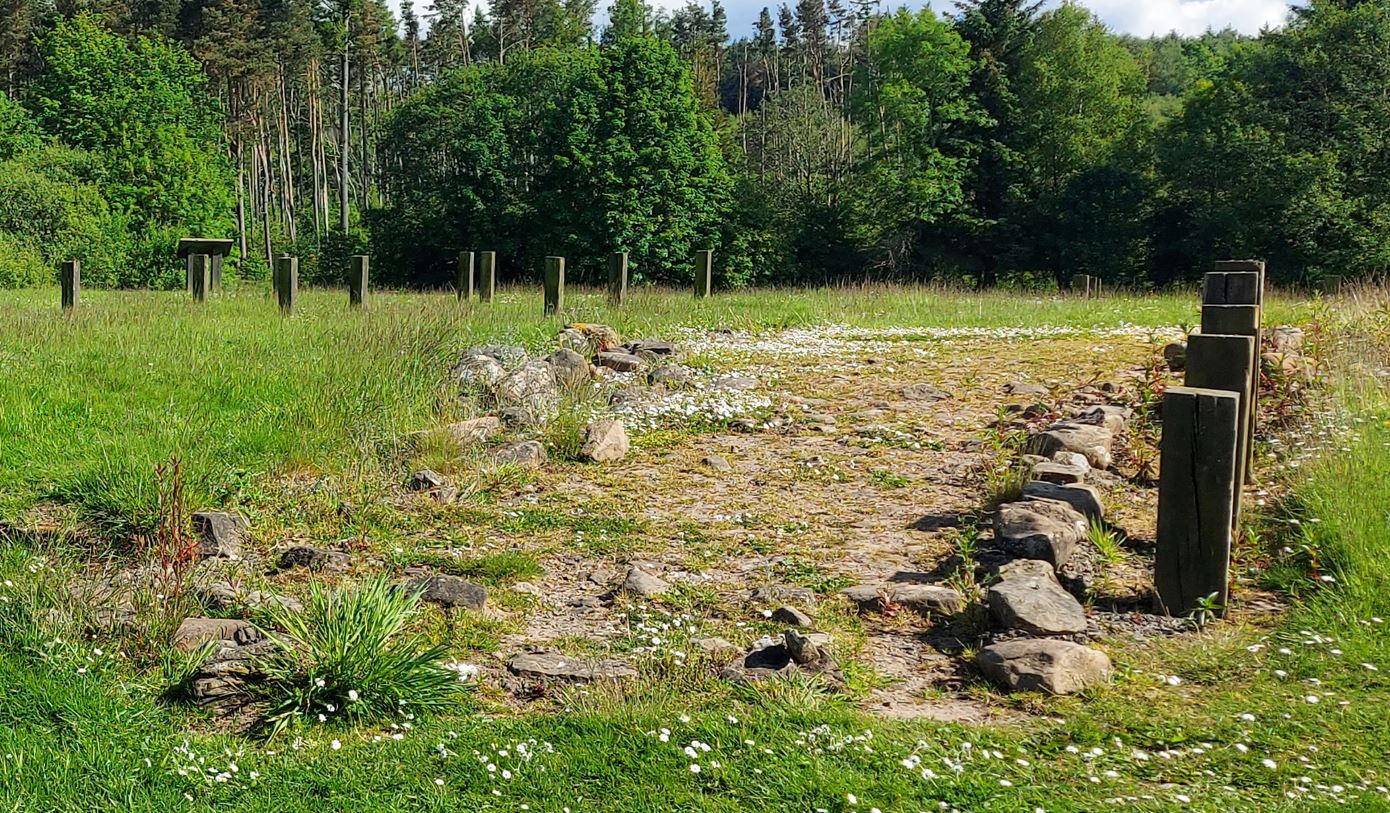
Kinneil: a small frontier post
Explore the fortlet’s excavated footprint and its relationship with the Wall. Small posts helped control movement as well as observe it.
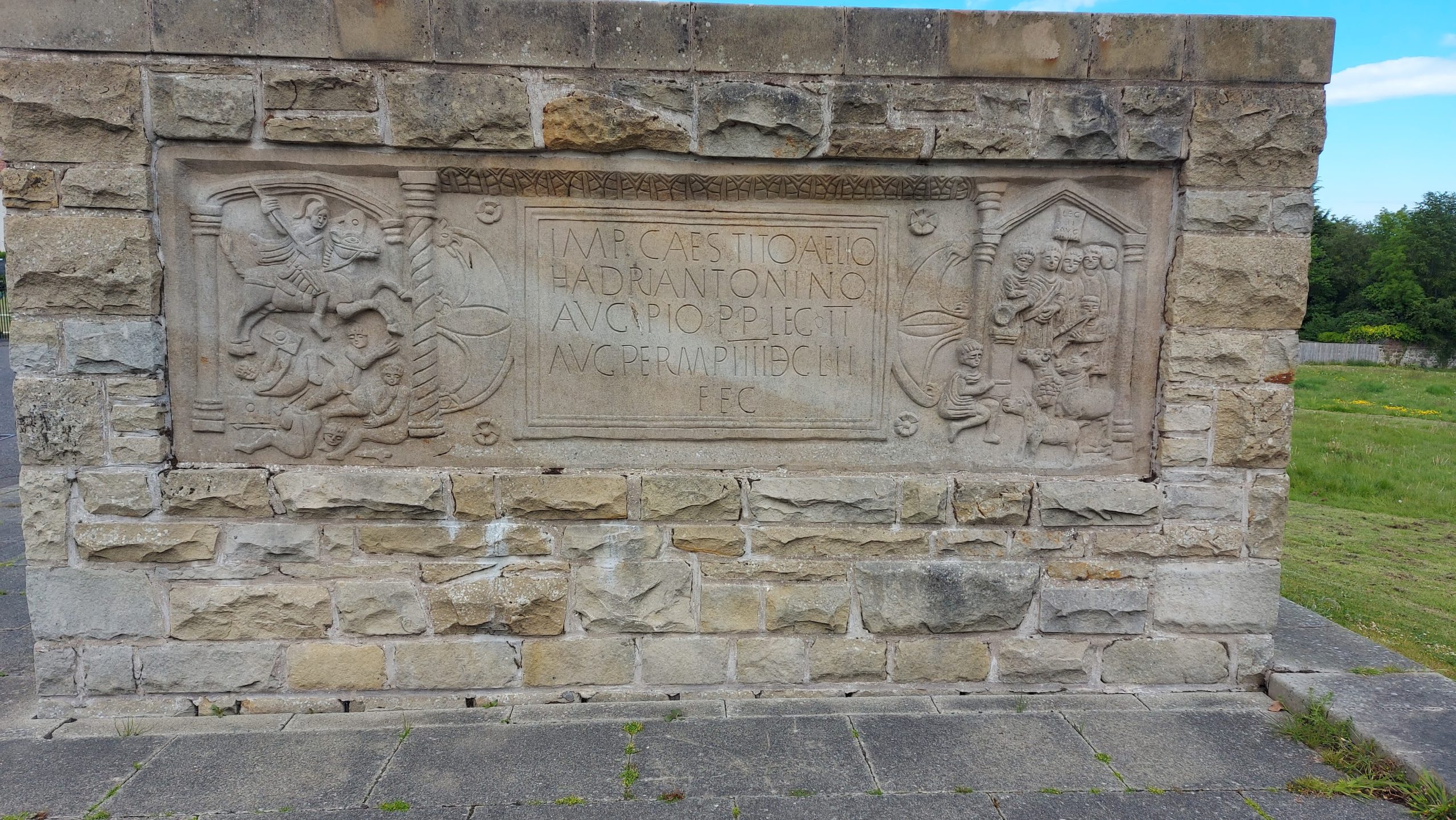
Bridgeness: the army’s message in stone
Read the distance slab’s inscription and imagery. Its discovery provides evidence for building the Wall, not proof of a fort beneath the findspot.
Explore the Roman sites map
Select the local map below to open the interactive view, then zoom or select a marker. Read the evidence notes below alongside it: a marker shows a recorded location or proposal, not proof that a Roman structure survives
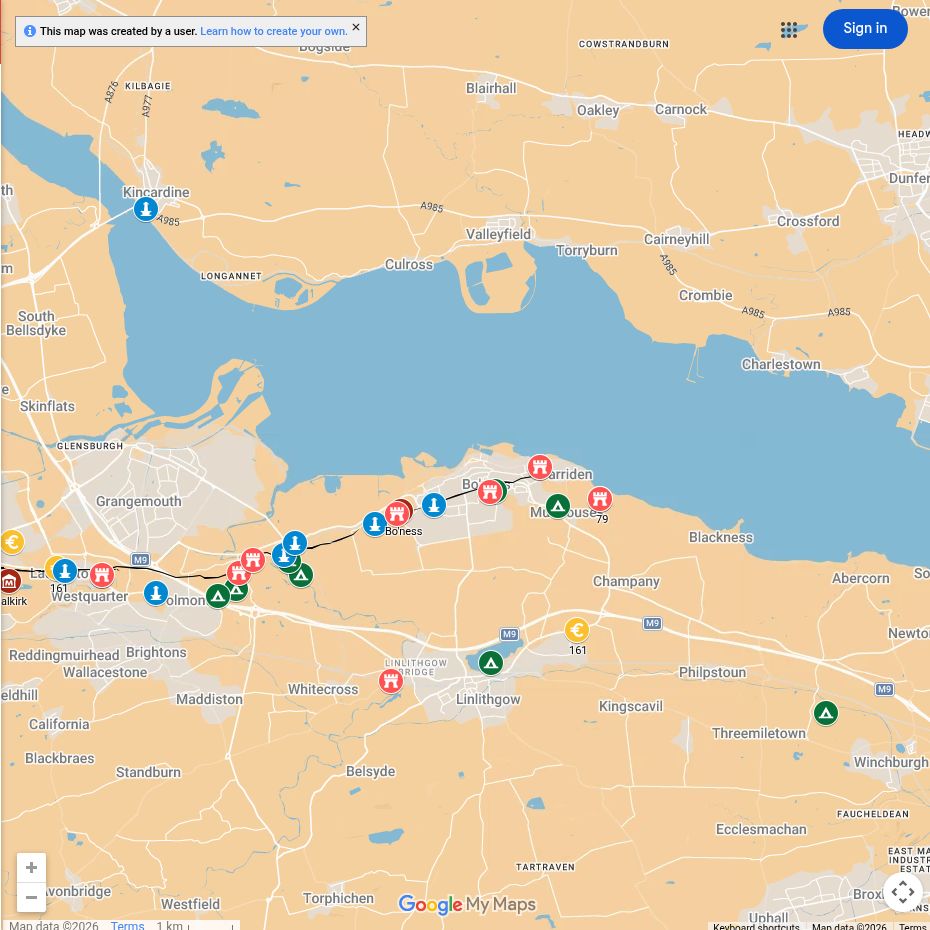
Open the interactive map full screen
What the evidence establishes
- Kinneil — excavated Antonine Wall fortlet. The visible presentation marks archaeological remains, rather than a surviving full-height Roman building.
- Bridgeness — established distance-slab findspot; fort proposed. The inscription is secure evidence. A fort here has not been established by equivalent excavation evidence.
- Carriden — established Roman fort east of Bo’ness. Most remains are buried; it is distinct from Kinneil and Bridgeness.
Why this area mattered
The Forth shore provided a route for transport and supply. The eastern end of the Wall had to control coastal movement while connecting with roads towards Falkirk, Edinburgh and the Borders.
Plan your visit: what survives today
- Kinneil Estate: combine the fortlet with the landscape around Kinneil House. The route includes unsurfaced and uneven ground; use the official Kinneil visit guide for access.
- Bridgeness: the modern replica helps you read the slab in its local setting. The original is in the national collection, not an exposed Roman wall here.
- Kinneil Museum: check current opening before combining it with the fortlet. Carriden is principally a landscape and archaeological-record visit; respect gardens and working fields.
Sources, finds and further reading
Start with the local articles above, then follow the excavation reports, archaeological records and collections below. Historical reports preserve valuable evidence but may use interpretations revised by later work.
- Bailey and Cannel, excavation of the Roman fortlet at Kinneil
- RIB 2139: Bridgeness distance slab
- National Museums Scotland — the original Bridgeness slab and Roman collections.
- Antonine Wall visitor information
Continue exploring
- Visit the Antonine Wall
- Explore distance slabs
- Roman fortlets in Scotland
- The Bridgeness commemorative stone — read the building inscription alongside the local landscape.
- Antonine Wall distance slabs: catalogue — compare Bridgeness with other stones and locate their museum collections.
- Vibia Pacata at Westerwood — her altar records a dedication with her family (RIB 3504); a North African origin remains a suggestion, not an established birthplace. This is a collection connection: the altar was found at Westerwood, not Bo’ness; RIB records it at Kinneil Museum.
- Women on the Antonine Wall — a 61-minute talk providing broader frontier context.
- Daily life in Roman Scotland — includes Carriden’s civilian community as well as the army.

