Roman coins and other objects reached communities in Moray, but this is not the same as evidence for permanent Roman forts. Birnie provides a strong starting point: an indigenous settlement with Roman finds. The proposed military sites at Thomshill and Balnageith need to be treated more cautiously.
Discover the Roman stories nearby
Birnie: Roman silver in a local community
Explore the coin hoards and their Iron Age settlement context. Roman money travelled beyond the occupied province; the finds do not turn Birnie into a Roman fort.
Thomshill and Balnageith: testing an interpretation
Read the archaeological reassessment of the Moray enclosures. A ditch resembling a Roman feature is a starting point for investigation, not a confirmed military identification.
Explore the Roman sites map
Select the local map below to open the interactive view, then zoom or select a marker. Read the evidence notes below alongside it: a marker shows a recorded location or proposal, not proof that a Roman structure survives
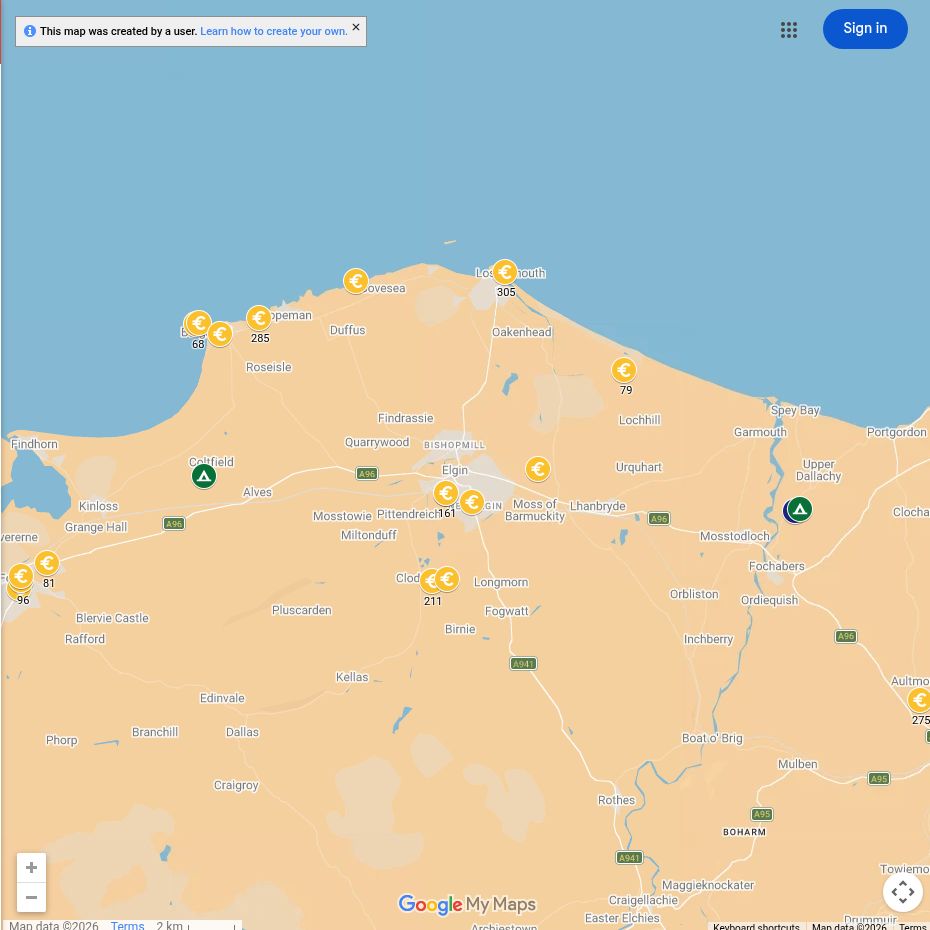
Open the interactive map full screen
What the evidence establishes
- Birnie — excavated indigenous settlement with Roman finds. The objects are established evidence of contact; their route into the community requires interpretation.
- Thomshill — enclosure with a proposed Roman interpretation. It should not be labelled an established timber fort or described as having a securely demonstrated Roman garrison.
- Balnageith — possible Roman camp. The interpretation is tentative; it is not a confirmed fort forming a proven system with Thomshill.
- Moray conquest — not demonstrated by these sites. Imported objects, proposed camps and permanent military occupation are different claims.
Plan your visit: what survives today
- Elgin Museum: the museum currently advertises a small pop-up display in its Side Hall; the main galleries are closed because of building problems (checked 26 October 2026). Ask about Birnie material before travelling, as a collection holding does not guarantee a current display. Consult the museum’s latest visitor information.
- Birnie: the excavated settlement is not an open Roman ruin. The museum, reports and landscape provide a more useful visit than searching fields for exposed buildings.
- Thomshill and Balnageith: mainly buried archaeology on working or privately used ground. Study the records and evidence first; map markers do not establish public access or Roman identification.
Sources, finds and further reading
Start with the local articles above, then follow the excavation reports, archaeological records and collections below. Historical reports preserve valuable evidence but may use interpretations revised by later work.
- Gregory (2001), excavations and reassessment of Moray’s proposed Roman sites
- Thomshill archaeological record
- Balnageith Historic Environment Record: possible Roman camp
- Birnie settlement archaeological record
- Scottish Archaeological Research Framework: the limits of the Flavian military evidence
- Elgin Museum: collections and visiting
Continue exploring
- Roman forts in Scotland
- Inside a Roman marching camp
- Explore Roman sites
- The Lochinver metalworking settlement — an Iron Age site near Elgin; Roman responsibility for its destruction remains a hypothesis.
- Explore Roman coins — place the Birnie finds in the wider study of coins and their movement.
- Roman leather — includes the leather containers associated with Birnie’s coin hoards.

